



Shops pour resources into technician certifications. Mike Hritzak thinks that’s only half the equation, and as car counts soften across the industry, it’s proving him right.
When a new manager at one of Brightpoint Auto Body Repair’s Idaho locations started struggling, Mike Hritzak didn’t schedule a disciplinary meeting. He bought a plane ticket.
For two weeks, Brightpoint’s director of operations worked inside the shop. In the first week, Hritzak ran the floor while the manager shadowed him during morning production meetings, technician communication, scheduling, and workflow management. The second week, they swapped. The manager led. Hritzak coached from beside him.
“Instantly, everything got better,” Hritzak said. It’s the kind of fix that doesn’t show up in a training budget line item. No certification. No class. Just a senior leader investing two weeks in one manager’s development.
That willingness to get on a plane, Hritzak says, reflects a broader gap the collision industry still isn’t talking about enough. “You can have the best technician,” he said, "but be led down a bad path."
The training imbalance shops can’t afford to ignore
Collision repair has invested heavily in technician development for years through OEM certifications, I-CAR credentials, welding qualifications, and equipment training. Those investments matter, Hritzak said. But they only solve part of the problem.
“I don’t believe there’s a whole lot of investment going on at the management level for leadership,” he said.
The result is a common pattern: a strong estimator or top technician is promoted for their technical skill, given a title and a set of KPIs, and expected to perform. Nobody teaches them how to lead people, set expectations, or run a consistent operation.
“You don’t get to the numbers by chasing the numbers," Hritzak said. “You get there by chasing performance, leadership, and excellence.”
Hritzak brings credibility to that argument. Before joining Brightpoint two years ago — when the company had just six locations — he served as a regional vice president and market support manager at Gerber Collision & Glass. Today, Brightpoint operates 38 locations across the country, a growth trajectory that Hritzak believes is directly connected to how the company invests in its people.
One of his favorite previous roles involved being dropped into underperforming markets and rebuilding operational metrics.
“That was probably my favorite job I’ve ever had in the collision industry,” he said. “You figure out very quickly that the numbers follow the people and not the other way around.”
Teaching by doing, not just telling
Hritzak is skeptical of what he calls the “sink or swim” approach to management development: Promote someone and wait to see what happens. He describes three levels of teaching: telling, showing, and doing together; the third one sticks.
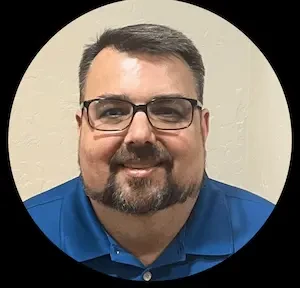 Mike Hrtizak“You can tell somebody how to do something, and that helps,” he said. “You can show them how to do something, and that’s better. But when you do it with them, it sticks more.”
That philosophy plays out even at the director level. Overseeing 38 locations, Hritzak still spends time in shops, working alongside managers and technicians on production tasks.
“If I’m asking a technician to do a complete teardown the right way, I’ll go do it with them,” he said. “I want them to understand why it matters, not just to us, but to them.”
That visibility does two things: it creates accountability, and it builds the kind of trust that’s hard to manufacture any other way.
“When the boss’s boss’s boss comes in and works beside you,” he said, “I think it brings real value.”
When volume drops, leadership matters more
The current market is stress-testing shops in ways that expose leadership gaps fast. Many locations are dealing with lower work volume, reduced capture rates, and tighter margins. In that environment, Hritzak says the temptation is to focus harder on the metrics dashboard. He thinks that’s exactly backward.
“You have to talk to your techs more when it’s bad than when it’s good,” he said.
That means being transparent about what’s actually happening in the shop:
- How many estimates came through the door this week
- How many jobs were captured — and how many weren’t
- What follow-up is happening on unconverted estimates
- What the team is doing operationally to improve
“If technicians know you’re trying to do something, they respond differently,” Hritzak said.
That transparency also pays dividends in retention, which matters even more when hiring is difficult. When employees feel a manager has their genuine interests in mind, not just the company’s, they stay. Hritzak has received calls from former employees years later, looking for new opportunities specifically because of how they were treated and developed earlier in their careers.
“I still get pictures from people when they buy their first house or have their first child,” he said.
What a scoreboard does to a team
Early in his career, Hritzak worked at an MSO where managers received a daily operational performance report every night. Cycle times, capture rates, and production throughput were all visible and comparable across locations.
“The managers who wanted to win waited for that report every night,” he said. “We’d immediately compare results and start pushing each other.”
The lesson he took from that experience wasn’t just about measurement; it was about what visibility does to a team’s competitive instincts.
“You have to know the baseline before you can improve it,” he said.
But metrics need context. Leaders have to help employees understand how their daily behaviors connect to the numbers. One of the most consistent operational issues Hritzak coaches against: front-loading the week.
“Stop bringing all your cars in on Monday,” he said. “Bring cars in every day so you’re painting every day.”
That scheduling discipline creates smoother production flow, faster cycle times, and more predictable weekly revenue. It’s not complicated, but it requires a manager who understands the connection and communicates it clearly to the team.
What shop owners can do Monday morning
That intentional leadership makes a huge difference. Start the daily production meeting and mean it. Not a quick huddle, but a structured conversation covering what came in yesterday, what’s moving today and what obstacles need to be cleared. Make it a non-negotiable.
Get on the floor. If you’re asking your team to do something, do it with them at least once. The credibility that is built is worth more than any training course.
Be honest when volume is down. Technicians know when things are slow. A manager who pretends otherwise loses trust fast. Share the numbers, share the plan, and let people feel like they’re part of the solution.
Hire for trajectory. When you bring new team members on, ask where they want to go. Then build a development path that takes them there. The retention payoff is significant.
“Leadership development ultimately comes down to helping people succeed,” Hritzak said. “And in an industry focused heavily on tooling, certifications, and KPIs, that investment in people may still be the greatest competitive advantage a shop can make.”


Leona Scott