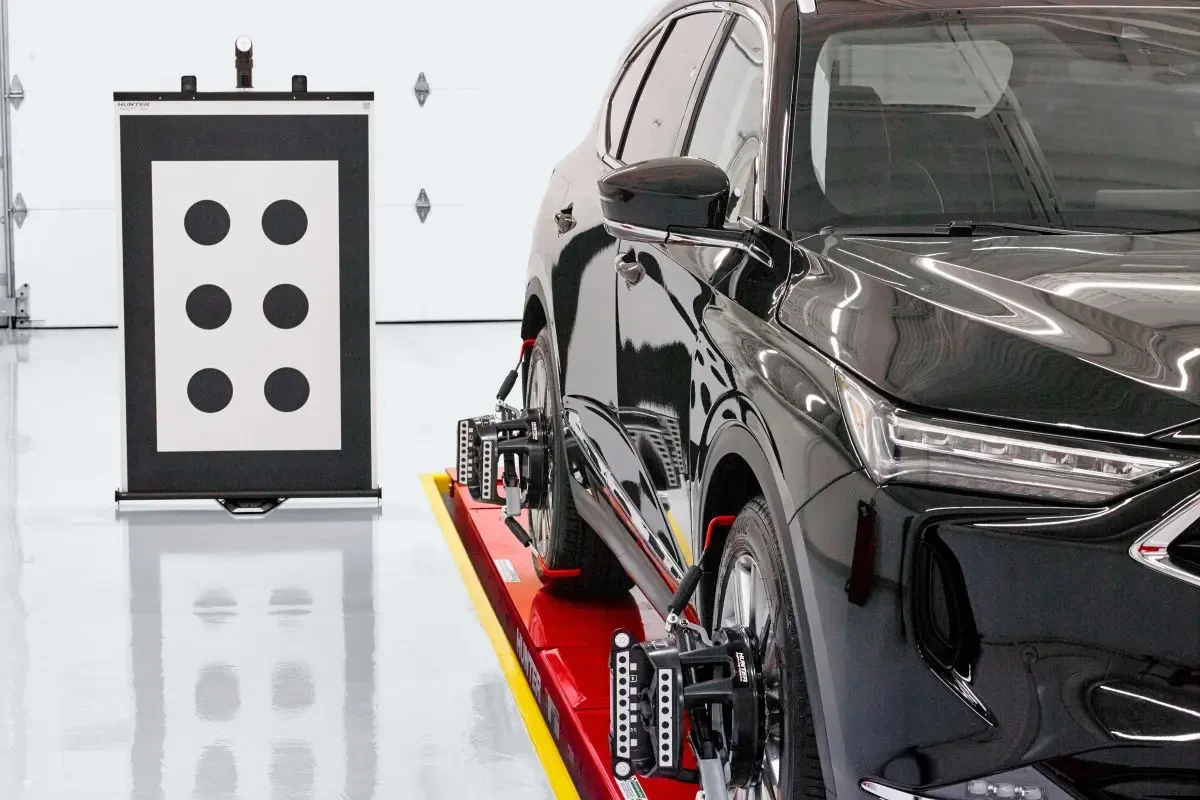
ADAS calibration is exacting work. The systems your technician calibrates govern how a vehicle sees and responds to the road, and they only do their job if the calibration behind them is right. The tolerances are tight, the margin for error is small, and when something is off, the consequences tend to show up not in the bay but later, on the road.
That's what makes the equipment question matter. When you invest in calibration capability, you're trusting that tool to hold the line on work that has to be exact, and the difference between equipment that clears that bar and equipment that doesn't is hard to see in a sales demo.
Official OEM approval is one way to know before you buy. Think of it like a professional credential. A good electrician does good work whether or not a certificate hangs on the wall, but when an authority you trust has vetted that person and put its name behind them, you know the work will meet the standard before they walk in the door. Approval works the same way. It's a manufacturer's own validation that a piece of equipment meets its requirements, confirmed before the tool ever touches a customer's vehicle.
The Difference Between Rules and Interpretation
OEM calibration requirements aren't guidance to approximate. They're specifications. The manufacturer defines what a correct calibration is down to the tolerance, and that definition doesn't bend to how busy the bay is or how confident the tech feels. Either the calibration meets it, or it doesn't.
Approval carries weight because those requirements are so exact. When a manufacturer approves a tool, it has verified that the equipment meets its standard, tested against the OEM's own procedures rather than the equipment maker's word for it. The rules are the rules, and approval is the manufacturer confirming the tool was built to them.
For your shop, that confirmation matters because the work leaves no room for close enough. Equipment carrying an OEM's approval has already been checked against the same standard you're on the hook to meet.
Approval Is the Gold Standard, and It Is Earned
Official OEM approval qualifies equipment as an endorsed solution for warranty work and for sale through dealer programs. That recognition is part of why you can rely on it. It isn't a label the equipment maker gets to hand itself.
It's called the gold standard because it's hard to reach. Approval usually comes only after a long, rigorous process of testing, evaluation, and documentation with the manufacturer, often a full team and a year or more of work. A manufacturer doesn't put its name behind equipment it hasn't satisfied itself about.
That's what makes an approval matter to you. No shop can put a calibration tool through a manufacturer's own testing. When an OEM has done that work and stood behind the result, you inherit a level of assurance you could never generate on your own.
The Equipment Keeps the Work Honest
Approval tells you a tool meets the standard. Strong equipment earns that approval by holding the technician to the standard while the work is underway, not by grading the result once it's over.
Consider what the job asks when it's done strictly to the letter. Placing the targets for a single forward-facing camera by hand, using a tape measure and plumb line to fix each one, can run to roughly 25 minutes on the shop floor. Every measurement in that stretch is a chance for a small slip, and a target that is off can carry the calibration off with it.
That's the problem good equipment exists to solve. The better systems walk the technician through the sequence and check each placement as it's made. When a target lands wrong, the system flags it and makes the technician redo that step before it will move on, rather than pressing ahead on a bad reading. Some verify their own accuracy each morning, before any vehicle is calibrated, so the tool has proven itself before a customer's car depends on it.
Verification built in this way keeps a calibration from finishing before it's actually finished. What the technician ends up with reflects a job done right from the first step, not one that merely reached its last screen. It also leaves behind a detailed record of exactly how the repair was performed, the kind of documentation that lets a shop stand behind its work if the calibration is ever questioned.
Getting Paid, and the Reason That Matters More
All of this leads to two outcomes, one immediate and one that matters more.
The immediate one is commercial. A calibration that's complete and provable gets you paid faster and with less friction, because thorough documentation leaves little to dispute. Clean records move the way well-documented work always does, without the back-and-forth that slows a repair down.
The one that matters more belongs to your customer. A calibration that isn't right leaves a safety system that can't fully do its job, on a vehicle someone drives every day. Strong equipment serves both ends at once. The same rigor that produces a clean, provable repair is the rigor that sends your customer home with systems that work the way they were designed to.
What Sets Strong ADAS Equipment Apart
A few things are worth looking for when you evaluate a calibration system.
- OEM approval is a manufacturer's own validation that the equipment meets its bar, specific to each nameplate. It's a strong signal in the equipment's favor, and worth checking against the vehicles you see most.
- Verification built into the process sets the better systems apart, guiding the work and confirming each step as it happens rather than only checking the result at the end.
- A record you can stand behind, detailed enough to remove doubt about how the work was done, is what defends the repair if it's ever questioned.
- A growing track record of approvals reflects a manufacturer investing to keep pace with where the work is heading.
The Standard Only Gets Higher From Here
More vehicles arrive in your bay every year with these systems on board, and manufacturers keep refining what a correct calibration requires. Equipment that keeps earning new approvals stays current with requirements that only grow more demanding.
One system on that curve is Hunter's Ultimate ADAS, which holds 11 OEM approvals, with more expected. For the current approval list, visit hunter.com/ultimate-adas or contact a regional Hunter representative.