

The United States and Canada are negotiating over U.S. duties on Canadian steel and vehicles, but a Canadian official familiar with the discussions told Reuters on Oct. 28 that the talks have produced little so far. No agreement has removed President Donald Trump’s threat to impose a 50% rate on Canadian vehicles and auto parts beginning Jan. 1, 2027, according to Insurance Business.
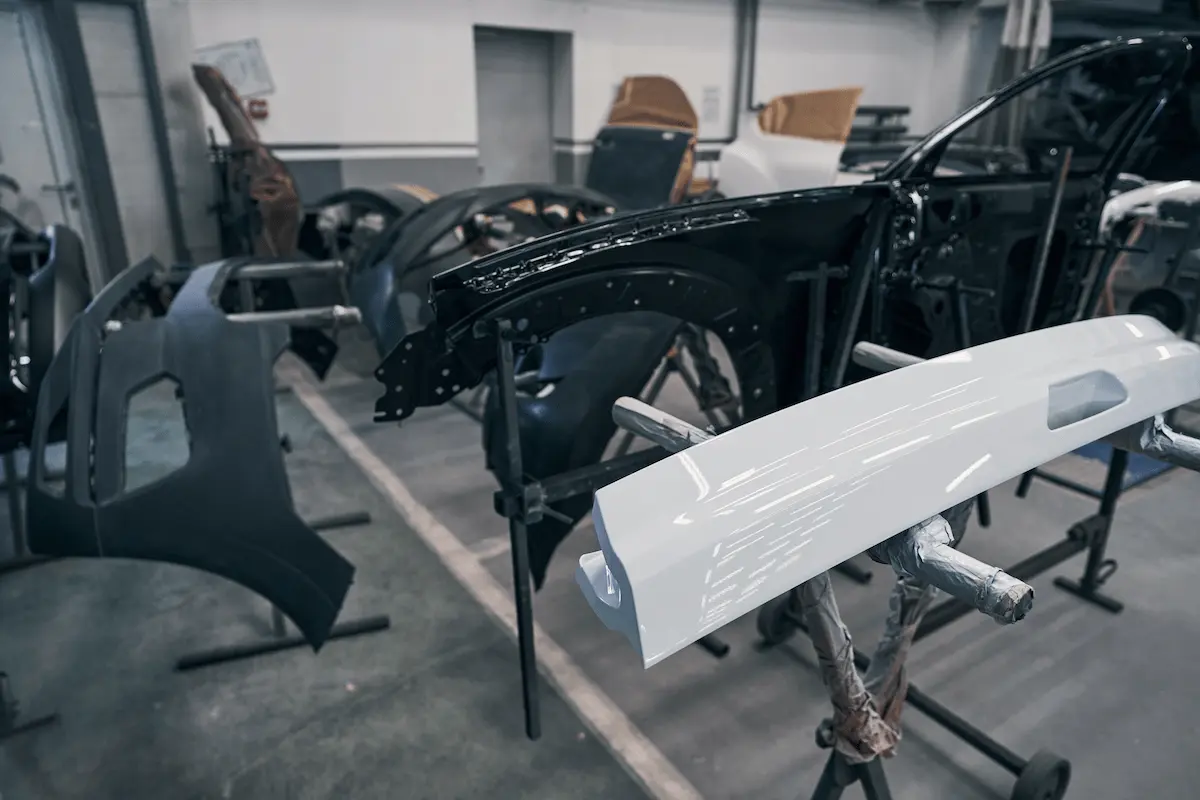
Collision repair shops that source OEM and certified aftermarket body parts from Canada and Mexico already face uncertainty over tariff treatment after the U.S. declined to renew the U.S.-Mexico-Canada Agreement (USMCA) in its current form. PartsTrader has estimated that about 44% of OEM collision parts sold in the U.S. are made overseas and that tariffs already in place add about $100 to parts costs on a typical repair order.
Talks center on Section 232 duties
Two U.S. sources and four Canadian sources said the two governments are working toward a deal, Reuters reported in an Oct. 26 story. At issue are Section 232 duties, a set of U.S. tariffs that includes rates of up to 50% on Canadian steel and 25% on autos.
Since the Commerce Department oversees those duties, Commerce Secretary Howard Lutnick, rather than the U.S. trade representative’s office, is central to the talks, sources in both countries told Reuters. One source said Lutnick and Dominic LeBlanc, Canada’s minister responsible for Canada-U.S. trade, have spoken often recently.
“Canada remains in constructive dialogue with our U.S. counterparts on a range of priorities,” a spokesperson for LeBlanc said in a statement to Reuters.
Canadian Prime Minister Mark Carney said there had been “a slight intensification” in the talks. “To the extent any progress has been made, it’s because the US is coming closer to our position,” Carney told reporters, according to Reuters.
A Canadian industry source told Reuters that any agreement would likely be limited in scope. “If it happens, it’ll happen fast. But my sense is it’ll be a narrowed deal, if it even happens,” the source said.
Talks continue ahead of midterms
“While discussions have continued, there has been limited progress,” the Canadian official told Reuters on Oct. 28, speaking on condition of anonymity.
Carney said the same day that Canada is prepared to sign a deal that benefits both countries. “If those deals present themselves, we will pursue them, but we’re not at that position right now,” he said, according to Reuters.
A U.S. government official described the talks as significant and ongoing, including discussions between Lutnick and LeBlanc. The White House said Lutnick and U.S. Trade Representative Jamieson Greer have each held recent discussions with Canadian officials, Reuters reported.
The negotiations are happening before the Nov. 3 midterm elections, and some experts have said the administration could be less open to trade concessions for Canada after the vote, according to Reuters. At an Oct. 25 political rally, Trump predicted a resolution “soon” without offering details.
Honda warns against January increase
Jennifer Thomas, senior vice president of corporate affairs for American Honda Motor Co., addressed the pending increase at the Reuters Automotive USA conference in Detroit on Oct. 27, Reuters reported.
“I am cautiously optimistic that cooler heads will prevail, and we will avoid that January 1 doubling of the tariffs, because that really would be catastrophic just for the entire industry,” Thomas said.
Thomas also called for keeping the three-country trade framework among the U.S., Canada, and Mexico. “We need that trilateral agreement to stay in place in order for the US industry to be competitive. It’s integral to our success,” she said.
Greer has said some tariffs would likely remain on vehicles built in Mexico and Canada, according to Reuters. In its talks with Mexico, the U.S. has pressed for a requirement that half the content of every North American-built vehicle come from the U.S., people familiar with those negotiations told Reuters.
How the January increase took shape
Disagreements including tariff relief for medium- and heavy-duty vehicles derailed U.S.-Canada negotiations in August, according to Reuters. Trump then threatened the 50% rate on Canadian vehicles and auto parts, Insurance Business reported.
Canada’s counter-tariffs took effect Sept. 8, raising its surtax on U.S. steel and aluminum from 25% to 50%, according to Norton Rose Fulbright and Buckland Customs.
The U.S. decision on the USMCA came at the agreement’s mandatory six-year joint review on July 1. Earlier, at a February 2025 CIECA webinar, PartsTrader’s Greg Horn said a proposed 25% tariff on goods from Mexico and Canada could increase OEM parts prices by $100 to $150 per claim. Mitchell’s Q2 2026 Plugged-In report cautioned that tariffs, the USMCA review, and broader trade and geopolitical conditions could again drive up replacement part prices and affect availability.







Lisa McArdle