



Things are tough all over.
Well … not everywhere.
Collision repair operations in several states — Washington, Illinois, Ohio, South Carolina, New York, Texas — are finding ways to expand their businesses in an industry awash with fewer repairs, amid a tech shortage.
They add locations after not doing so for decades, give new and more square footage to solve current logistical nightmares, or make a play for new business while maintaining their regional personality with no kvetching about business troubles.
One reason is that the small local MSO doesn’t really compete in a single “collision industry.” What matters is your place. So a business not now playing in Peoria collision repair could be an off-off Broadway smash hit, pun accepted.
A second factor involves a USP — unique selling proposition — relative to local competition: specializing in or adding certain vehicles or practices: German imports, customizing and accessories, big vans requiring taller paint booths, for instance.
Third? Maybe you just have to.
A river runs through it
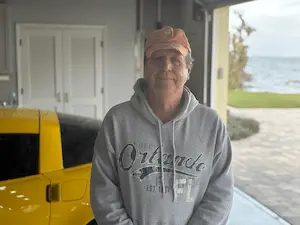
In 1991, Ryan Mathews started working at Mathews Auto Body in Kennewick, Wash., the shop his dad had opened 10 years before. In 2014, he bought it. This past November, 43 years after its doors opened, the collision repair house added a second location in Pasco.
“My main reason is to stay competitive with MSOs that plant their feet as many places as they like,” he said.
His two shops are across the Columbia River from each other, and a million miles apart.
“In Kennewick, where we’ve been forever, it’s older, so the parking is not great,” Mathews said. He’s also in seven buildings there, spanning a four-lane road. Pasco’s is 9,000 gleaming square feet in an autoplex. And it is “dead-center, high-traffic” in the newer, growing city itself and compared to competitor shops.
Pasco’s paint booth is “massive, 30 feet long and 12 feet high. We’ve always had to turn away larger vans” from Kennewick’s nine-foot booth. A new MoonWalk system improves efficiency and reduces waste.
Two locations also work better for insurance company geo-locators.
The move actually mirrors what his dad did at one point: moving from a sparser area into newer development.
“I don’t know that I would’ve done this anywhere but here,” Mathews said. He heard of the deal from a former painter at his shop who’d gone into commercial real estate.
Mathews Auto Body employs about 30, and when he decided to add the second site, they were working about five weeks out.
“Be careful what you wish for,” Mathews chuckled. As the $700,000 project began, the slowdown had as well, and backlog was down to two weeks, tops. He credits a fair bit of divine serendipity along the way: “Things that happened that shouldn’t have happened.”
The shop has 2,000 Google and Carwise reviews combined, averaging 4.9 across both. About 200 Facebook evaluations are 5/5. It has few DRPs, 11 OEM certifications, along with specialty work in Ford aluminum.
“My business model is different,” Matthews said. A local profile said that he “personally checks each car that leaves the shop [and] every customer gets his cellphone number when they leave in case they have any issues.”‘People know they can talk to someone’
“We’re blowing out the seams here,” said Peter Petruzzelli, who owns St Charles Collision Experts in northern Illinois, another dad-founded business that’s been in his family for three decades and counting.
“We’re constantly moving cars around. If a car’s getting detailed, we have to ask the detailer to move; if a car needs painting, we gotta move two cars.”
The old shop has 5,000 square feet. The new one is 8,000, on an acre of land in a newer business park. He’s buying it and building from scratch with dedicated areas for different business activities, from check-in to parts.
“I’m setting it up perfectly,” he said. “Ample parking, tow-ins … a secure area for storage, with a pretty decent fence and motorized gate.” The park closes at night and has a security system with cameras.
He’s moving, but not far.
“It’s less than a mile away, a half-mile away,” he told Autobody News. “People won’t have to find you [after a move], that’s one of my big things. We have a reputation and have to stay in the area.”
The shop has seven employees, works on about 60 cars a month. One DRP supplies 60% of business; overall he gets 90% from insurance.
“It’s not necessarily to add business, but it will allow me to do that,” he said. “All the possibilities,” Petruzzelli added, but atop them all is the strength of collision repair — ironic given this “down” market.
“Any industry has its ups and downs, [but] I feel the industry is here to stay; there’s always going to be cars that need repairs,” he said. “If I keep up with the times, the technology, things of that nature, in times of AI, this is a job that’s secure.”
He’s supporting the trades — “people who work with their hands, we’re going to be something; we’re here to stay,” he said — and his customers.
“Treat everyone as if they were my own family, probably better if you ask them,” Petruzzelli said. “Bend over backwards for them, people knowing they can talk to someone,” he said, at one of the busier area shops.
“I try, that’s how.”
A thousand points of collision repair
These aren’t isolated cases.
Or rather, in a sense they are, but there are thousands of them.In November, a South Carolina operator with two locations in Charleston sought zoning changes in Goose Creek, 18 miles away, for a third shop, next to a Classic Collision. It focuses on fixing German imports.
- A family-owned dealership group in Ohio (four collision centers serving nine of its own stores and four other dealers) is tapping the decline in collision centers at car sellers and looking to grow.
- A regional MSO in and around Albany and upstate New York went from one location to five through the aftermath of the 2008 real estate meltdown and during COVID, and has since added two more sites.
- An Austin, Texas owner fixes 1) complicated, costly cars in eat-off-the-polished-floor shops, 2) Amazon vans, and 3) opportunistically buys land where residential development is heading — as Wayne Gretzky famously advised, skating to where the puck is going.
MSOs, of course, keep going regardless of tumbleweed-and-crickets dynamics. Maybe they buy fewer shops, but they still open them — Classic Collision in Texas, Caliber Collision in Maryland; ProColor Collision for its first, also in South Carolina.
Shops look for “friction” and “pain points”in customers because those are opportunities to serve and succeed. Nearly anyone who’s suffered will say, seriously and straight-faced, it was their time of greatest growth.
Often, what independents and regionals are doing is well within reach of anyone who recognizes that a down market is an upmarket for someone else. After all, aren’t we supposed to buy low and sell high? Don’t independents claim they do better work than the consolidator up the street? Do they believe it?
Better and worse than ‘carmaggedon’
Believe it. Business is market-specific — and more than that, owner-specific.
Ryan Mathews, for one, made his move to increase competition with larger operators who get the insurance business steered to them. To stay competitive and not back off, receding into the shadowy murk.
A few years ago, there was widespread talk during COVID of a “retail apocalypse.” Malls were doomed, in-person shopping dead. In reality, the middle of retail struggled while businesses at either end of the spectrum survived where customers had to shop (or wanted to).
As comedian Conan O’Brien put it, “There are few things in life more liberating than having your worst fear realized.” Through disappointment comes clarity; with clarity comes conviction and originality.
In that sense, it was an apocalypse only in the literal meaning of the word: a revelation. It revealed who had a strategy for their particular market and the resolve to execute it.
Turns out there is an Armageddon, too, but in its literal sense: a decisive confrontation. A crisis, we might call it, and a crisis is simply a moment of decision.It’s a big one, but that’s all it is.

Paul Hughes