


This article is part five in a series on IBIS 2026.
In a presentation he described as “a little controversial and provocative,” futurist Steve Greenfield provided insight into what the future might hold for collision repairers during the recent IBIS USA 2026 conference in Scottsdale, Ariz.
Greenfield, a general partner at Automotive Ventures and author of two books "The Future of Mobility" and "The Future of Automotive Retail," discussed "what's front and center for the industry changemakers" and future trends to anticipate. These included increasing vehicle complexity, the possible entry of Chinese vehicles to the U.S. market, the rise of autonomous vehicles, and artificial intelligence (AI).
Vehicles Are Getting Harder — and Costlier — to Repair
Greenfield pointed out how much automotive technology has changed in just a decade. “The complexity of cars continues to increase and there's no slowing this down,” he said.
According to data Greenfield shared from PwC (Statista), automotive electronics are expected to be half the cost of building a car by 2030. As a result, vehicle repairs are increasingly becoming more complicated.
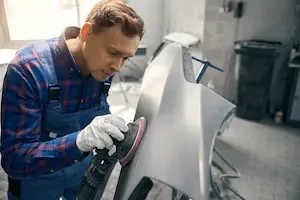
Those who plan to work on the sophisticated cars of the future, according to Greenfield, will need technicians with the right skills.
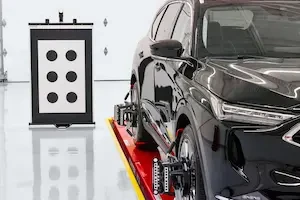
Specialized tooling will also be required as parts and vehicle construction become more complex.
To demonstrate the changes taking place in vehicle construction, Greenfield shared a slide from Mitchell International showing the differences between a 2017 and 2018 Toyota Camry front bumper assembly. The 2018 vehicle has twice the number of parts, which are double the cost to replace.
While some manufacturers are increasing the number of parts in vehicles, others are moving toward gigacasting or megacasting manufacturing, where die-casting machines cast huge, single-piece aluminum structural components instead of welding together dozens of smaller, separate parts. Greenfield cited the earlier-generation Tesla Model 3 with 150 individual components of metal compared to a recent Model 3 with only three.
“Fewer metal pieces also means fewer welds,” he explained. “Tesla claims its megacast model Y cuts more than 1,600 welds out of the production process.”
With the increasing number of electronics in vehicles, Greenfield noted a rise in collision repair inflation since the start of the COVID-19 pandemic. According to data from Bloomberg and the Bureau of Labor Statistics that he cited, vehicle repair costs have increased by nearly 50% since the pandemic began, far exceeding general inflation. Greenfield cited a Rivian R1T repair bill of $42,000 after the EV’s rear bumper was replaced.
“We are moving quickly towards vehicles that are not repairable,” he said.
Higher repair costs are driving up insurance rates, which Greenfield said have surged over the last two years.
In response, automakers like Tesla are bundling basic car insurance into the vehicle’s purchase price. At the same time, some insurers are not covering certain models.
“OEMs are going to have no choice but to come in and subsidize the insuring of these vehicles overall,” said Greenfield. “I haven't heard of this yet, but I suspect this will all play out in the next couple of years.”
Chinese EVs Could Reshape the U.S. Market and the Collision Industry
One year ago, at the Autopromotec show in Italy, Greenfield described the predicted growth of EV market share, which was expected to slow in the United States before accelerating in the following years.
 Futurist Steve Greenfield outlined the top trends collision repairers should anticipate at IBIS USA 2026.“We went from probably 12% EV penetration of new cars down to currently about 6%, which seems to be the natural adoption rate right now without tax incentives from the government and the OEMs,” he explained.
While consumer demand for EVs is currently low, Greenfield speculated that, long term, they will become the dominant drivetrain.
Meanwhile, China is competing with legacy automakers and boosting EV production. The share of Chinese car production has risen from 1% to 39% over the past 20 years, according to Bloomberg and the International Organization of Motor Vehicle Manufacturers/BofA Global Research.
“The Chinese are the largest new car market in the world,” said Greenfield, who shared that production costs are much lower in China. In addition, where a legacy OEM typically moves from design to production in four years, China completes that cycle in 16 months.
At the same time, according to Global Data and The New York Times, China’s car production capacity has risen faster than sales.
“They're at about 24 million new cars sold domestically within China,” said Greenfield. However, they can produce 45 million.
“There's a very perverse incentive for the Chinese to be exporting these cars as aggressively as possible,” he noted. “Even if there are tariffs, they can be much more profitable with an exported car than with a domestic sale.” The BYD Seagull, for example, sells for $8,000 and the Xiaomi YU7 costs $35,000.
“The Chinese are slowly but surely taking market share from the dealers overall,” Greenfield said. “The consumers are benefiting because they're getting good quality cars at a low price.”
With likely impacts to the U.S. fleet and ultimately to the collision industry, he contended that the U.S. will need to navigate through the geopolitical issues with the Chinese over the next 18 months to possibly bring these vehicles into the country.
“We're already hearing in the press some indication that some of the legacy automakers may be open to bringing the Chinese in,” he commented.
Self-Driving Cars Are Coming
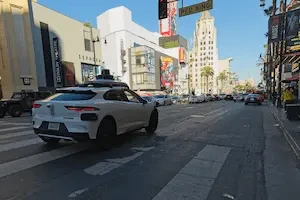
According to 2013 research from Morgan Stanley, all new cars were expected to be fully autonomous by 2026. While this obviously has not occurred, Goldman Sachs forecasted last year the growth of autonomous vehicle penetration in major economies. According to their company data, by 2040, adoption will be 90% in China, 79% in Europe, 73% in Japan, and 65% in the US.
If autonomous vehicles prove safer than human drivers and are widely adopted, as Greenfield believes will be the case, the rate of accidents will drop, affecting the collision industry. The shift would also disrupt vehicle and component manufacturers, auto insurers, health care professionals, personal car ownership, parking, trucking, and ridesharing.
AI Is Changing How Shops Find Customers
Only a short time ago, Internet users depended on search engines like Google for information. With the increasing use of AI, that is changing. Whereas traditional AI analyzes data, generative AI, such as ChatGPT and Google Gemini, generates responses according to a user’s prompts.
“There are all kinds of opportunities around AI,” shared Greenfield. “It's disruptive, but equally, there are all kinds of opportunities for all of us to find aggressive use cases to benefit from AI.”
He noted the massive adoption of ChatGPT, which is being used weekly by almost a billion users worldwide.
Greenfield encouraged the industry to start replacing some Google searches with ChatGPT and comparing the results. “This is such an intuitive technology… It's being adopted far quicker than any other technology in the past.”
The Google search engine has led market share over the past few years by 90.7%. With AI chatbots and other virtual agents, Gartner predicted two years ago that search engine volume would drop 25% by 2026.
With Google placing AI overviews at the top of the page, Greenfield said users are less likely to click on other links.
“We've gone from search engine optimization, where you might have had a 1 in 10 chance of showing up on a link on the home page of Google, to AI engine optimization, where you get one chance,” he explained. He stressed the importance of following this trend and determining how the business will acquire traffic in the future.
“In many cases, people aren't going to find your link on that page if you're not optimized to show up in that AI overview at the top of the Google bar,” he said.
Currently, about 90% of ChatGPT subscribers are using the application for free. Greenfield forecasted there will be pressure for ChatGPT to monetize.
In one scenario, he said ChatGPT may adopt an e-commerce model, recommending a body shop and taking a percentage of the repair revenue.
“We may find that your bots are negotiating with my bot and you never actually get to have contact with the consumer at all,” he said. “That could be exciting for you, or it could be scary and it should probably be a bit of each.”
With the increasing usage of AI applications, many collision repair businesses are finding that the work done by employees who sit in front of a computer is becoming automated. While this removes much of the mundane, repetitive work, it may mean some employees are no longer needed.
A similar situation is occurring with call centers. Gartner predicted that by 2026, conversational AI will reduce contact center agent labor costs by $80 billion globally. “Call centers won't exist in five years,” said Greenfield. “The whole idea of a call center will be very archaic.”
In response to the growth of AI, he advised repair shops to do the following:
- Monitor website traffic: Ensure the business shows up in the AI overview at the top of the page.
- Rethink how the business is using call centers: It has been shown that employees with AI companions drive up productivity.
- Utilize process automation: For employees who do repetitive tasks, encourage them to experiment with the free version of ChatGPT to automate business processes and develop best practices that can be shared with team members.
With the anticipated changes expected to take place, Greenfield acknowledged that cars are still going to get into accidents and will still need to be repaired. However, it will lead to overall complexity for those involved in repairing them.
Top 10 Trends to watch:
- Vehicle complexity will continue to increase
- Auto insurance premiums will likely continue to increase as vehicles become more complex to repair
- More shop consolidation will occur
- Big implications if China enters U.S. market
- EVs will inevitably dominate
- Autonomous vehicles are slow to penetrate but are disruptive when they do
- OEM/insurance conflicts continue
- OEM certification programs are gaining momentum and automakers will want to control the quality and the parts used in collision repair
- Increased focus by OEMs on captive insurance
- Greater competition for highly trained technicians







Stacey Phillips Ronak