


Each year, the International Bodyshop Industry Symposium (IBIS), held this year in Scottsdale, Ariz., brings together a diverse group of people from across the collision repair ecosystem. IBIS USA Moderator Sean Carey explained that conference organizers implemented a new format this year designed to promote connection and interaction. Attendees were encouraged to be “Changemakers” by challenging ideas, sharing insights, and learning from one another.
“We believe this is the beginning of the conversation,” said Carey.
The first session tackled the economic forces reshaping collision repair and what shop owners must do to adapt.
Primary Focus for Industry Changemakers
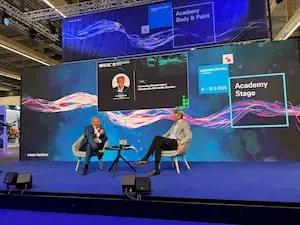
In the session, Rex Green, managing director and global co-head of Automotive Aftermarket Investment Banking at Jeffries, talked about “what's front and center for the industry changemakers.” He began his presentation by discussing what he called “the disappearing claims crisis of 2025.”
“The pressure on the industry from the decline in volume has forced repairers to look inward at their operations and inefficiencies,” said Green. “This focus on operations and cost control is healthy and perhaps overdue.”
Green predicted that the coming decades will be more focused on system rationalization and operating efficiency.
While he said the service-center-location land grab will likely continue and acquisitions will be important, the industry must face up to and prepare for a future of declining car counts.
“Fortunately, there is much the industry can do to address and respond to this future,” Green noted.
Although he predicted that the crisis would pass, the volume challenges in the industry will not.
“This is not a reason to panic,” Green said, advising the industry of the need to change their terminology and, most importantly, their mindset.
“The most important measure of volume in this industry is actually not how many cars we repair,” said Green. “It is how much collision work is being done and how much value is being added by that work.”
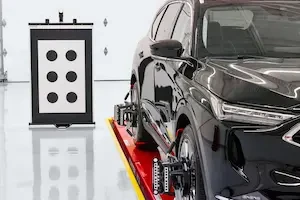
With each repair taking more time and requiring the application of increasingly expensive technology, it ultimately adds more value per car repair.
Green forecasted that the major drivers of repair work volume growth will be labor and calibrations. As a result, he recommended collision repair businesses follow Safelite’s model of tailoring services to cash pay.
The transformation from collision services to business services
As an investment banker, Green encouraged collision repair businesses to look at themselves as business service companies and learn from successful providers, such as Aramark food services and facilities management, Brinks home security, and Cintas corporate apparel.
“While few in the industry think of their business as being similar to washing the uniforms of hospitality workers, maybe they should,” he pointed out.
Green has found that outstanding business service companies have consistently demonstrated the ability to grow both top-line and margins. They also hold large market shares and lose few customers.
Leading “best in class” business service companies have the following in common:
- A maniacal commitment to operational excellence
- A realization that earnings growth from margin expansion is just as good as growth from unit expansion
- A relationship with customers that is almost unbreakable
Long-term future of collision repair
Green offered some thoughts on the future of collision repair. He said the long-standing tradition of vehicle owners deciding when and where to get their vehicles serviced will gradually wane.
“Changes in technology and consumer behavior are coinciding to create opportunities for new service models,” he explained. “These new models are B2B in their structure and will lead to better, lower costs, and more efficient service models.”
According to Green’s research, the future will bring substantial changes to how service providers are selected. “Digital networks will connect service agents with providers of multiple repair services,” he said.
As a result, he advised collision operators to evolve and become providers of a broader set of services. “Broadening the service offerings to adjust to the changing vehicle services environment will give the industry a long and prosperous future,” he shared.
Although Green noted how the industry has entered a period of opportunity, taking advantage of it will likely be a challenge. He predicted that consolidation will continue but more in the background.
In response, he said the industry must focus on transforming to an operating model that drives higher margins while also improving service delivery and customer satisfaction.
“The coming decline in accidents must be anticipated, embraced and planned for,” he emphasized. “The good news is that the strength and pace of change of the aftermarket will allow for this.”








Stacey Phillips Ronak