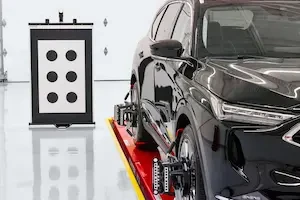
ADAS on newer vehicles, along with sensors and other onboard electronics, require more parts, more highly trained technicians, and added scans and calibrations, raising ADAS repair costs, according to a white paper dated September 2026 from the American Property Casualty Insurance Association (APCIA).
The paper is titled "A New Road Ahead for Auto Insurance: Safer Vehicles, Higher Claim Costs?" It found that the severity of paid vehicle damage claims, a category combining property damage liability and collision coverage, climbed 42.3% between 2020 and the four quarters ending in the third quarter of 2025. Claim frequency for the same coverages, measured per 100 vehicles insured for a full year, increased 1.4% over that period. APCIA drew those figures from the Fast Track Monitoring System through ISS Fast Track Plus.
"As vehicles become more complex, access to repair tools, parts, and data becomes increasingly critical to controlling costs," the paper states.
APCIA wrote that barriers to obtaining repair information, tools, and parts can reduce competition, slow repairs, and raise costs for consumers and insurers.
Repair and parts prices outpace premiums
APCIA tracked Bureau of Labor Statistics price indexes from June 2021 to June 2026, the paper shows. Over those five years, the producer price index for vehicle repair and maintenance climbed 34.4%, and the producer price index for auto parts, accessories, and tires rose 55.6%.
The producer price index for personal auto insurance increased 24.4% over the same stretch, while the consumer price index for used cars and trucks fell 7.8%. The paper said repair and vehicle replacement expenses, which it identifies as major contributors to claim costs, have stayed elevated even as broader inflation cools.
Fewer crashes, costlier repairs
APCIA wrote that ADAS is most effective at the extremes of crash severity, cutting the number of minor low-speed collisions as well as deaths. Citing outside research, the paper said automatic emergency braking has led to about 50% fewer front-to-rear crashes and about 56% fewer of those crashes involving injuries.
The paper said remaining crashes frequently cost more to repair because more repairs now involve replacing and recalibrating sensors. It also said the higher repair and calibration expenses of modern vehicles are keeping physical damage claim costs high.
"The policy implications are clear: safer vehicles do not automatically mean lower claims," the paper states. It also concludes that "ADAS is changing the profile of crashes more than it is reducing the underlying cost pressures on auto insurance."
Related research has examined ADAS repair costs and claim trends. An Aug. 11 analysis from the Insurance Institute for Highway Safety cited a Highway Loss Data Institute comparison of 2017-22 models that were alike except for a package of driver assistance systems. Severity of collision claims ran roughly 10% higher on the equipped vehicles, while their overall collision losses came in roughly 5% lower.
Enlyte's 2026 trends report, based on Mitchell estimating data, found calibration lines appeared on 12.1% of repair estimates in 2022 and on 34.7% last year. On estimates that included a calibration, the report put the average cost at $688 apiece.