

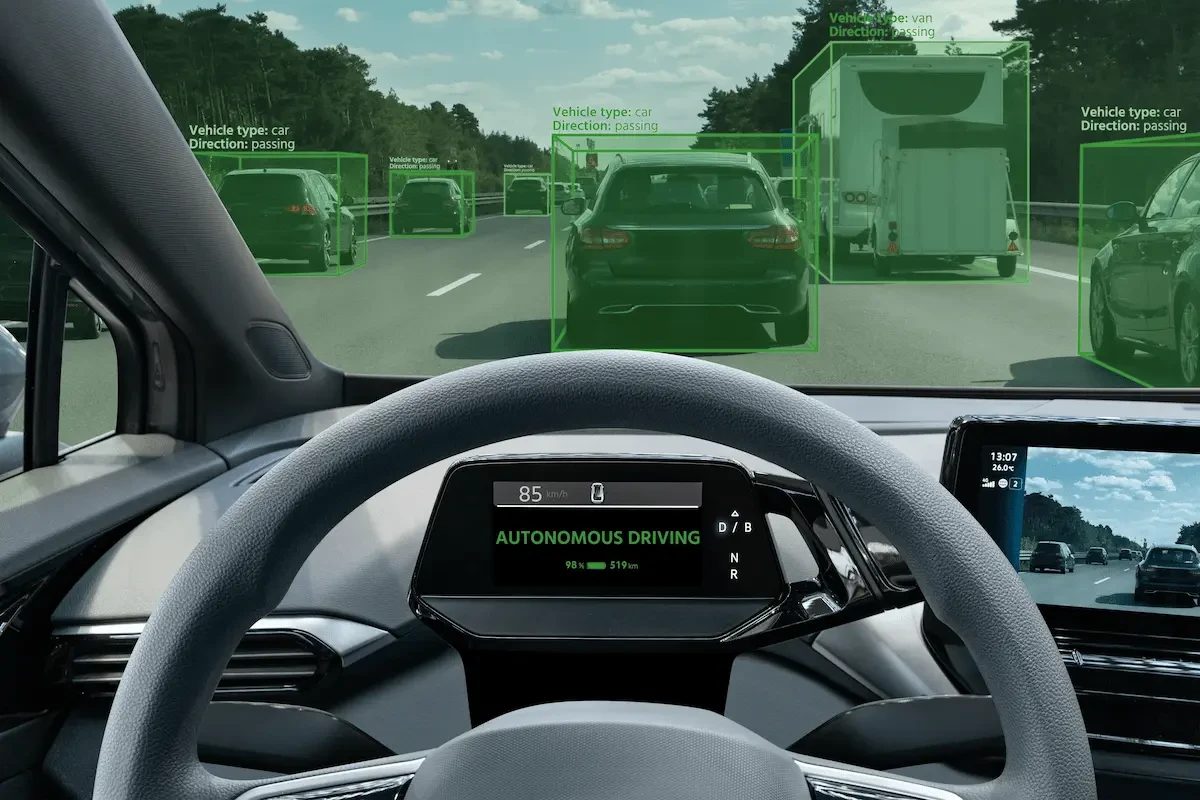
Thirty-four percent of U.S. consumers now own a vehicle with Level 2 or Level 3 driving automation, up from 12% in 2016, according to the 2026 Cox Automotive Autonomous Vehicle Study, released Sept. 28.
In the study's framework, a Level 2 vehicle corrects itself when it drifts from its lane and avoids front and rear collisions. A Level 3 vehicle can handle city or highway driving but still needs a human for unmarked roads or heavy congestion.
What Level 3 means for repair records
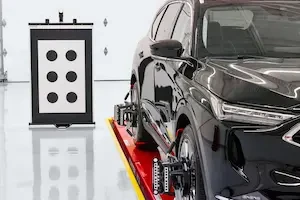
John Melendez of JDM Collision in Thornton, Ill., said in March that repair records on vehicles with Level 3 systems may face closer review. "If a vehicle was previously repaired, especially involving ADAS components, calibration, or structural areas, documentation could be scrutinized to determine whether the vehicle was returned to OEM specifications," he said. "Incomplete or vague documentation could easily shift liability toward the repairer."
If vehicles at every autonomy level were on the market, 57% of consumers said their next purchase would be Level 3 or above. That compares with 59% in 2016, Cox found. Cox reported that GM, Ford, BMW, Tesla, Nissan, Hyundai/Genesis, Rivian, and Lucid offer hands-free Level 2+ systems. It also reported that certified Level 3 systems are available only on flagship sedans from Mercedes and BMW.
"The auto industry has always had longer adoption curves for new technologies," said Vanessa Ton, senior manager of market and customer research at Cox Automotive, in the company's announcement. "Even hybrid vehicles, which have been available to U.S. consumers for more than 25 years, account for only about one in five new-vehicle sales today. For autonomous vehicles, safety concerns and high-profile incidents have slowed progress, but the growing acceptance of robotaxis seen in this year's study indicates that attitudes are clearly evolving."
Familiarity rises as Level 4 leads in appeal
Familiarity with autonomous vehicle technology rose to 58% from 40% in 2016, the study found. In addition, 46% of respondents said they expect to see fully autonomous vehicles within their lifetimes, compared with 37% in 2021.
Level 4, in which the vehicle drives itself but a person can still take the wheel, ranked first in appeal. Twenty-eight percent chose it, compared with 30% in 2016. The share picking Level 5, a vehicle with no steering wheel or pedals, as most appealing fell to 10% from 17%.
Confidence in safety also declined at the higher levels. The share of respondents who said they would feel safe riding in a Level 3 vehicle dropped to 66% from 73% in 2016, according to the study. The share fell to 55% from 64% for Level 4 and to 38% from 47% for Level 5.
Robotaxi awareness outpaces use
Seventy percent of consumers nationally said they are aware of robotaxis, and 89% said so in cities where the services operate, Cox reported. Reported use was 18% nationally and 33% in those cities. Cox noted that Waymo says it gives roughly 2 million U.S. robotaxi rides a month.
Among people who have taken a robotaxi, 83% said the experience gave them a better view of autonomous vehicles. Among those who have not, 61% said the lack of a human driver makes them uneasy, the barrier they cited most, Cox reported. The study also found that 64% of respondents won't commit until autonomous vehicles are far safer than human drivers or have no accidents at all.






Lisa McArdle