


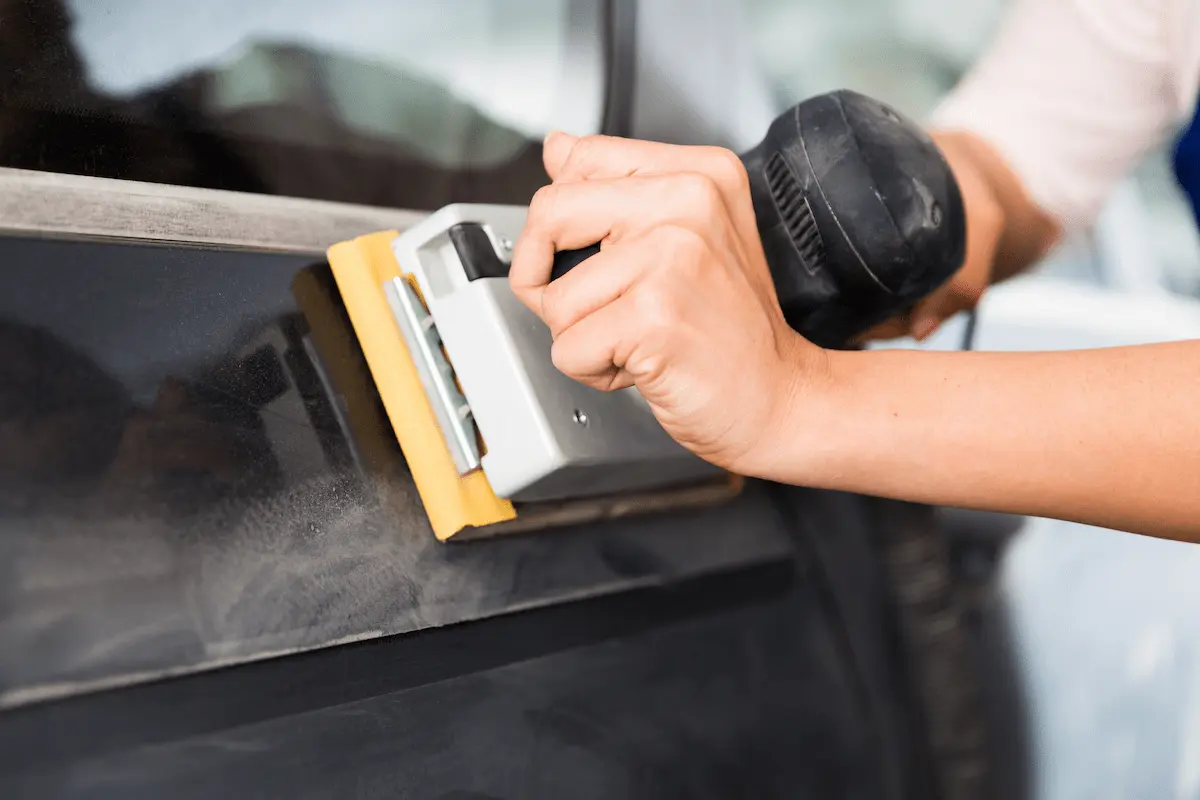
When Cassandra Thibeault went looking online for other women working as collision body technicians, she came up empty. So, she built what she couldn’t find.
Thibeault, a body technician in Manchester, Conn., who already posted about her work as Ctbodytech, launched Bodywomen in April 2025. The idea came together on an engagement trip to Arizona, sparked by her friend Connie Manjavinos, who started Girls Behind the Gun to showcase female refinishers. Manjavinos now runs a broader Instagram page, Theworkingclasswomen.
“I really liked that she had a niche for painters, so I started looking into what’s out there for female body techs, and I couldn’t find anything,” Thibeault said. “So I was like, ‘All right, well, here we go.’”
Going viral was never the point. “I just wanted someone to type in ‘female body technicians’ or ‘body women’ online, and something would be there.”
Charting her own way from prepper to body tech
Thibeault entered the industry in 2017. She attended Lincoln Tech but didn’t graduate — “I was not a star student in my life in general,” she admitted — though the training helped her land her first shop job, where she prepped, primed, handled parts, and detailed.
People kept telling her she’d become a painter. She wanted to be a body tech. The problem: No one around her had seen a woman do it, so no one knew how to guide her.
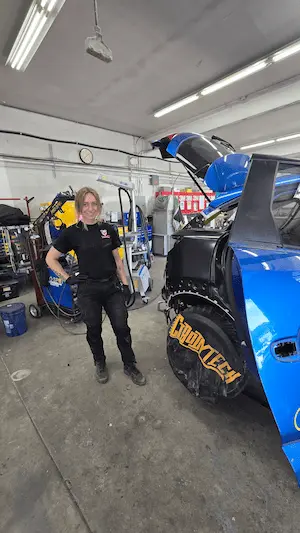
“I just got really kind of obsessed, and I didn’t pursue this goal gracefully. I made a lot of mistakes,” she said. “But I was really focused on this goal, and along the way I became what I consider to be the best version of me and the best technician I can be.”
She became a technician in 2022 and progressed quickly, crediting her mentor, now her husband, Alan Thibeault, who taught her to think like a collision technician: reversing damage, following procedures and advocating for proper repair processes. “Having a mentor is a huge, huge thing in this industry,” she said.
Notably, Thibeault doesn’t attribute her early struggles to gender. “I’ve always had a very fair experience in the industry. I don’t think I was treated poorly because I was a woman,” she said. “I think my experiences were based off the fact that I wasn’t ready to be a technician when I thought I was.”
Today she handles everything but paint: teardown, repair planning, the repair itself, priming, blocking, and reassembly. She usually has one larger structural job going, with smaller jobs on the side. And every shop, she’s learned, approaches repairs differently. “It is important to find the right shop for you,” she said. “You want to make sure you’re learning from the best that you can.”
Hard to enter, harder to stay
The women who find Bodywomen tend to describe the same thing: Collision repair is a challenging trade to break into, and an even more challenging one to stay in. What she hears is polarized. “I hear excellent experiences, but the bad ones are truly terrible,” she said. “There doesn’t seem to be a lot of middle ground.”
Thibeault has also made mental health part of the conversation, sharing openly (online and in person) that she lives with bipolar disorder. That openness draws private messages from both women and men describing their own situations: techs who wish they could take a break, or women struggling to stay at a shop because of what’s happening there.
“In the trades especially, it’s about being tough and pushing through to the next paycheck,” she said. Having felt excluded herself as a young adult, she wants the industry to meet differences “with curiosity and kindness instead of judgment.” As she put it, “Navigating being different is what lands people in the trades in the first place.”
Her aim is simple. “I love to let people know they are not alone,” she said, “and that accepting and celebrating psychological differences is important for a healthy workforce.”
The community reaches beyond the screen, too. Emma Chambers, a technician at Andy’s Auto Body who now helps moderate Bodywomen, was out roughly six weeks after knee surgery this year. Thibeault posted asking members to send her encouragement. “She’s truly one of the sweetest people I’ve gotten to know,” Chambers said.
What shop owners can do tomorrow
Owners have reached out to Thibeault asking how to get more women into their shops. Her answer: a clean, positive environment and zero tolerance for abusive behavior.
She also suggests opening the door wider in hiring. Adding “will train” or “will train, no experience” to a job posting really does encourage applicants, she said. So does outreach to local schools that tells female students directly: We are looking for you. We want to hire you.
Retention, in her view, isn’t complicated. “Many technicians love and have passion for the trade, and they just want to be treated with respect,” she said. “Say good job, and give a raise every year.”
Why she says now is the time to join collision repair
Thibeault’s message to women entering the trade is candid: There’s still no direct, fast path to becoming a body tech. Some MSOs now offer strong apprenticeship programs, and outside of those, a good mentor is essential. Beyond that, women should expect to forge their own way. She still hasn’t met another full-fledged female body tech while working in a shop.
But she’s bullish on the opportunity. “Right now is the most exciting time to be in collision,” she said, as advancing vehicle technology forces techs to adapt. “AI is not taking your job any time soon. Your unique skill set will come with a high-value price tag once you are trained.”
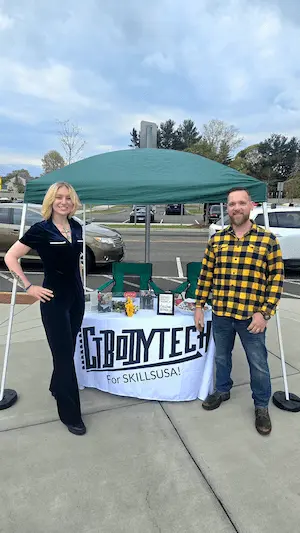
This year, she set out to show up in person, too, attending the SkillsUSA National Leadership & Skills Conference in Atlanta, along with career fairs and industry events.
“It’s definitely not easy,” she said. “But if you like feeling accomplished, it’s for you.”
Follow Cassandra Thibeault
Ctbodytech: @ctbodytech on Facebook, Instagram and YouTube
Bodywomen: @bodywomen on Facebook and Instagram



Leona Scott