
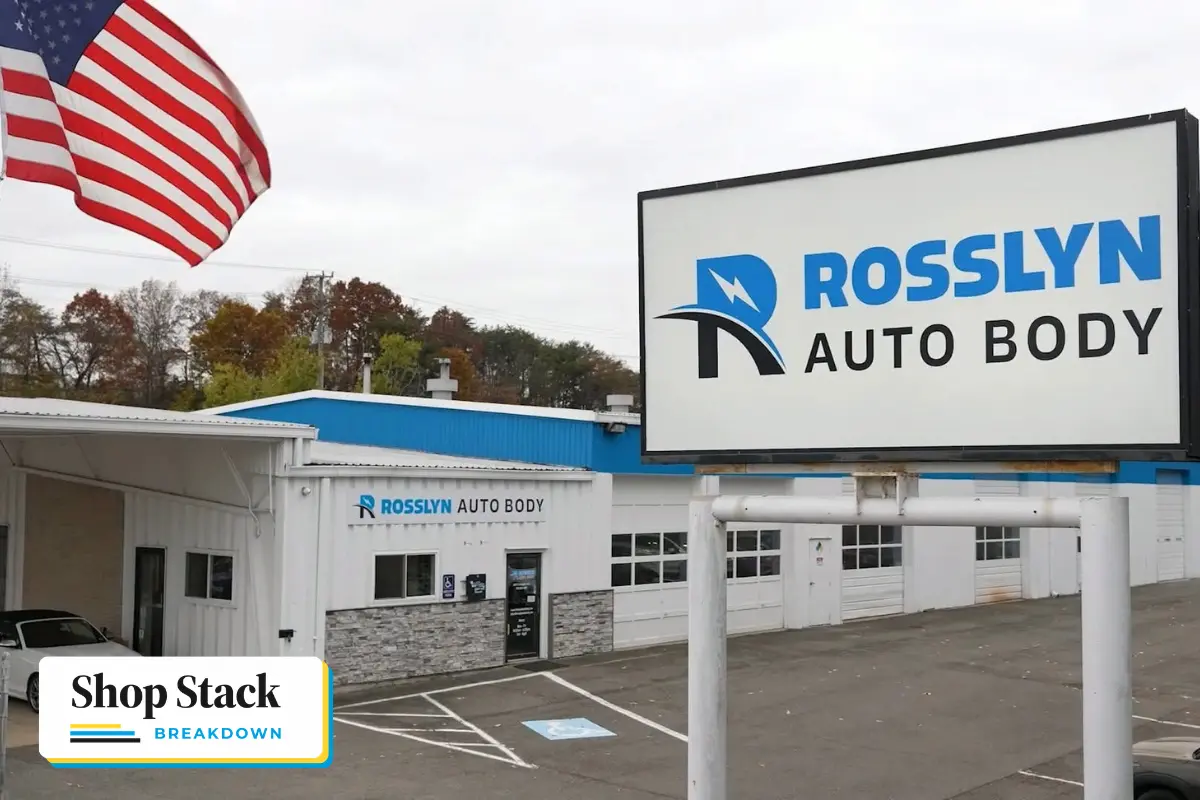
Kris Burton, owner and manager of Rosslyn Auto Body, runs a shop with nearly nine decades of history behind it.
Rosslyn opened in 1937 in Alexandria, Virginia, which Burton said is inside the Beltway, right outside Washington, D.C. Burton’s father, Steve, purchased the business in the early 1990s and stepped back in 2018, Burton said. Kris joined the shop during college, working in the front office.
The single-location, family-owned shop has 22 employees, and Burton described it as a consumer-focused, high-end OEM repair facility. Rosslyn has insurance contracts with Chubb and Pure.
The certifications shape nearly every equipment decision. Burton said he looks for tools that meet the requirements of several manufacturers rather than a single brand.
When the shop started pursuing certifications around 2015, he said, equipment requirements were more brand-specific. “Some of the manufacturers ... they’ll share certain types of equipment between a couple of them, so it’s been easier,” he said.
Rosslyn follows manufacturer safety guidance and uses OEM parts exclusively, ordering directly from the manufacturer with no aftermarket or used parts.
“There’s certain things that we don’t compromise on ... anything safety related,” Burton said, calling those commitments the shop’s “true norths.”
THE STACK
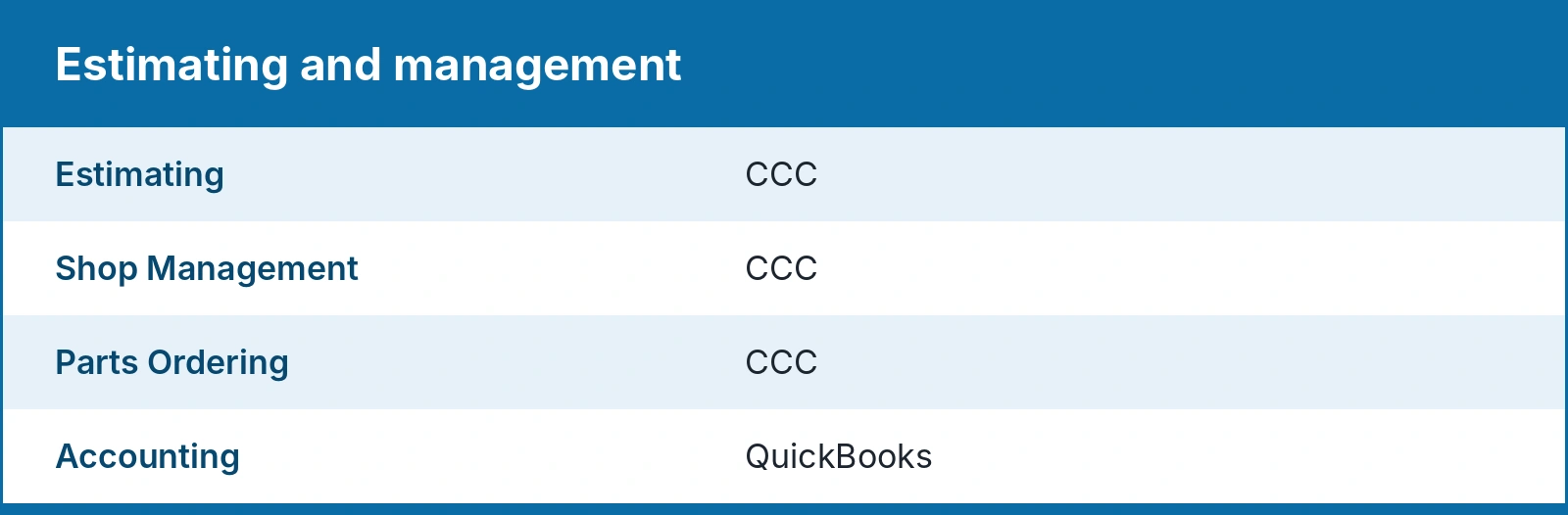
Because Rosslyn doesn’t do DRP work, Burton said, the shop doesn’t follow an insurer’s estimate. It keeps a copy of the carrier’s estimate for claim details.
“We’ll just write our own estimate, and then any differences we use Carmic to help us highlight any differences dollar wise or labor wise,” he said. From there, the shop begins the negotiation or rebuttal process with the carrier.
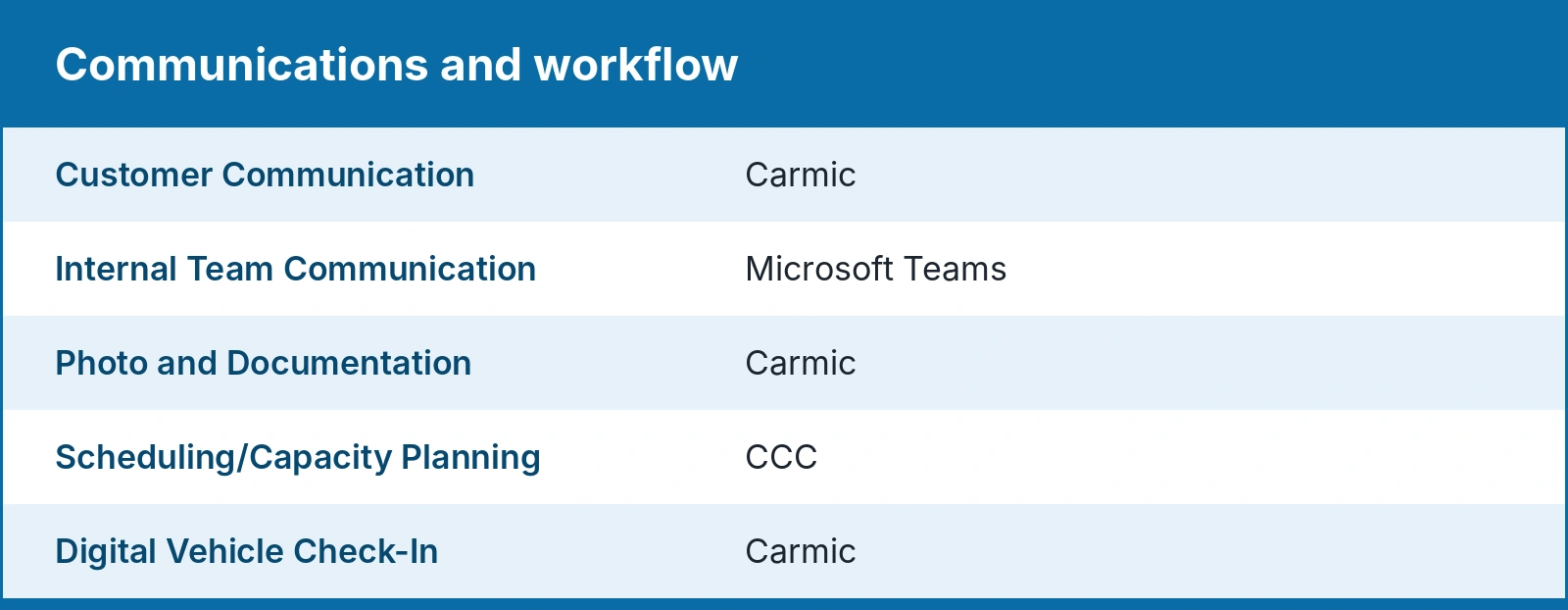
As Rosslyn took on more OEM certifications, Burton said, the shop needed more room to store repair procedures and documentation than its estimating system alone provided. Before Carmic, files were spread across Google Drive folders and a local server at the shop. Carmic gave Rosslyn a single place to keep OEM repair procedures.
“It was nicer to have it like you know online, mobile, on a phone, where a technician can also access it,” he said.
Carmic doesn’t handle parts ordering, but Burton said the shop uses it to manage parts internally.
Customer updates go out by text and email, and Burton said customers have increasingly gravitated toward text. “Everyone’s busy, right? And everyone’s got so many emails nowadays; it’s hard to keep track,” he said.
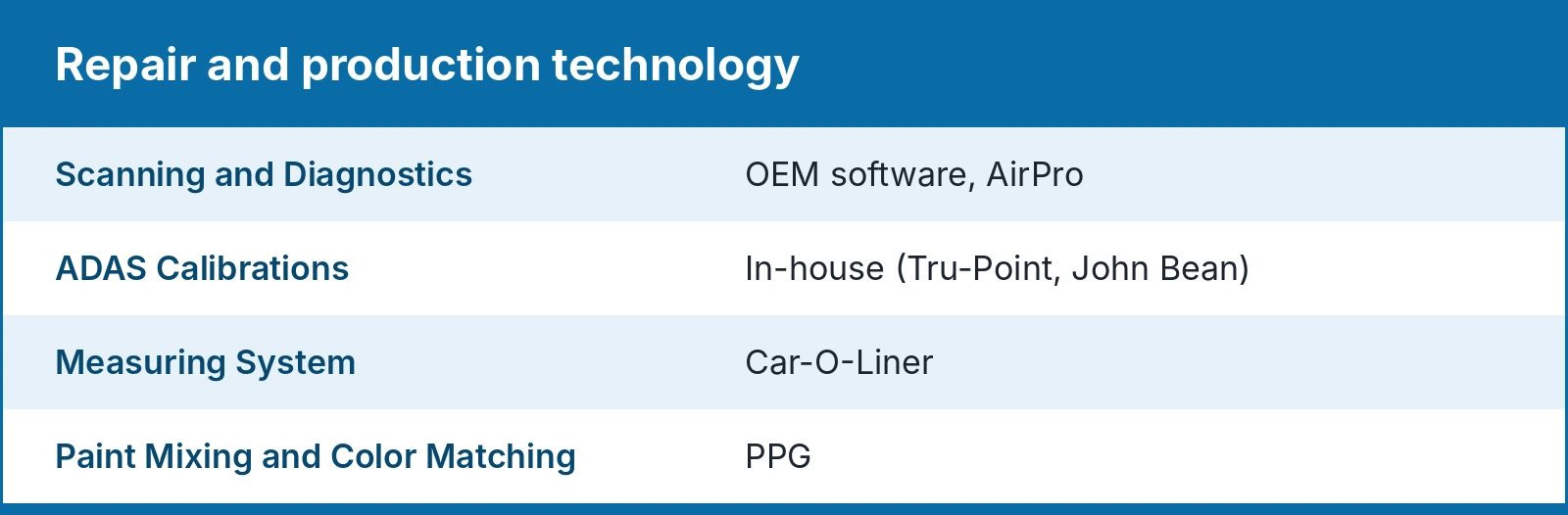
Burton said he decides which OEM scan software to buy based on how much of the shop’s business each brand represents. Rosslyn runs factory software for its highest-volume makes, including BMW, Audi, Rivian, Lucid, Tesla, and Volkswagen, and uses AirPro for vehicles it sees less often, such as GM and Honda models.
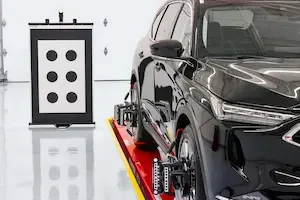
Calibrations started in-house with Tesla, when the shop earned that certification around 2016 or 2017. Rivian’s program later required John Bean calibration equipment, which Rosslyn purchased around 2021 or 2022. When Lucid required the same system, the shop added Lucid-specific targets and training.
The investment was significant. “We don’t sell cars, we just fix them, so we don’t have the means of a big dealer,” Burton said.
Training adds its own costs. Burton said one of the shop’s technicians, who is 21, has traveled across the country for OEM-specific ADAS training, including recent trips to California and Tennessee.
Still, Burton said bringing calibrations in-house has paid off in scheduling, quality, and turnaround, even if the return is hard to put a dollar figure on. “It is easier to have it readily available ... when it’s on your time as opposed to somebody else’s,” he said.
Rosslyn runs its repairs in a production-line setup, with disassembly in one area and body work in another, and different technicians handling each stage. Measuring starts at disassembly. The shop uses Car-O-Liner’s larger Vision system, which Burton said is approved by nearly every manufacturer, along with the company’s PointX measuring tool.
On the refinish side, Rosslyn has worked with PPG for about 20 years. Burton said the people matter even more than the product for a small shop, pointing to being able to “call somebody at 7:00 t night and have them answer.”
What technology could you not live without?
Burton’s first answer was simple: “A second computer screen."
On the equipment side, he pointed to in-house wheel alignment. Rosslyn pre-aligns every vehicle, and he said more than half end up needing an alignment after that check.
“This sounds pretty minimal, but being able to do wheel alignments in house ... has been like a game changer for us,” he said, adding that the shop uses its alignment machine more than its frame machine.
Before adding new equipment, Burton said he researches heavily, builds relationships with vendors, and often asks for a trial period before spending tens of thousands of dollars. “If someone’s that confident in their product, they should be able to let you demo it for a week or two,” he said.
Looking ahead, he’s interested in Hunter Engineering’s Ultimate ADAS, which he described as an all-in-one alignment and ADAS system, and plans to look at it at SEMA. He also said he likes Celette’s Naja measuring system and the company’s benches.
The stack changes, the priorities don’t
Rosslyn’s stack has grown alongside its certifications, from in-house Tesla calibrations a decade ago to John Bean equipment for Rivian and Lucid and a move to Carmic as the shop needed more capacity for OEM repair procedures. What hasn’t changed, Burton said, are the shop’s “true norths”: following what the manufacturer says on safety and using OEM parts 100% of the time.
Want to see your shop’s setup featured in Shop Stack Breakdown? Every edition profiles a collision repair shop and the technology behind its operation. Fill out our intake form and we will be in touch.

Lisa McArdle