


When a customer hands their keys to a body shop after an accident, they’re trusting that business to guide them through a process most of them rarely experience.
“That trust starts with the first conversation, and we earn it every time we follow through,” said Dan Carranza, founder of Accelerate Growth Partners and the executive producer of the Collision Next event.
One of the biggest gaps Carranza sees today is at the customer service representative (CSR) level. Shops that don’t educate customers and ask the right questions up front can lose the job. A lack of follow-up can impact CSI scores.
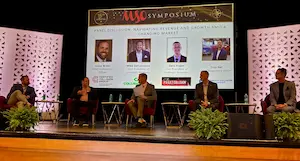
With many collision repair facilities facing these challenges, Carranza invited industry experts to discuss them during Collision Next in September.
“We wanted independent owners and regional MSO leaders to look at where work gets held up, which services make sense to bring in-house, and how their teams can give customers more confidence from the first call,” said Carranza. “The decisions leaders make inside the shop show up in what customers experience at every step of the repair.”
Strategies to increase throughput
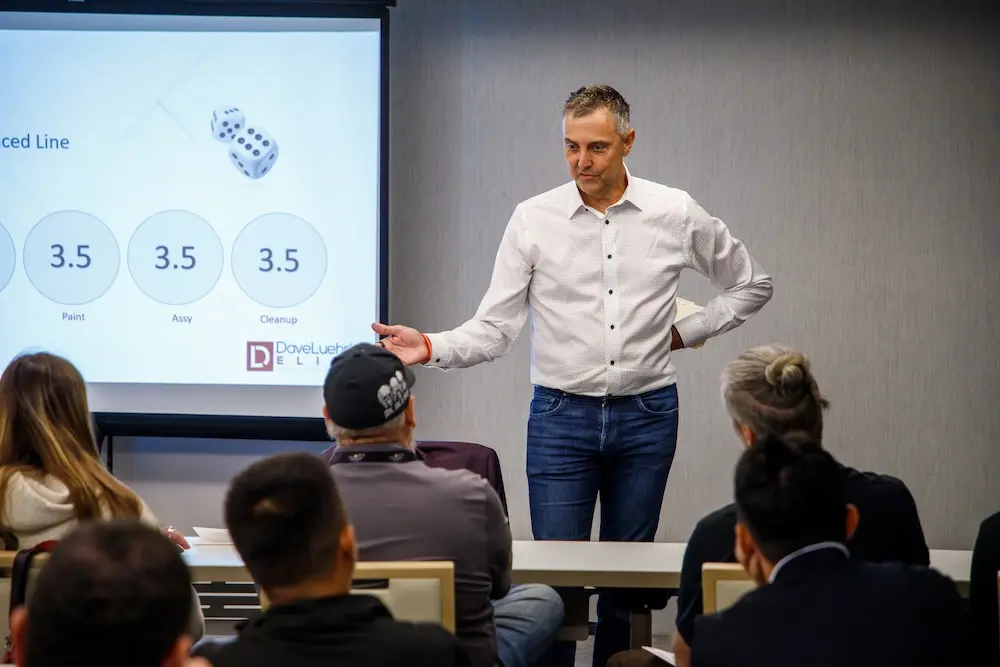
Dave Luehr, founder of Elite Body Shop Solutions, presented twice during the event and said Collision Next brought a forward-thinking, positive vibe the industry craves right now.
“Far too often, events have more suppliers than shop owners and managers,” he noted. “That was not the case at Collision Next; it was attended by many top shop operators in North America in addition to great supportive suppliers.”
During his breakout session, “More Throughput, Less Chaos,” Luehr challenged attendees to rethink their long-held beliefs around managing production. Participants played a dice game that demonstrated the deficiencies in lean manufacturing principles used in body shops.
Luehr then introduced a modern, high-performing alternative called Elite Velocity based on Theory of Constraints principles.
“By following these principles, businesses can improve throughput by 20% or more without adding any additional overhead or people,” he explained.
Elite Body Shop Solutions is offering a free service to help shops identify the biggest friction points in their businesses and address throughput. Email info@elitebodyshopsolutions.com.
On the second day of the event, Luehr shared insight on the Elite Velocity system during his presentation, “The Velocity Challenge: Why Shops That Flow Faster Will Win the Next Era of Collision Repair.”
“The world evolves because of great men and women who are willing to challenge the status quo and are often seen as ‘crazy,’” he said.
Luehr used the example of his own dream of eliminating the enormous and costly friction between repairers and insurers. He urged shops to focus on the operational inefficiencies within their businesses instead of only on circumstances beyond their control.
“You get more of what you focus on most,” he shared.
Luehr pointed out that vehicle technology, customers, and the workforce have evolved massively over the years, but operational admin and production processes have not.
“Shops get frustrated because they believe that working harder on perfecting the old system will help them when the real problem is they are using the wrong system!” he said. “Velocity is fundamentally a different and better system.”
Implementing outside-of-the-box thinking
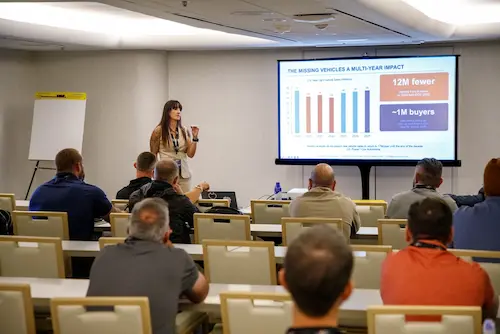
Erin Killcoyne-Solis, senior vice president of operations at Square One Systems, took a unique approach to leading her two breakout sessions, focusing on what the industry has experienced this year.
“Since a lot of it included topics being covered across the industry, I knew this wasn’t information that most of them hadn’t already seen this year,” she said.
With her background facilitating performance groups, Killcoyne-Solis decided to run the sessions in a similar format.
“I don’t have the magic bullet for claims being down or total losses being on the rise,” she said. “The best ideas and conversations come from these folks talking to each other.”
During her sessions, Killcoyne-Solis provided statistics and data to prompt conversations. This included discussions about where to find additional revenue, what is being done to ensure shops use OEM certifications to their advantage, and their vision for the business.
Attendees also discussed opportunities to expand their businesses. This included doing more mechanical work, bringing more sublet services in-house, and determining if the shop is equipped to calibrate.
“There are a lot more services within the automotive industry than just collision,” noted Killcoyne-Solis. “Outside-the-box thinking will carry shops forward into the future.”
Strengthening customer service
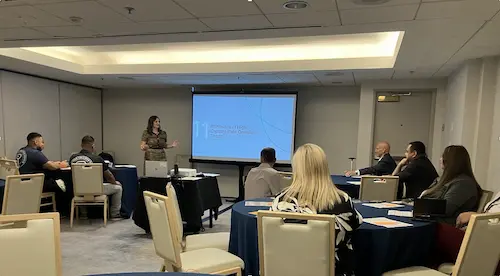
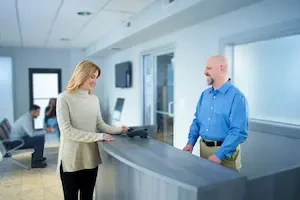
During an interactive session titled "The Customer Confidence Advantage: How Shops Win the Job Before Repairs Begin," Surventis Commercial Excellence Manager Susan Dooley challenged attendees to rethink what influences a customer's decision when they choose a collision repair facility.
While Dooley acknowledged the importance of repair quality, equipment, and certifications in a shop, she pointed out that consumers are increasingly looking at these as table stakes.
“The differentiator isn't the repair itself, but the confidence customers feel in the people guiding them through the repair process,” she noted.
Dooley talked about the human side of the repair process and explored how trust, empathy, communication, and confidence can shape a customer’s decision before a repair begins.
Attendees discussed some practical ways shops can strengthen first impressions, reduce customer anxiety, and build credibility to create an experience that their customers remember and encourages them to recommend the repair facility to others.
“In an industry where many shops can fix a vehicle, the businesses that consistently capture more repair orders are often the ones that make customers feel understood, informed, and confident in their choice,” said Dooley.
In addition to focusing on operational excellence, Dooley explained that people skills and technical skills work together, and that earning trust is one of the most powerful competitive advantages a collision repair business can have.
She used Surventis as an example of a company committed to people development.
“Surventis invests heavily in training and professional development programs designed to strengthen leadership, communication, sales effectiveness, customer experience, and operational performance,” said Dooley. “By helping collision repair professionals develop both technical expertise and interpersonal skills, we want to equip customers with the tools they need to build stronger teams, create exceptional customer experiences and drive long-term business growth.”



Stacey Phillips Ronak