Vehicle complexity is accelerating and sublet partners often struggle to keep pace. As a result, collision repair shops are rethinking a long-standing assumption: that mechanical work belongs outside the shop.
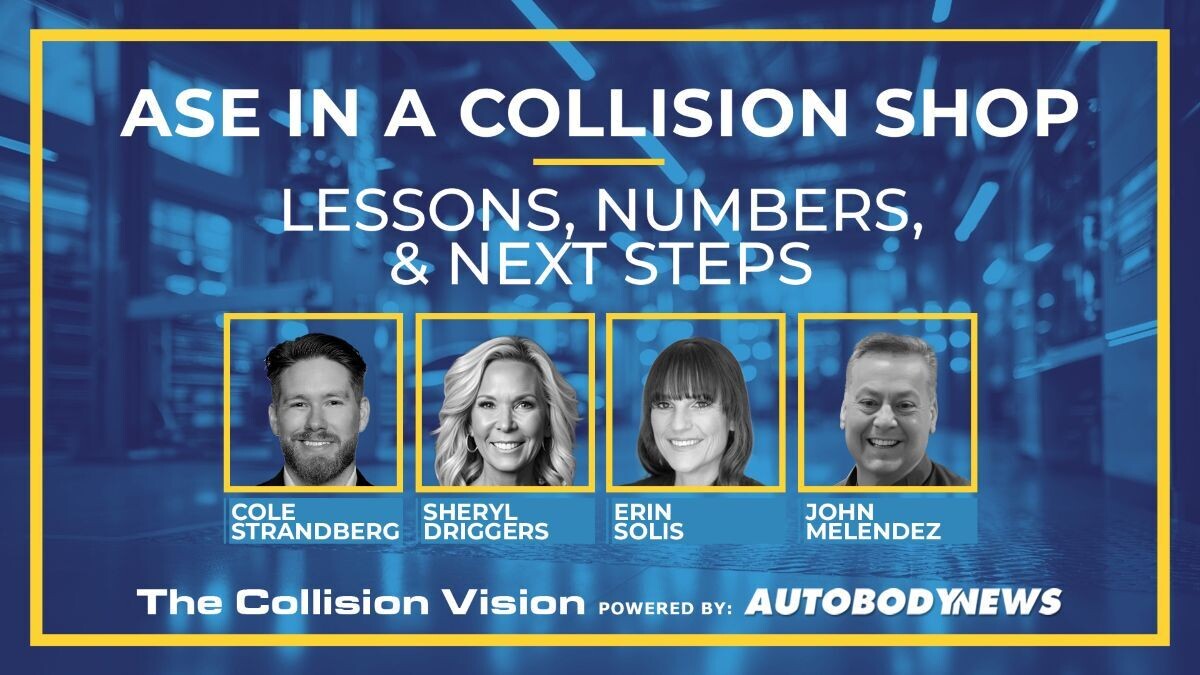
In the latest episode of The Collision Vision, industry leaders Sheryl Driggers (Collision Advice), Erin Solis (Square One Systems), and John Melendez (JDM Collision) discussed why and how more collision repair businesses are bringing mechanical operations back under their own roofs.
The group also had valuable insights for shops evaluating whether now is the right time to bring mechanical work in-house. Here are the highlights:
Subletting can be a liability risk
The panelists discussed liability when it comes to subletting and shared that liability doesn’t transfer when work leaves the building. Whether a shop sublets to a dealer, an alignment center, or a calibration vendor, the repairer remains responsible for the safety and correctness of the vehicle.
“Anytime that leaves your control, [it] does not mean it leaves your liability,” said Solis.
They noted that many sublet partners, including dealerships, are often behind on tooling, training, and OEM procedures. In some cases, shops are sending vehicles out only to discover calibrations or alignments were performed incorrectly.
Key Takeaway: Oversight and verification are critical because shops remain fully liable for repairs even when they are sublet.
Mechanical capability is now a collision requirement, not a specialty
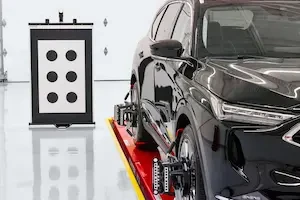
Panelists emphasized that mechanical work is no longer an occasional add-on like it was five to 10 years ago. Now, there are so many more mechanical operations that are part of repair plans. Today’s vehicles routinely requireADAS inspections, suspension damage, pre- and post-repair alignments, steering angle sensor resets, and drivability checks.
Driggers emphasized that bringing these operations in-house gives shops greater control over repair quality, cycle time, and profitability.
“It's just so much easier if you're handling the whole thing ... rather than sending it to somebody who never touched it,” added Stolis.
Key Takeaway: Mechanical operations are now collision repair functions and no longer optional add-ons, and there are benefits to having these processes in-house.
The KPI that matters first: Sublet as a percentage of sales
For shops evaluating whether they’re ready to bring more work in-house as opposed to subletting, Driggers recommended starting with the numbers, specifically, sublet as a percentage of total sales. She also suggested looking at sublet profit margin vs. mechanical labor profit margin and considering how cycle time can be improved by bringing processes in-house.
However, Solis cautioned against relying on one metric alone. Rising parts prices can distort sales growth, making vendor-level analysis just as important.
Key Takeaway: Shops should analyze more than one metric, including sublet costs, margins, and vendor performance, when deciding whether to sublet or not.
Cycle time gains can be significant if done correctly
Melendez shared a concrete example in his shop: reducing subletting from roughly 30% of sales to about 5%, with most remaining sublets limited to glass.
Melendez said he has improved operations in his shop by bringing procedures like alignments, calibrations, tire mounting and balancing in-house, coupled with having the right staff in place in his shop.
The result was an improvement in cycle time and the ability to scale production after expanding from 4,800 to 13,000 square feet.
Key Takeaway: Pairing proper staffing with in-house mechanic operations can improve cycle time.
Not every shop is ready to bring services in-house
Despite the benefits of bringing capabilities in-house, the panel cautioned against rushing in, and agreed that adding capability won’t fix broken processes
Shops should pause if they lack:
- Strong repair planning and scheduling processes
- Adequate production and calibration space
- Financial stability to support tooling, software, and training
Solis recommended getting outside perspectives from peer groups to stress-test the decision beforehand.
Key Takeaway: Shops should only add mechanical capability if they have financial readiness and strong processes in place.
Dealer rates are defensible if you have the right credentials
Melendez explained that combining ASE certifications with OEM brand certifications has allowed his shop to successfully charge dealer-level mechanical labor rates.
The argument is simple:
- Same certifications
- Same tooling
- Same OEM procedures
“I carry the credentials that the same technician has within that dealer, and they've been paying them the rates without any issues over the years. Now they will pay us the same because there is no difference,” Melendez said.
Key Takeaway: Shops should consider obtaining certifications and documentation to justify charging dealer-level mechanical rates.
Internal development can be a worthy strategy if done right
With technician shortages persisting industry-wide, all three panelists discussed the benefits and strategy behind upskilling internal talent, emphasizing that it’s about finding passionate workers and investing in their education.
Melendez shared his example of developing a tow truck driver into a master-certified technician over eight years. This process was paired with clear benchmarks and pay progression, including a recent 30% wage increase.
Driggers and Solis reinforced that structured career paths, investment in resources to help workers grow, transparent expectations, and measurable skill-based pay increases are critical to retention.
Key Takeaway: With the labor shortage, shops can benefit from developing talent internally, but the process needs clear structure, investment, and measurable progression.
The bigger picture
The repair landscape continues to evolve, but there are many opportunities for shops to strengthen their operations. As vehicle technology advances and safety systems become more regulated, mechanical competence is rapidly becoming a core collision repair function.
For shops that invest in people, processes, and documentation, bringing mechanical work in-house can improve control, reduce risk, unlock new profitability, and ensure long-term success.
Want more insights from The Collision Vision crew? Our library lets you catch up on all the episodes, past and present.