A vehicle gets stopped in traffic and tapped from behind. Small hit, low speed, no airbags. The bumper cover takes the damage, maybe a little reinforcement bar work and some attention to a body panel. On paper, it's a quick repair.
In practice, by the time that vehicle is ready to go home, nearly 60% of the labor that went into it can live in alignment and calibration work, not body work. That's not a hypothetical. It's a repair shops across the country are running into more often as vehicles get more complex.
For most collision shops, alignment is still treated the way it always was: a final QC step before the keys go back to the customer, often sublet to a partner down the street. That workflow was built for a different era of vehicles.
Collision Alignment Is a Category of Its Own
Traditional alignment and collision alignment are often spoken about as the same activity. They're not.
A traditional alignment is preventative or symptomatic work. It happens after new tires, after worn part replacement, when a steering wheel sits off center, when a car pulls. The job is to set the wheels straight, confirm the geometry, and hand the car back.
Collision alignment is a different category of work entirely. It identifies bent and damaged components. It positions new parts. It accounts for structural changes from the impact. It feeds into calibrations. It returns the vehicle to pre-accident condition, not just to a steering-straight condition. And it produces the documentation that defends the repair afterward.
The financial picture is different, too. A traditional maintenance alignment might bill at around $100. A collision alignment, with the pre-repair assessment, the structural measurement, the final alignment, and the documentation work that comes with it, represents a meaningfully larger ticket. Subletting that work sends the alignment revenue out the door with the vehicle. The shop is already doing the repair; the alignment income belongs to that work.
The two activities share a name and use related equipment, but the job description doesn't carry over. A shop subletting collision alignments to a traditional alignment provider is sending a vehicle to a partner whose job description doesn't match what the repair actually requires.
The paint booth is a useful comparison here. A generation ago, a collision shop could get by without one. Today, that's nearly unthinkable. A modern paint procedure can't happen without the right environment, and any shop serious about quality controls the booth in-house. Collision alignment is on the same trajectory.
What an Alignment Rack Finds That the Eye Misses
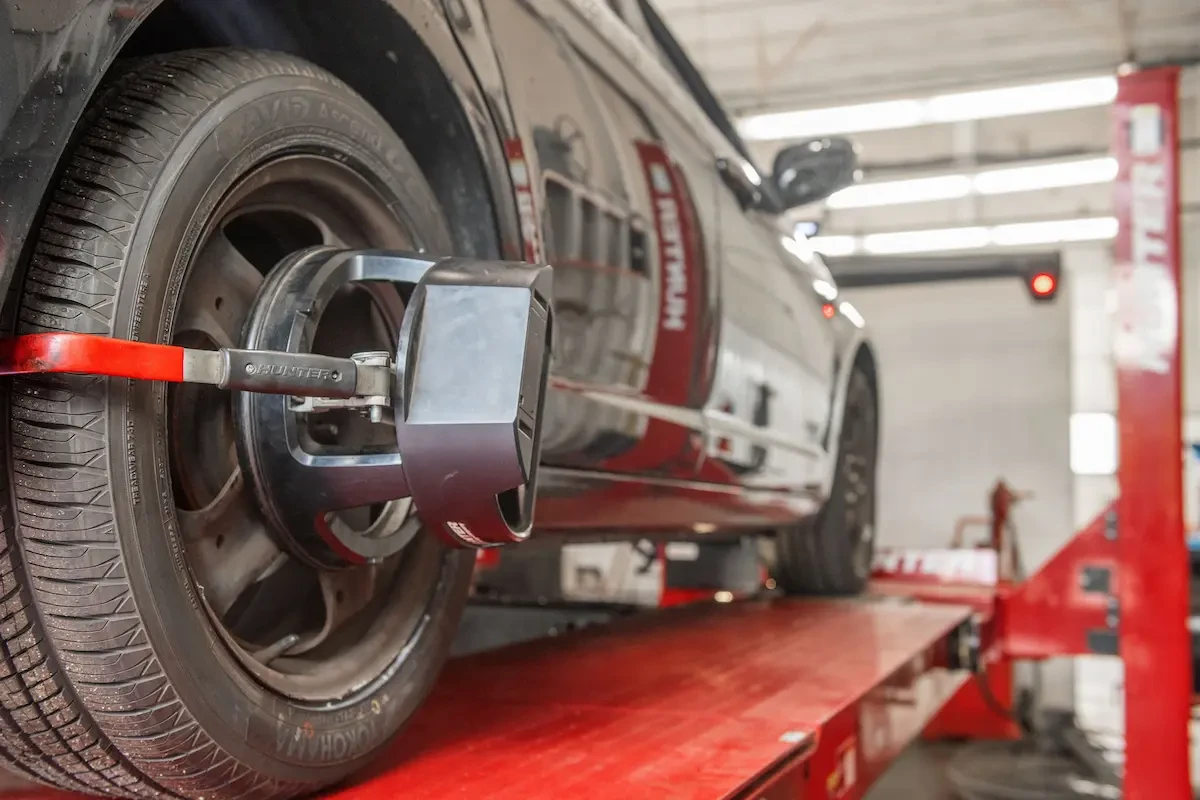
The naked eye and a tape measure aren't built to find what a modern alignment machine finds. Damage that sits a few millimeters off spec can change how a vehicle handles, throw off how its ADAS cameras read the road, and undermine the repair if the work is ever questioned.
Consider a rubber-to-rubber hit. Two vehicles, both at very low speed, come together in a parking lot. The contact happens between two tires with enough force to bend a control arm, but no visible damage on either bumper. The vehicle never goes on an alignment rack during the repair. The bumper cover is refinished and the car goes home with a bent control arm still in it.
Another scenario: a pickup truck settles out a body damage claim with the insurer. The owner thinks it's over. A later alignment check finds a sheared rear axle pin, the impact having shifted the rear axle three-eighths of an inch off center. The truck wasn't tracking straight down the road. None of that was visible from the outside, and none of it would have been caught without putting the vehicle on a rack.
What a modern alignment machine surfaces that nothing else in the shop will:
- Shifted or damaged subframes and unibodies
- Bent or damaged lower control arms
- Shifted or damaged axles
- Sheared axle pins
- Bent tie rod ends
- Bent spindles
- Damaged steering racks
- Included angle deviation
- Steering axis inclination problems
- Wheel setback
Modern alignment equipment touches a vehicle at three points during a collision repair: a pre-repair assessment at intake, a final alignment after metal and paint work, and an ADAS calibration on the same equipment for shops that have added that capability.
The pre-repair assessment is the one that delivers most of the diagnostic value. It surfaces hidden damage while the estimate is being written, not partway through the repair. It's also the touch shops are most likely to skip, because alignment hasn't traditionally sat at the front of the workflow.
That diagnostic value depends on both the machine and the person reading it. The machine surfaces the indicators. A trained technician interprets them and turns them into a repair plan. A shop without the equipment in the building has access to neither half.
OEM Procedures Now Pull Alignment Up Front
OEM repair procedures are shifting. Alignment appears more often now as a precondition for other work, not as a step at the end.
If a calibration requires the vehicle to be aligned first, alignment can't be the last thing a shop does before delivery. The procedure won't allow it. That pulls alignment forward in the workflow whether the shop is ready for it or not, and reading the procedures changes the order of operations.
Shops still running alignment as a sublet, end-of-the-line task will find themselves either bending the procedure to fit the workflow they have or scrambling at the back end of a repair to make the timing work. Cycle time suffers either way, and so does defensibility if the repair is later questioned.
The benefit of moving alignment up the workflow lands at the front end. Bent components surfaced while the estimate is being written get ordered alongside the hood and the bumper, so the repair plan written on day one matches the repair that happens. There's no mid-repair stall, no waiting on a supplemental part, no awkward call to the customer pushing the promise date out a week.
This is the operational case for in-house alignment. OEM-compliant repairs are going to require alignment earlier than most workflows are built for, and adapting now means less to redo as procedures continue to evolve.
The Alignment Record That Defends the Repair
Modern alignment systems produce documentation older equipment couldn't: pre-repair readings, post-repair readings, vehicle specifications, visualizations of vehicle roll and steering geometry, and a full record of how a vehicle measured before the work began and how it measures now.
For calibrations performed on the same equipment, the documentation goes further. Target placement is recorded in three-dimensional space relative to the vehicle, which accounts for unlevel floors and surface-mount alignment lifts no shop is fully immune from.
The system confirms which target was used for which system and where that target sat in space around the car at the moment of calibration. That level of detail removes any doubt that the procedure was performed correctly, and it gives the shop a record that holds up regardless of who is reviewing it later.
Insurers care about this. Every claim a shop submits gets justified upstream: a field adjuster defends a repair cost to a supervisor, a subrogating carrier defends a dollar amount to another carrier. Documentation that makes those conversations easier turns the shop into a preferred partner. Documentation that doesn't turns it into a problem to manage.
Legal exposure is climbing across the industry. A shop that can produce specifications, measurements, and a clear record of why each component was replaced has an easier time defending its work. A shop that hands over a basic alignment printout from the quick-lube shop down the street does not.
Sublet alignment work simply wasn't built to produce the documentation a collision repair requires. Shops that own the equipment own the data, and the data is the defense.
Subletting Costs More Than the Lost Margin
Most shops that sublet alignment haven't run the numbers. They sublet because alignment has lived outside the shop walls for as long as anyone can remember.
That default has outlived its logic. The equipment has changed. Vehicles need alignment more often and earlier in the repair than they used to. And the work that disappears down the street takes diagnostic value and documentation value with it.
The case for in-house collision alignment lines up across the three parties involved in a repair:
- For the customer: faster turnaround, no transport delays, fewer days in a rental.
- For the shop: stronger margins, better quality control, fewer supplements, and OEM-compliant workflows.
- For the insurer: cleaner documentation, fewer follow-ups on supplements and subrogation, and lower rental exposure.
The same workflow change improves outcomes for everyone with a stake in the repair. Subletting fractures all three.
| Sublet to a Partner | In-House | |
| Where alignment happens in the workflow | At the end, after the rest of the repair is done. | At intake, at the end, and at calibration. |
| Diagnostic value when writing the estimate | None. Bent components are discovered mid-repair or not at all. | Bent tie rod ends, control arms, and other hidden damage caught before parts are ordered. |
| Parts ordering | Risk of mid-repair supplements when damage is found late. | One repair plan, parts ordered on day one. |
| Cycle time impact | Vehicle leaves the shop, sits at a partner facility, returns and is re-cleaned. | Alignment runs within the existing workflow. |
| Documentation depth | Basic alignment printout, not built for collision defense. | In-depth collision-specific documentation with 3D target placement records. |
| Insurer relationship | Documentation gaps create friction on supplements and subrogation. | Stronger justification packets, fewer follow-ups. |
| Margin captured | A markup on someone else's work. | The full margin on alignment and calibration work. |
Margin is real, and it is only part of the case. The handoff that looks manageable on the invoice costs the shop diagnostic value during estimate writing and documentation value at delivery on top of the revenue handed away. Three losses, not one, pinned across a repair the shop is supposed to control.
Whether to sublet goes beyond revenue. The deeper question is whether the shop measures, plans, and defends its own work.
Modern Alignment Equipment Fits the Existing Shop
The most common objection to bringing alignment in-house is square footage. It's the wrong question to start with.
Modern alignment equipment is flexible. A frame machine can double as an alignment surface with mobile turn plates. Bench systems integrate. Floor-based setups work in shops that don't have rack space yet. A dedicated alignment rack can come later, once volume justifies it. The configuration adapts to the shop that already exists, built around the bays and the workflow already in place.
A layout assessment from an experienced equipment partner is the right starting point. The goal at this stage is figuring out what fits the shop today, with phased growth from there.
Before any equipment changes hands, the right first move is a walkthrough. Someone who can look at the shop's current workflow, identify where alignment should fit, and lay out a phased path that doesn't require the shop to change everything at once.
Most shops begin with pre-repair assessment and final alignment, then add ADAS calibration tooling as volume builds. The investment doesn't have to happen all at once, and it builds back through the repairs it improves.
Shops treating alignment as a measurement tool are running cleaner repairs, defending their work better, and meeting OEM requirements without scrambling at the back of the job. The shops still treating it as a service step are subletting work they should be doing themselves, missing damage they should be catching, and writing supplements they should have avoided.
Key Takeaways
- Alignment is diagnostic equipment, not a service step. The first measurement should happen while the estimate is being written, surfacing damage before any parts are ordered. That's the touch most often skipped.
- OEM procedures are pulling alignment earlier in the repair. Alignment is showing up more often as a precondition for calibration and other work, not as a final QC step.
- Documentation is now a defensive asset. Modern alignment systems record target placement in three-dimensional space relative to the vehicle, removing any doubt that the procedure was performed correctly.
- Subletting costs more than the lost margin. Shops that sublet are giving up margin, diagnostic value during estimate writing, and documentation value at delivery. Three losses, not one.
To start the conversation about what an in-house alignment workflow could look like in your shop, visit Hunter.com or contact a regional business consultant for a no-obligation assessment.