



Kevin Gallerani was getting groceries in Plymouth, Mass., when the guy bagging his order placed him.
“Hey, I recognize you from those Cape Auto videos online,” the man said. “Is that your dad? I love those videos.”
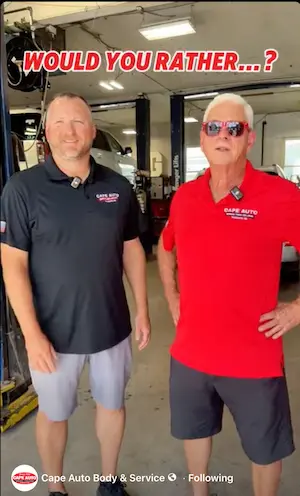
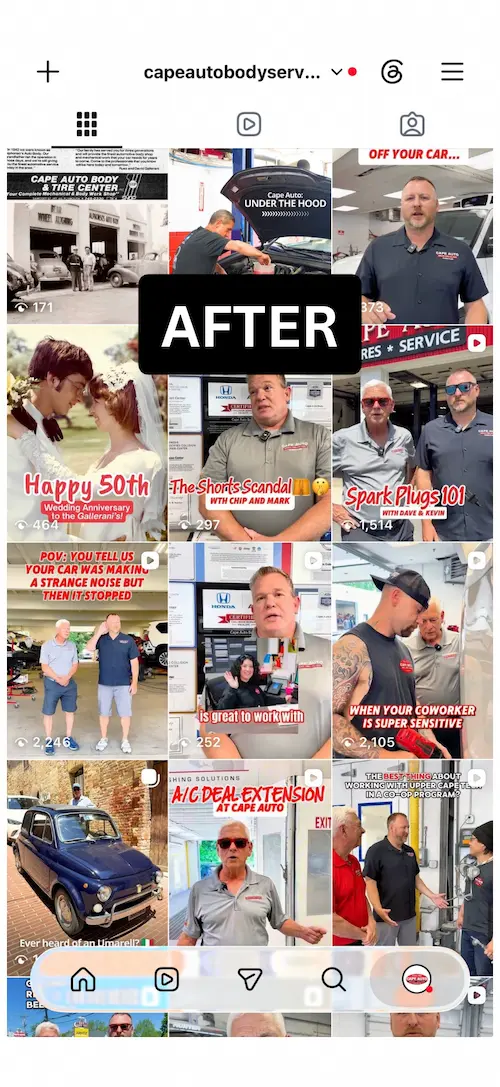
Gallerani runs the collision side of Cape Auto Body & Service, and his father, Dave Gallerani, runs service. Since January, the two have appeared in a steady stream of social media videos produced with Valoisa Media, a video-focused agency in Plymouth.
Gallerani isn’t a natural on camera. He gets nervous, he rambles, and he winces at hearing himself say “wicked.” But that unrehearsed delivery is a big part of why the videos land.
“My customers in Plymouth are more blue collar, normal people,” he said. “When they see them, they recognize the authenticity, the genuine speaking from the heart.”
How a chamber project led to a marketing partner
Every other year, the Plymouth Area Chamber of Commerce places 20 to 25 artist-painted sculptures around town such as lobsters, then scallops, most recently seals. For six to eight years, Cape Auto has clear coated them for outdoor display.
During the seal project about a year and a half ago, the chamber sent a local social media team to film him. “They recorded me, and I felt like an idiot,” Kevin said. “I go, ‘Let's just run that back one more time.’ It ended up being fine.”
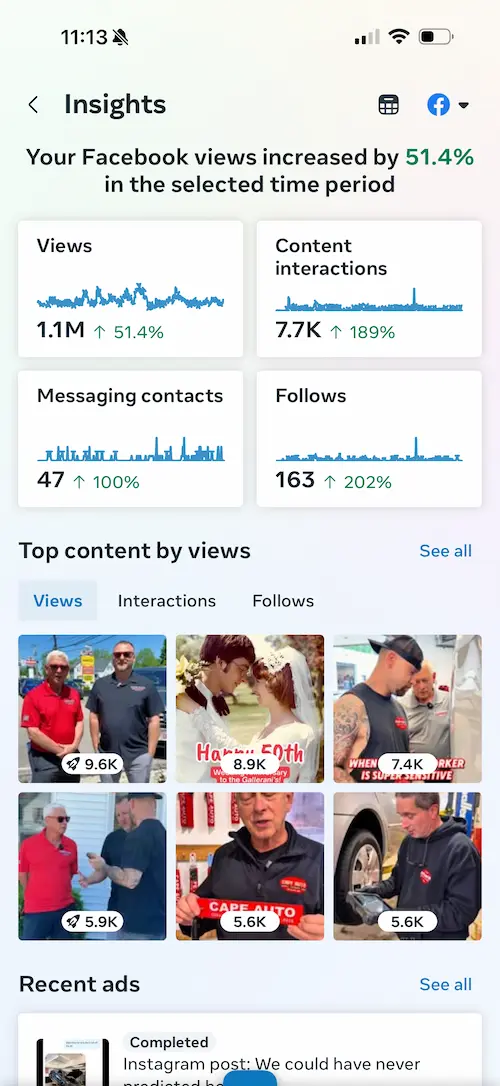
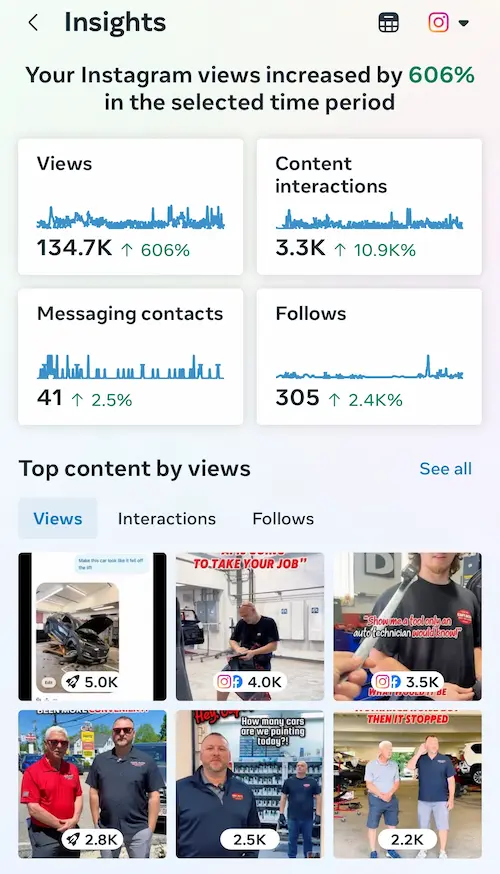
That team was Valoisa Media, a women-owned agency Sarah Jane Tolman founded during COVID. When Kevin decided last December the shop needed something new, he called them back. “I’m seeing other businesses doing the social media, the reels, and I want to do some of these reels,” he said.
Shop staff on camera, with education ahead of sales
Valoisa puts the people behind a business in front of the camera. “Dave and Kevin are huge pillars in the community up here in Plymouth,” Tolman said. “And they're very vivacious and outgoing and willing to be on camera.”
The strategy balances education and entertainment. “If there's a funny way to talk about snow getting stuck on your tires and how it’s not an alignment issue, then we’ll do that,” she said. Only 10-15 percent of posts are sales messages.
“You think everyone knows this because you do it every day, but they don't,” Tolman said. “That's what social media is really for: to break it down into bite-sized pieces.”
The team aims for a 50-50 split between collision and service, though busier service usually ends up closer to 60-40.
Why the first take is usually the keeper
Gallerani was stressed the night before his first full shoot day and the morning of. Watching the footage was worse. “I hate looking at myself. I hate hearing myself talk,” he said. “I'm probably my own worst critic.”
Tolman’s advice: “If you don't like yourself on camera, don’t watch it.”
Gallerani’s instinct is to ask for another take. Tolman says the first is usually the keeper. “Nine times out of 10, the first take, even if they think it wasn’t that great, is better than any take after that,” she said. “Then they’re in their head.”
So scripting stays light: a hook, three points, and a closing line such as “Call Cape Auto today.” Beyond that, she asks owners to talk the way they would to a customer at the counter. “It’s an opportunity to remind them how much knowledge they have to share,” she said.
Gallerani has taken that to heart. “Half the time, I don't read [the game plan],” he said. “I just show up … and shoot from the hip.”
Personality-driven videos and a mix of fun and education
Gallerani doesn’t want videos like some he sees from other shops. “You can tell they've rehearsed it and gone through it like 30,000 times,” he said. “It just seems stiff.”
“Being genuine means more than being a robot.”
The father-son pairing is central. Early on, Kevin was to cover collision and Dave service, but Kevin wanted them on camera together on both sides. With Dave starting to wind down, the shoots matter off camera, too. "It forces us for two hours to talk cars and be together," [Kevin] Gallerani said.
In a recurring “This or That/Would You Rather” series, the two choose between options such as heated seats or remote start. “Those do really well because they’re personality-driven,” Tolman said.
The one fully scripted video was a lift prank on Dave. His first question was whether anyone was hurt. “He didn’t even flinch,” Kevin said. Tolman said it “did extremely well.” So did a photo carousel marking Dave’s 50th anniversary. “People just care about people,” she said.
The mix is deliberate. “You don't want everything to be fun, because then you look like a clown, and you don’t want everything to be too informative because it’s too boring,” Gallerani said.
Educational videos may draw smaller numbers, but they reach “the person who says, ‘I’m actually going to bring my car in, because they just told me something I did not know,’” Tolman said.
About four hours a month and a 90-day commitment
Valoisa sends a session plan, films for a few hours each month, and posts a reel every couple of days, plus shop photos and promotions. Gallerani approves every video through a shared spreadsheet. “Usually it’s small edits, and keep rolling,” he said.
Reviewing the plan, a two-hour shoot and a content review add up to “maybe it’s four hours max” a month, Tolman said.
About six months in, the team asked whether they were oversaturating viewers. “But we've decided to keep going,” Gallerani said. Tolman advises giving any new program 90 days. “You have to prove your consistency to the algorithm and to the people watching,” she said.
Familiar faces help an independent shop compete with dealerships
The payoff shows up at chamber events and fundraisers. People mention a funny video or say a maintenance reminder will bring them in. Customers who never used to say hi now do.
“I feel like they probably think they know me more, because they’re seeing me more,” Kevin said.
That familiarity helps a shop compete with dealerships. Customers are “dropping off their car, which is one of their big assets,” Gallerani said. “They want to make sure it’s taken care of by good people that care about it.”
His advice to camera-shy owners: “The first one’s the hardest, and then it gets easier after that.”
No agency budget? Five ways to start anyway
Tolman’s tips for shops without an agency:
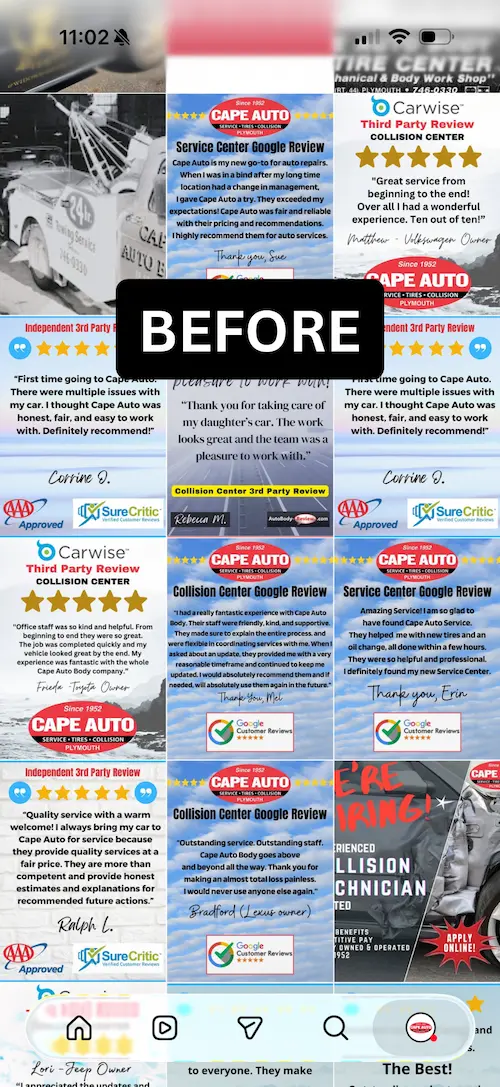
- Mine your reviews. Turn Google testimonials into posts.
- Post at a pace you can keep. “If it’s one post a week, great. Just do it where you can sustain it.”
- Skip the polish. A quick selfie video is fine. “You can always archive it or delete it.”
- Find your face. “It doesn't have to be the owner.” Try the longtime employee customers see at the counter.
- Shrug off critics. “A bad comment is a sign that you’re doing something right.”
- The biggest mistake, she said, “would be to just not start.”
Check Out Cape Auto Body & Service’s Social Media Handles:
Facebook:
https://www.facebook.com/capeauto
https://www.facebook.com/capeauto/reels/
Instagram:




Leona Scott