


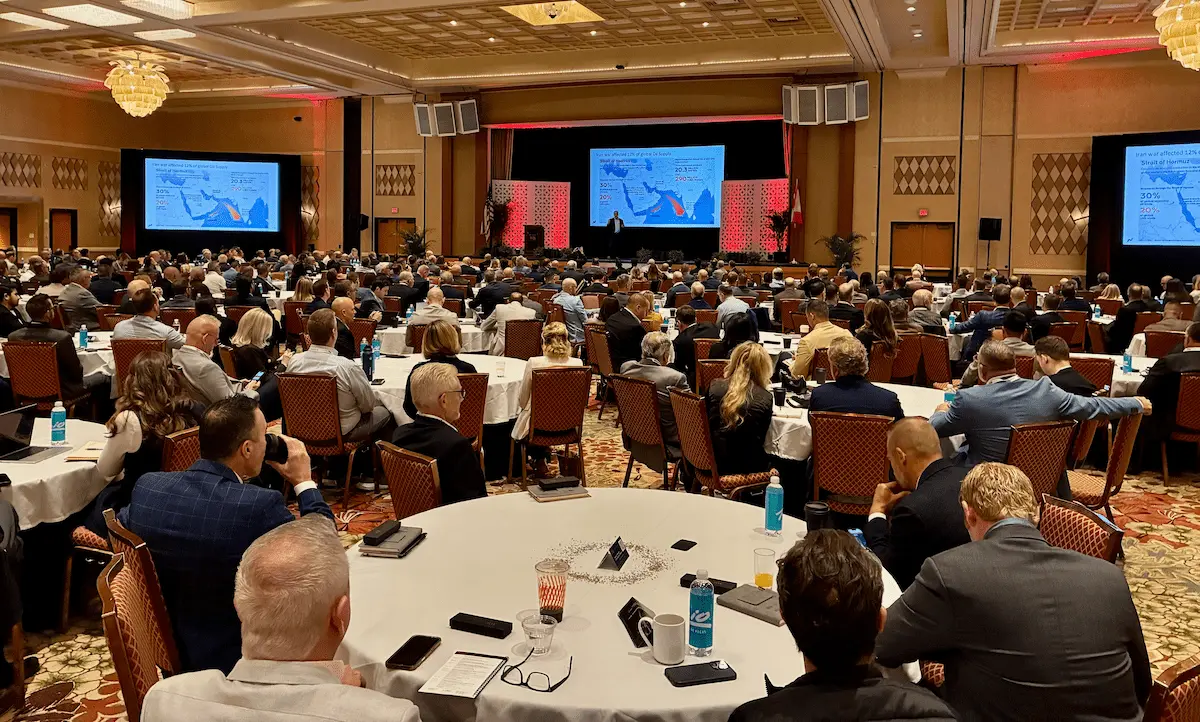
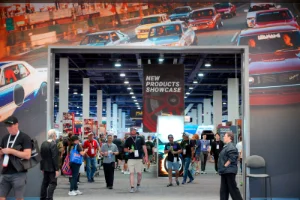
The 15th annual MSO Symposium, a one-day conference created by and for multi-shop owners and operators, led SEMA week in Las Vegas in early November. About 450 people attended the event.
The day kicked off with an economic outlook from Phil Mackintosh, chief economist for Nasdaq, who noted the U.S. economy has been performing well despite tariffs, war and high interest rates.
“I think one of the things that's been really helpful is we have not seen that many layoffs yet,” Mackintosh said. “Over a couple of decades, we are pretty close to historically low levels of layoffs. And that's important because not many people know someone who's lost their job and might not get a job back. When those people would stop spending, their friends might slow down spending.
“But the other side of that equation is the hiring rate has also softened. Hiring is pretty slow, though partly because of the way immigration has changed, this hasn't mattered. So, we have what we're calling a no-hire, no-fire market. So, everyone feels pretty secure, but the job creation has slowed down quite a lot. But that's been good for companies because wages have also slowed down because there's not a super-heated market like there was coming out of COVID.”
He said while tax cuts from the “Big Beautiful Bill” could be adding a boost to the economy, higher gas prices and the slow-down in wage growth have “kind of counteracted that benefit.”
“What we’re starting to see is maybe some signs of stress,” Mackintosh said. “Households are definitely dipping into their savings to pay their bills. And we're starting to see [revolving credit] delinquencies at relatively high levels. You've got credit cards, student loans, auto loans, all pretty close to multi-decade high levels of delinquency.”
Interest rates could decline
But in better news looking forward, Mackintosh said unlike some economists, he foresees interest rates coming down next year.
“I actually think we’re more likely to see inflation fade,” he said. “If the conflict in Iran doesn’t get worse, then the oil price won't keep going up, which means it stops being inflationary. Imagine if it goes away and the oil price comes down, then you get deflation from oil, and all of a sudden we could be talking about 2 percent inflation pretty quickly.”
Other potential deflationary trends could be a boost to productivity from AI, and declining birth rates leading to an aging population.
“There’s more people retired than there are with babies needing new houses and new cars and more clothes,” he said. “So, the demand kind of comes out of the economy. Interest rates don’t need to be very high in an economy where the population is shrinking.”
Consumers’ insurance and shop decisions
Also during the MSO Symposium, Mark Garrett, director of customer solutions for JD Power, shared more information from the company’s study of post-claim consumer satisfaction with auto insurers.
The study, based on responses from 8,261 auto insurance customers who settled a claim within the nine months prior to participating in the survey, found that 7 percent said they had also avoided filing a claim because of fear of increased premiums, contributing to the decline in insurance claim counts.
“A lot of that tends to be those simpler claims, those lower kind of severity claims,” Garrett said.
Perhaps not surprisingly, younger drivers are leading the switch to higher deductibles; only 12 percent of Baby Boomers who had seen a price increase in auto insurance raised their deductible, compared to twice that percentage (25 percent) of Gen X and Xennials in that situation, and 45 percent of Millennials and Gen Z drivers.
They’re also more likely to be paying for any rental vehicle costs on their own as well. Across all drivers, 44 percent had rental coverage this year compared to 51 percent in 2024; the two-year decline among Millennials and Gen Z drivers was even more severe, down from 50 percent to just 40 percent this year.
“We’ve even heard agents are just taking [rental coverage] out of the quotes, that coverage isn’t kind of baked into the policy quote anymore,” Garrett said. “That means out-of-pocket costs are going up.”
The study also looked at how consumers chose a repair facility. It allowed them first to cite the primary reason they chose the shop they did. About 20 percent said the top reason for their choice was past experience, and an equal percentage said it was based on the shop suggested by their insurer or agent.
Other top reasons were shop location (16 percent), availability to start the repair (12 percent), cost of repair (8 percent), a family or friend recommendation (7 percent), online reviews (6 percent), or wanting to use a dealership shop (6 percent). Only 5 percent said repair shop certifications were their primary reason for choosing a shop.
But when allowed to cite their top three reasons for choosing the shop they did, the ranking changed. Shop location was cited among the top three reasons by 59 percent of customers, followed by ability to start the repair (52 percent), insurer or agent referral (46 percent), past experience (36 percent across all drivers, but even higher for GenX and Boomers), and cost of repair (33 percent).
Repair shop certifications were next at 24 percent, and it was even higher (28 percent) among those with 2024 or newer vehicles. If that newer vehicle was a “premium vehicle,” shop certifications were cited as a factor by 38 percent of those drivers, and 48 percent if those drivers were also aware their newer premium vehicle has two or more ADAS features.
Winners and losers among insurers
The “Auto Claims Satisfaction Study” found the average post-claim customer satisfaction score across 18 insurers was unchanged from last year at 700 (on a 1,000-point scale), with satisfaction for repairable claims up by four points, but satisfaction after a total loss down (for the third year in a row) by 12 points. That’s not particularly good news for insurers, given the recent continued rise in the percentage of claims resulting in a total loss.
Amica was among the biggest gainers, jumping to 775 (up from 718 last year) to gain the top spot. Nationwide and Auto Club of Southern California saw their scores rise by 14 points to capture the No. 2 and No. 3 spots, respectively. American Family saw the second-biggest improvement this year, jumping by 34 points to 736 and the No. 4 spot.
Erie Insurance (which was No. 1 last year) and Liberty Mutual had the biggest declines. Liberty Mutual fell 21 points (to 709), and Erie 37 points (to 706) though both stayed just above the study average. Three of the other largest carriers — Allstate, Geico and Progressive — were among the carriers whose scores under 700 pulled down the industry average.
The score among those whose vehicle was a total loss is down 46 points since 2023. Total loss customer satisfaction scores are lowest (490) among the 25 percent of those customers whose payout from the insurers did not cover the amount the customer still owed on the vehicle.




John Yoswick