

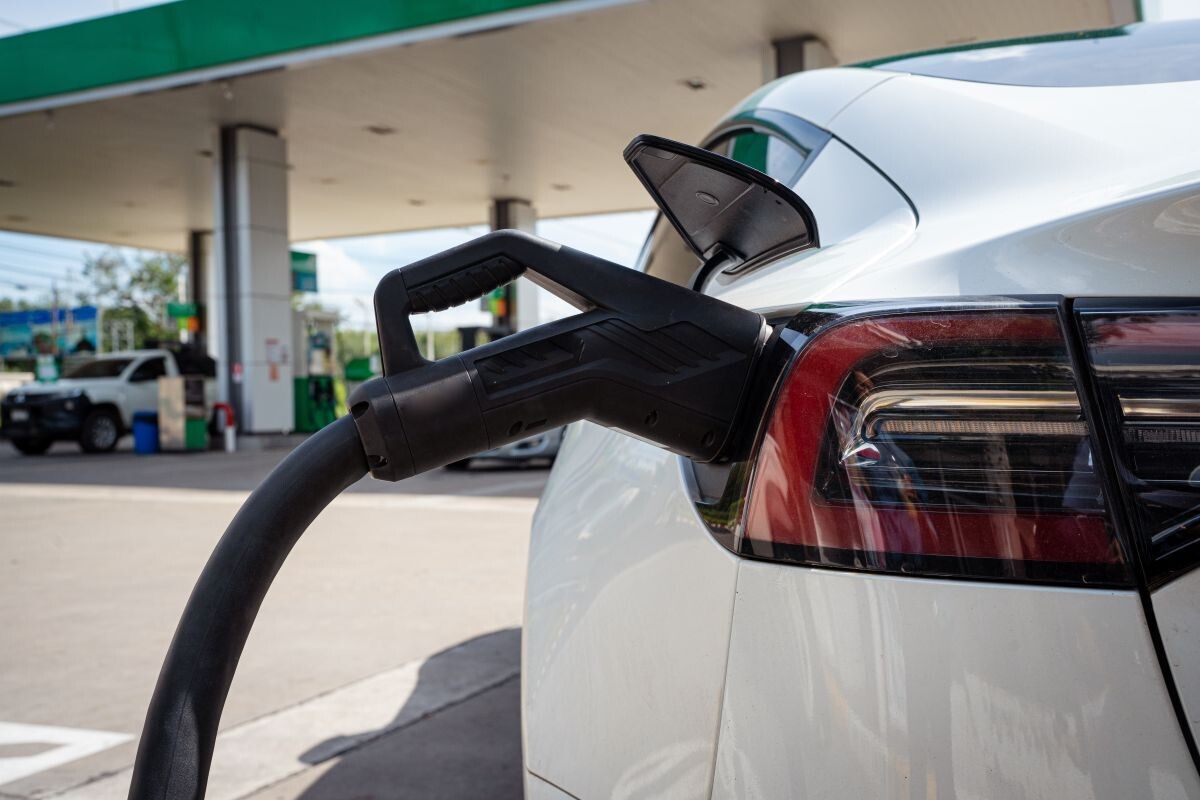
Collision claims involving battery-electric vehicles (BEVs) continued to climb across North America in 2025 even as new vehicle sales slowed, underscoring a shifting repair landscape for collision facilities, according to the latest industry report.
Mitchell’s newest Plugged-In: EV Collision Insights analysis found repairable BEV claims rose 14% year over year in the United States and 24% in Canada, despite a modest decline in U.S. EV purchases.
The increase reflects the growing number of electrified vehicles already on the road. It’s a trend that could sustain demand for specialized repair capabilities regardless of fluctuations in new-vehicle sales.
Growing fleet driving claims
While U.S. BEV sales fell by roughly 2% in 2025, the share of repairable claims continued to increase as the installed EV base expanded, according to the Mitchell report.
Mitchell reported that BEVs accounted for about 3.07% of all repairable U.S. auto claims last year, with hybrids also showing gains across North America.
“Even as BEV adoption slowed … claims volume rose since more of these automobiles are on the road than ever before,” said Ryan Mandell, Mitchell’s vice president of strategy and market intelligence.
Repairable claims for plug-in hybrid electric vehicles increased 6% in the U.S. and 26% in Canada, while mild hybrid claims jumped 20% and 29%, respectively.
Complexity remains a major factor
Beyond volume, EV repairs continue to demand more time and expertise than those for internal-combustion vehicles.
Mitchell reported that battery-electric vehicles required an average of 1.70 calibrations per estimate in 2025, higher than for internal-combustion vehicles, reflecting the increased use of advanced driver-assistance systems and other electronic components.
EV repairs also relied heavily on OEM parts, which accounted for about 86% of parts dollars on repairable BEV estimates, which is significantly higher than for conventional vehicles.
Severity declines but challenges persist
While repair complexity remains high, some cost metrics showed modest improvement. Average severity for repairable BEV claims declined about 5% in the U.S. and 2% in Canada in 2025, according to Mitchell.
Total loss market values for BEVs also dropped more sharply than for other powertrain types, reflecting accelerated depreciation, increased availability of lower-cost models, and changing consumer sentiment.
Continuing a volatile trend
The new findings build on a series of recent reports showing volatility in EV collision activity. Previous industry data highlighted both record highs in claims frequency and short-term declines tied to market conditions.
For collision repairers, the latest data suggests electrified vehicles will continue to make up a large portion of workloads. As more EVs age into the repair cycle, shops without the necessary certifications, tooling, and training may face increasing pressure to adapt or risk turning away work.







Lisa McArdle