


Mitchell’s latest “Plugged-In: EV Collision Insights” Q2 2025 report showed both a decrease in collision claims frequency for repairable battery electric vehicles (BEVs) in the U.S. and an increase in mild hybrid electric vehicle (MHEV) claims across North America.
The report found the number of BEV claims in the U.S. dropped 7% year-over-year in Q2 2025, while MHEV claims rose 21% in that same period; they are now 5% of repairable claims.
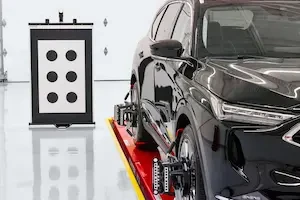
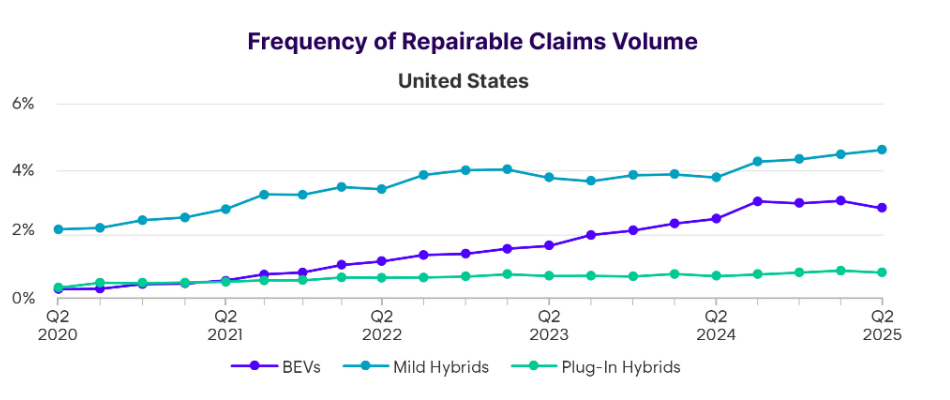 Image via Mitchell.
Collision shop owners considering investing in training and equipment to repair EVs shouldn’t base their decision on a single quarter of data, said Ryan Mandell, Mitchell’s vice president of strategy and market intelligence.
“We have to be careful about jumping to any massive conclusions when we have one quarter that bucks a trend,” Mandell told Autobody News. “I think it certainly can be indicative of a coming trend, and I would not be surprised if we saw potentially a further decline [in BEV claims in Q3 2025] or again, a lower number than what we've seen in the past.”
Mandell pointed out the decrease in BEV claims coincided with a 6% year-over-year reduction in new BEV purchases in Q2 2025, despite strong sales earlier in the year, though buying activity could see a surge in Q3 2025, as consumers rush to capitalize on tax incentives before they end Sept. 30 while taking advantage of automaker discounts, which reached an all-time high of nearly $8,500 per vehicle in Q2.
Even if the adoption rate for BEVs slows down, Mandell said, “Over time, there's still going to be more of these vehicles that are on the roads, that are ending up in collision repair facilities.”
Automakers are devoting a lot of resources to improving battery technology to eventually bring about price parity between EVs and their gas-powered counterparts, which Mandell said will eventually drive adoption even after tax incentives disappear.
“If I'm looking at an F-150 and I can get an XLT or a Lightning for comparable prices, that really breaks down one of the barriers to entry for a lot of consumers,” Mandell said.
Claims Severity, Total Loss and Repairable Parts
The report found average severity for repairable vehicles remains the highest in the U.S. for BEVs at $5,903. Plug-in hybrid vehicles (PHEVs) were a close second at $5,254, followed by gasoline-powered vehicles at $4,938.
Much of the difference between repair costs for EVs and ICE vehicles is related to managing an EV’s high voltage battery system, Mandell said.
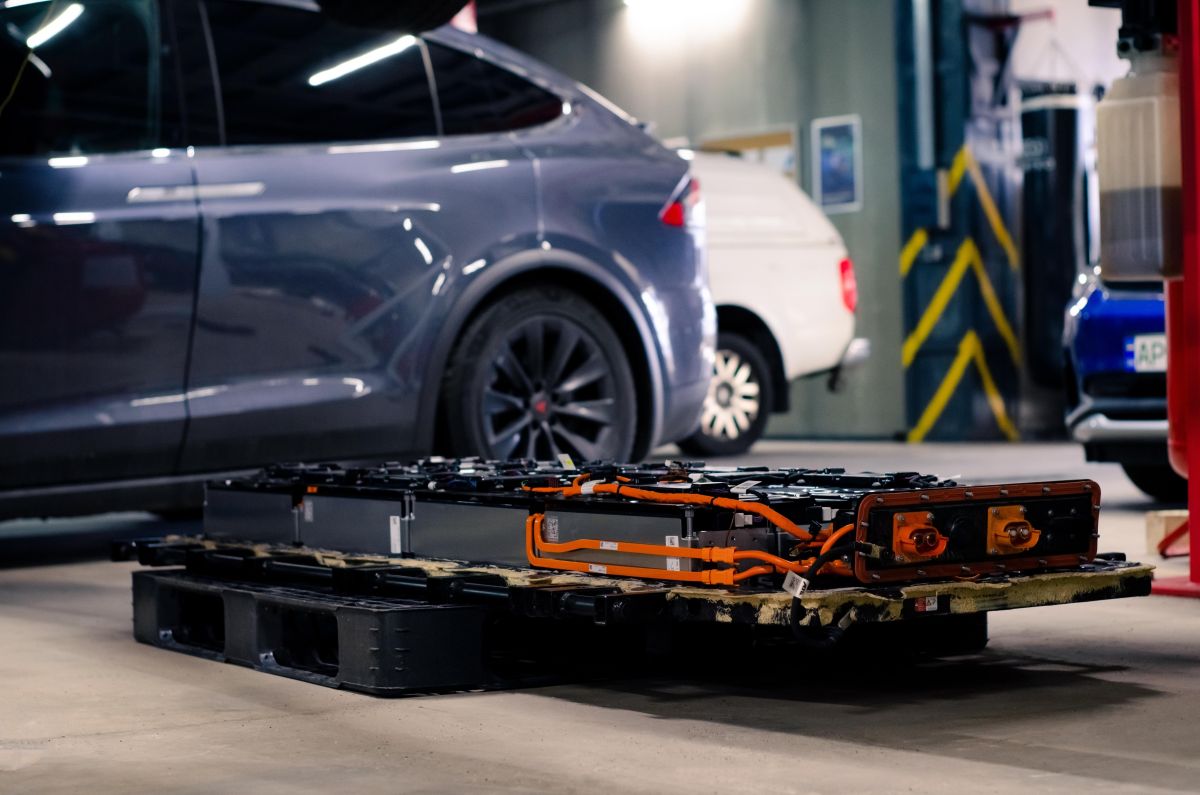
“There's steps that have to be taken in order to ensure the vehicle has been properly de-energized. Oftentimes that may mean that you have to completely remove the battery from the vehicle,” he said. “All of that adds to the labor cost. Typically, that's being billed as mechanical labor, which is typically going to be a higher rate than body labor is.”
Second, many EVs are built on new platforms. For instance, the Chevy Bolt does not share its platform with any other GM vehicle. As a result, there isn’t a “mature” aftermarket or recycled parts inventory, unlike for ICE vehicles, which are frequently built on more common platforms. That means EVs use more OEM parts on average than ICE vehicles do — in Q2 2025, 83% of the parts dollars on estimates for repairable BEVs were designated for OEM parts, versus 63% for ICE alternatives.
Third, EVs are built with more lightweight materials, like aluminum, carbon fiber and composites, which are not as repairable as steel, Mandell said, and are more often replaced.
“While the entire car parc is utilizing more of those components, it's the EVs that are at the leading edge of that,” he said.
Although the percentage of parts repaired on BEVs increased slightly over Q1 2025 to 12%, it still fell short of ICE vehicles’ 14%.
The report also found total loss market values were relatively stable, averaging $30,172 for BEVs and $13,850 for ICE vehicles, representing a decrease of approximately 2% and less than 1%, respectively, over Q1 2025. PHEVs also experienced a 3% decline in average total loss market value, while MHEVs increased in value by close to 2%.
In addition to Mitchell’s “Plugged In” report, shop owners should consider all data points, including those on local EV sales and vehicles in operation, when deciding whether or not to pursue EV repair certifications.
“If you're in an area like California or Florida, these places in the Sun Belt where we've seen more widescale EV adoption, then I think there's still a lot of value if you've determined that is the right path for your shop,” Mandell said. “That's not the right path for every shop.”
Download the Q2 2025 Plugged-In: EV Collision Insights report for more detail on the latest BEV and hybrid vehicle claim trends. Access previous issues or subscribe to future publications by visiting www.mitchell.com/plugged-in.







Abby Andrews