

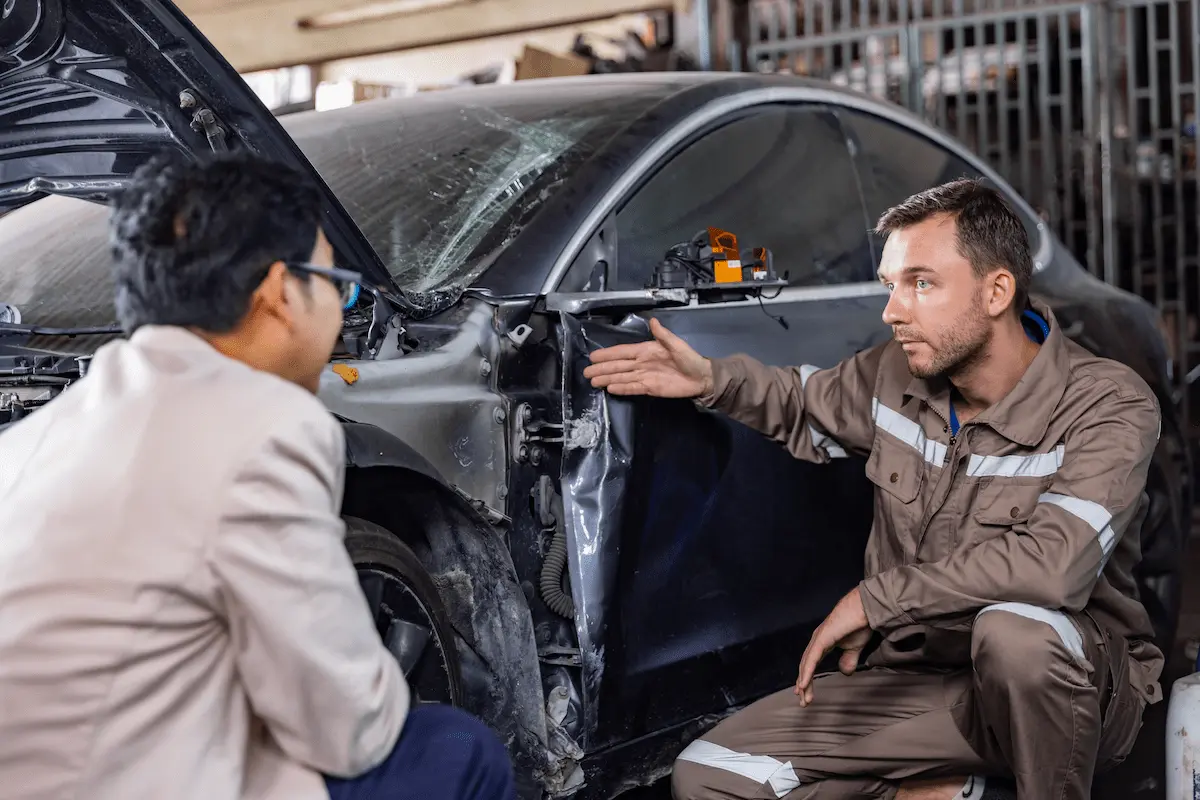
After 46 years in collision repair, Edward Kalinowski of Phil’s Collision Center in Schererville, Ind., says OEM knowledge, solid documentation, and a cool head do more for a shop than any heated phone call with an appraiser.
Kalinowski has spent 46 years in the collision repair industry. In that time, he has seen vehicles grow more complex, repair costs climb, and the back-and-forth with insurance companies become a daily part of the job.
What he hasn’t seen is an argument win a negotiation.
He believes the shops that get paid for proper repairs aren’t the ones that argue the loudest. They’re the ones that know the most and can prove it.
For Kalinowski, that knowledge starts with OEM repair procedures and it extends to knowing when a vehicle shouldn’t be repaired at all.
Knowledge changes the conversation
At Phil’s Collision Center, a Ford/Lincoln OEM-certified shop with Kia and Hyundai certifications in process, the estimate isn’t a starting bid. It’s a position grounded in what the manufacturer requires, and the shop’s estimators are trained to defend it on those terms.
“Our estimators know how to explain to insurance companies that we stand by OEM repair procedures,” Kalinowski says. “We will not accept an appraiser lacking that caliber of knowledge.”
That isn’t stubbornness. It’s a standard. When an appraiser questions a procedure or a labor time, the conversation shifts from opinion to evidence: what the OEM calls for, why it’s required, and what happens to the vehicle if it’s skipped.
“Each time we explain our position with proper documentation, we reach a fair understanding,” he says, “ensuring the insurance company knows we are in the industry to fix damaged vehicles correctly to pre-accident condition.”
The takeaway for estimators: Don’t walk into a disagreement with a number. Walk in with the procedure that justifies it.
Sometimes the best repair is no repair
OEM procedures don’t just justify repair costs. Sometimes they reveal that a repair doesn’t make sense.
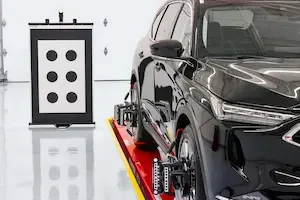
Calibrations show how quickly those costs add up. On a 2024 Honda Accord sedan, Kalinowski says, calibrations alone added $1,600 to the repair, and the Honda dealership had to perform them.
When costs like those push a vehicle into total-loss territory, the work it took to reach that conclusion still has value. In several cases, Kalinowski says, the shop’s teardown, storage and administrative fees were all paid.
Kalinowski is clear that notifying the owner of a total loss isn’t the shop’s job. “It is the insurance company’s responsibility to notify the insured that their vehicle has been declared a total loss,” he says.
But the vehicle owner is still standing in his shop, and he doesn’t leave that conversation to chance.
“The way I explain and discuss this with the vehicle owner is by using the rule of thumb that sometimes the best repair is no repair at all,” he says. “Our customers always agree with us once we discuss the reasons in detail.”
Those customers brought their vehicles to his shop because they trust it, he says, and that trust is what makes a difficult message land. A customer who chose a shop for its expertise is more likely to accept that shop’s explanation of why a repair isn’t worth doing.
Know when to walk away
Not every negotiation ends in agreement. Kalinowski says his shop has walked away from jobs “quite a few times” — typically with low-rated insurance companies and vehicles that were towed in as non-drivable.
“We here at Phil’s Collision Center will not jeopardize any repair just to satisfy the insurance companies,” he says. “We again are based on great customer service along with the best quality in the industry.”
For shop owners, the lesson is that a willingness to walk away is part of the negotiation. A shop that will take any job on any terms has little leverage when the terms don’t support a safe repair.
Equip for the repair you’re negotiating
Kalinowski’s confidence at the negotiating table rests on the investments behind it: OEM certifications, trained estimators, and the equipment to perform repairs to manufacturer specifications.
He has a direct message for smaller shops that haven’t made those investments yet.
“To the smaller independent shops, we can’t stress enough the legal liabilities that can occur when not properly equipped to repair collision-damaged vehicles,” he says. “We urge them all to take that leap and invest in the needed equipment, as the benefits outweigh what can turn into huge-dollar lawsuits against you.”
His bottom line: “Proper equipment for proper repairs is a must to survive in this challenging industry.”
The equipment isn’t only about liability. It’s what allows a shop to negotiate from the procedure rather than around it. A shop that can’t perform the calibration or the OEM-specified repair has a harder time arguing it should be paid for.
Insurers know what repairs cost
Does Kalinowski believe insurers understand the true cost of repairing today’s vehicles? He does, and he points to the price of coverage as his evidence.
“I definitely believe the insurance companies know the modern repairs cost more now than ever before,” he says. “I determine that by the expensive cost of auto insurance policies, which are at an all-time high.”
That belief shapes how he approaches every claim. If insurers already know repairs are expensive, the shop’s job isn’t to convince them that costs have risen. It’s to show, procedure by procedure, why this repair costs what it does.
Five principles for negotiating from the procedure
After nearly five decades, Kalinowski’s philosophy comes down to a few principles that any shop can put into practice:
- Know the OEM procedures, and make sure your estimators can explain them.
- Document your position so the conversation is about evidence, not opinion.
- Explain your position; don’t just argue it.
- Be willing to walk away from a repair you can’t do correctly.
- Invest in the equipment and certifications that back up your estimates.
None of it guarantees that every supplement gets approved. But in Kalinowski’s experience, knowledge gives a shop credibility, documentation gives it evidence, and professionalism gives it the best chance of reaching a fair agreement and fixing the vehicle the right way.
Leona Scott