
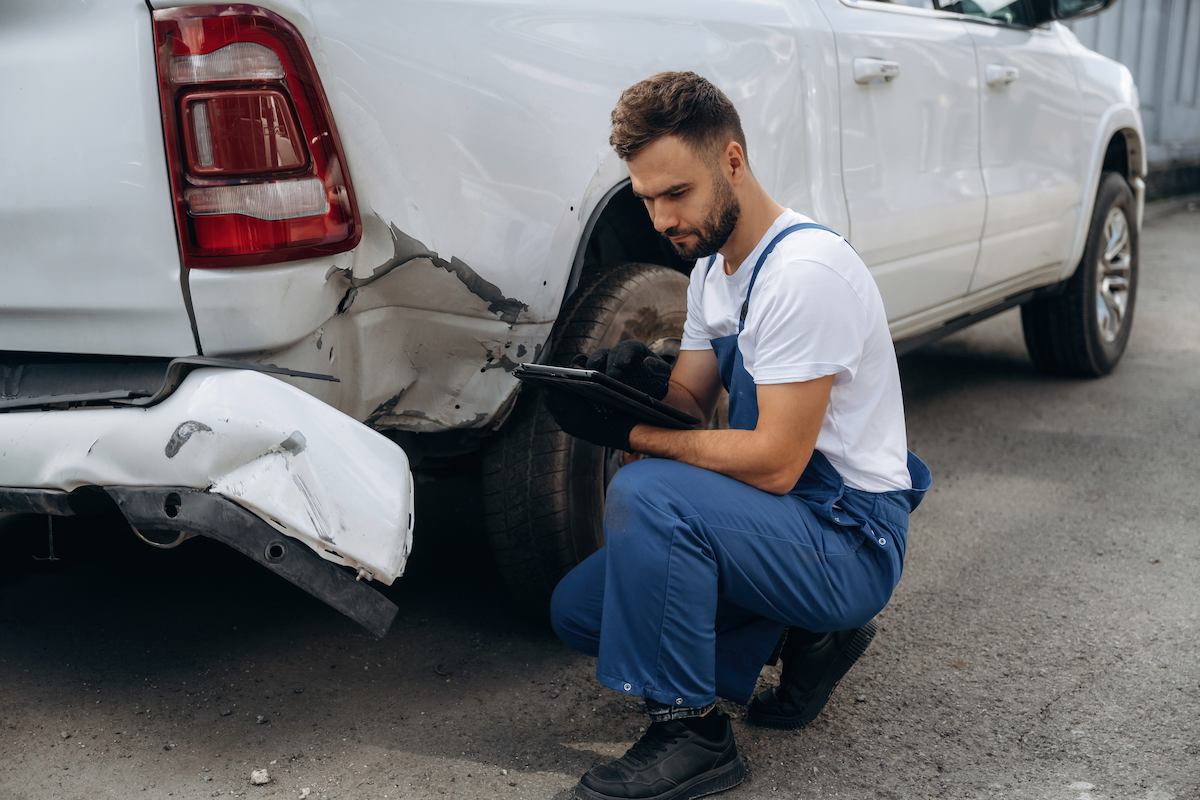
Documenting repairs before the estimate, explaining coverage to customers early, and copying customers on insurer correspondence are among the best practices collision repair shops shared in interviews for The Advocate, Autobody News’ series on insurance advocacy.
When those steps aren't enough to settle a claim, shops in Washington, Illinois, and Wisconsin pointed customers to right-to-appraisal clauses or took short-pays to small claims court.
Each edition of the series profiles a collision repair shop that went to bat for a customer in an insurance dispute, total loss reversal, denied supplement, or claims confusion. Here is how the shops described each practice, starting with the options they turn to when negotiation with an insurer stalls.
Appraisal and small claims give shops options when negotiation stalls
Andy Grundman, owner of Pat's Body Shop in Wausau, Wis. has customers sign a post-loss assignment of benefits, then sues the insurer in small claims court. He said the shop has recovered more than $40,000 in two years and has another $60,000 in cases it hasn't filed yet.
"So, a lot of shops are like, I'm just going to eat it. I'm just going to not take that money," Grundman said. "If small shops continue to do that, they're going to go out of business."
If the shop loses, the customer doesn't owe the difference. "If I lose, I let them off the hook, and I make sure they know that," he said. Wisconsin's small claims limit rises from $10,000 to $15,000 on Jan. 1, 2027, under 2025 Wisconsin Act 105.
Shops in Washington and Illinois have pointed customers to right-to-appraisal clauses instead. Center Collision in Tacoma, Wash., closed a gap of about $10,000 after General Manager Jared Osten directed a customer to the appraisal clause required under Washington Senate Bill 5721. The process took about a month, compared with the six months to a year a lawsuit might take.
At Gold Coast Auto Body in Chicago, when a first-party claim comes back short, staff discuss with customers whether to invoke the appraisal right in their policy, a decision that depends on the size of the gap. In one example, a customer might pay $650 to pursue a $1,000 difference. "I've never seen an insured invoke their right to appraisal and not prevail," said Drew Plischke, the shop's director of client/insurance reconciliation.
Illinois' appraisal law takes effect July 1, 2027, covers first-party claims only. It requires each side to bear its own appraisal costs, according to coverage of a Collision Industry Conference panel. In Oregon, April White of White's Collision Service said state law doesn't require an appraisal clause and insurers are removing it. A group within the Oregon Collision Repair Association is working on legislation to keep it in policies.
Documentation starts before the estimate
Israel Garcia, co-owner of Merced Auto Body, said his shop checks OEM position statements on ADAS calibration and scanning before writing an estimate. When an insurer pushes an aftermarket part, the shop orders one and photographs its quality to argue for an OEM or CAPA-certified part.
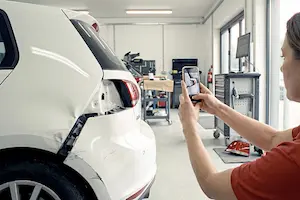
Henry Arroyo, who owns five Fix Auto USA locations in California's Coachella Valley, keeps OEM training and certification records on hand. His staff photograph the vehicle before repair planning begins and also photograph small parts. "This is where this documentation beats conversation," Arroyo said. "We can sit there and talk about it, but here's my document ..."
At Gold Coast, staff blueprint vehicles after the customer signs the repair authorization and before teardown. "Our goal is 100% disassembly, no supplements, one complete part order, no delays," Plischke said. Grundman said shops without documentation can't take a claim to court.
Customer education begins at the counter
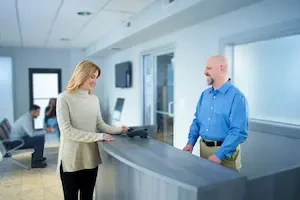
"I would say that most customers don't have a very good understanding of how any of it works when they come in," White said. Her staff help customers file insurance claims before they leave the shop.
Plischke said most drivers know three things about their policy: their insurer, their deductible, and whether they have rental coverage. "Our insurance policies are legal documents. They're legal binding contracts between two parties, and I want you to know that the collision repairer is not one of them," he said.
Nikki Anderson, co-owner of D&B Auto Body in Minnesota, warns customers up front when a minor-damage claim will likely get an AI-written photo estimate. "Something like this is probably going to be written by AI," she tells them. She said those estimates typically land at around a third to half of her shop's final estimate.
Anderson and Zack Newman, who runs Newman's Auto Body & Repair in Olathe, Kan., both address aftermarket parts with customers up front. Anderson tells customers Minnesota insurers can't require aftermarket parts without their consent. Newman discloses aftermarket parts and estimated that 50% to 60% of customers pay the difference for OEM parts.
Garcia's shop is producing short videos explaining deductibles and the difference between collision and comprehensive coverage. "You can never over-communicate," he said.
In separate coverage of the first 72 hours after a collision, Greg Luther of Helfman Collision Center in Houston said, "Insurance is just a form of payment ... not the authority on how your vehicle should be repaired."
Customers stay copied on insurer responses
Newman and Gold Coast both copy customers on correspondence with insurers. Newman sends supplements to the customer first and kept copying customers after one adjuster asked him to stop. Gold Coast audits an insurer's offer within two hours, then sends the carrier an itemized comparison with the customer copied.
Newman also holds vehicles until final supplements are approved, after losing money when insurers cut them. "So now we hold the car at the end until the supplement's approved," he said.
Maria Quintero, co-owner of Body Builders Automotive in Rolling Meadows, Ill., said her shop updates customers after disassembly and again after the insurer responds, so they know their final bill before pickup. "I feel like we are afraid to have conversations, so we omit them till the end, and then it gets worse," she said.
Total loss decisions get explained early
Garcia explains that a total loss decision depends on whether repair costs exceed the vehicle's current fair market value, regardless of how bad the damage looks. Center Collision title manager Darin Dewey said an insurer may total a vehicle when paying the owner its value and selling the damaged car at auction costs less than repairing it.
White said the insurer, not the shop, decides whether a vehicle is a total loss. "One of the misconceptions is that we are the ones that make that decision," she said.
Anderson and Newman both push back on valuations. Anderson encourages customers to check valuation reports for comparables that don't match their vehicle. Newman keeps disputed total loss vehicles on the lot. "It gives them some kind of a bargaining chip over the insurance company to get them a fair value," he said.
Four shops operate outside DRPs
Body Builders, Pat's Body Shop, Gold Coast, and Newman's shop operate without direct repair program relationships. Body Builders dropped all of its DRPs, which had made up about 78% of its business. "We really wanted to be pro-consumer, and we wanted to advocate for the consumer's right to choose the right repair," Quintero said.
"I refuse to ever sign a DRP because that takes away my ability to advocate for my customer," Grundman said. Plischke said walking away from Gold Coast's largest network relationship "was a much bigger decision" than dropping smaller ones.
Without DRP relationships, Newman's shop receives no referral work from insurers' programs. "It's especially trickier for us because I don't have any of them sending me any work," he said.
Shops tie advocacy to the repaired vehicle
Arroyo and Quintero both described their responsibility as extending to the vehicle after it leaves the shop.
"We need to put this car back on the road as safe as it came out from factory," Arroyo said.
"Not only was I responsible for the people inside my building, but I'm also responsible for the product that gets put on the road," Quintero said.
Taken together, the shops described an approach that starts before the first estimate. They document the damage and OEM repair requirements, explain coverage, parts rights, and total loss rules to customers, and copy customers on insurer correspondence.
When those steps don't settle a claim, shops have turned to appraisal clauses and small claims court to close the gap.
Want to share your shop's advocacy story? Every edition of The Advocate profiles a collision repair shop that went to bat for a customer in an insurance dispute, total loss reversal, denied supplement, or claims confusion. If your shop has a story like this, email us at lisa@autobodynews.com to be considered for a future feature.

Lisa McArdle