
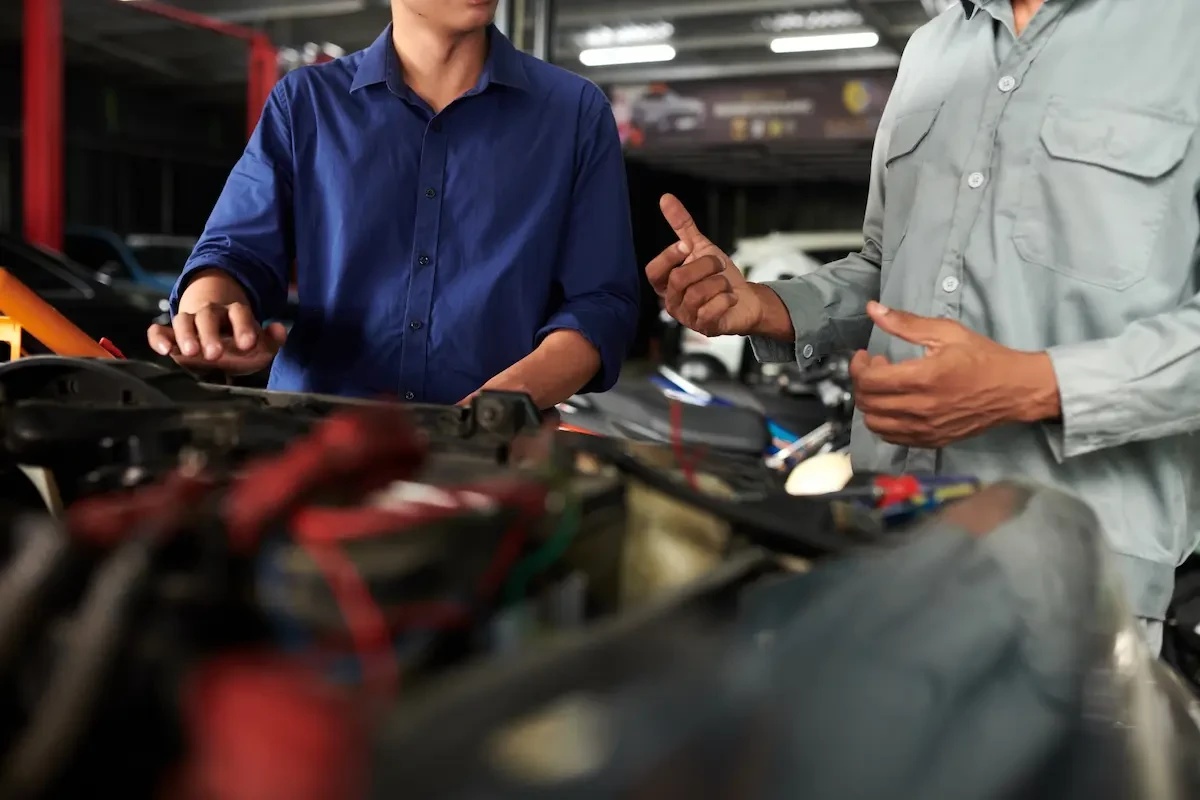
Zack Newman opened Newman's Auto Body & Repair from scratch roughly 14 years ago and now runs two locations in Olathe, Kansas, with 18 employees and OEM certifications with Mazda and Subaru. Newman said the shop is among the largest in the Kansas City area by sales volume without any direct repair program relationships at all.
"It's especially trickier for us because I don't have any of them sending me any work," he said.
That lack of DRP ties cuts both ways. Newman said the shop also takes on repairs after a customer's insurer steered them elsewhere and the job wasn't done right.
Keeping the customer copied on everything
If a teardown turns up additional damage, Newman said the shop writes the supplement and sends it to the customer first, with a discussion, before sending it to the insurer. From there, the customer stays copied on every email exchanged with the insurer.
“It really makes a big difference,” Newman said
He said one adjuster recently asked the shop to stop copying customers on correspondence. Newman kept doing it anyway, saying the practice puts pressure on the insurer to move faster.
Holding the car until the supplement clears
Newman said he used to release repaired vehicles as soon as the work was done, prioritizing getting customers their cars back quickly. That cost the shop money when insurers shorted the final supplement after the car was already gone.
“So now we hold the car at the end until the supplement's approved,” he said. With the customer copied on the same emails, he said, they end up applying their own pressure on the insurer to close it out.
He uses a similar approach on total losses he believes are undervalued: if a customer wants to keep the vehicle at the shop's lot rather than release it, Newman said that gives them leverage. “It gives them some kind of a bargaining chip over the insurance company to get them a fair value,” he said.
A two-week standoff over a truck bedside
Newman pointed to an active dispute as an example of how the approach plays out. A 2-year-old Chevrolet truck came in with damage to the left rear pillar and bedside, which Newman's shop said from the start needed a full outer and inner panel replacement. The insurer wanted the shop to try repairing the outer panel instead.
Newman said the shop took the panel apart and attempted the insurer's approach, but it still didn't work. The insurer still pushed for a pieced-together repair. Newman said the back-and-forth added about two weeks to the job, a delay the customer was informed of and accepted. He said the insurer will ultimately end up paying for the full repair scope the shop asked for from the beginning, at a higher cost than if it had agreed up front.
Explaining total loss and parts choices
Newman said customers not realizing they can choose their own shop is a common misunderstanding he runs into, something he said insurers' language around DRPs tends to obscure. He also walks customers through total loss decisions he thinks are premature: “You need to make sure they're giving you a fair offer for your car,” he tells them, adding that pushing back has turned a total loss back into a repairable vehicle "quite a bit over the last year.”
Asked what he sees as the most common misconception about full coverage specifically, Newman pointed to parts: many customers don't realize their policy may default to aftermarket parts, and don't understand the difference between aftermarket and OEM until the shop explains it.
The shop tells every customer up front when an aftermarket part is being used and gives them the option to pay the difference for OEM. Newman said customers choose to pay that difference roughly half the time or more, an estimated 50% to 60%.
Newman said carrier behavior varies widely; some insurers are straightforward to work with, while he said some of the larger national carriers cut what he submits, whether an initial estimate or a supplement, by roughly half regardless of what the on-site adjuster wrote, since the estimate gets reviewed and revised internally afterward.
How Newman builds advocacy into every claim
- Copy the customer on every insurer email, not a summary. Newman said it keeps customers informed throughout the claim.
- Send supplements to the customer before sending them to the insurer. It keeps the customer informed and gives them context before the insurer's response arrives.
- Hold the finished vehicle until the supplement is approved. Newman said releasing cars too early cost the shop money on shorted final payments.
- Let a customer's total loss vehicle stay on the lot if they want a second look. Newman said it gives the customer leverage to negotiate a fairer payout.
- Flag aftermarket parts by default and offer the OEM option. Roughly half or more of his customers choose to pay the difference once they understand the choice.
- Stand behind an accurate estimate rather than negotiate it down. “If the car needs it, it needs it,” Newman said.
Want to share your shop's advocacy story? Every edition of The Advocate profiles a collision repair shop that went to bat for a customer in an insurance dispute, total loss reversal, denied supplement, or claims confusion. If your shop has a story like this, email us at lisa@autobodynews.com to be considered for a future feature.




Lisa McArdle