

When an insurer won’t pay the full cost of a repair, Andy Grundman said, he doesn’t send the balance to his customer, and he doesn’t write it off. He takes it to small claims court.
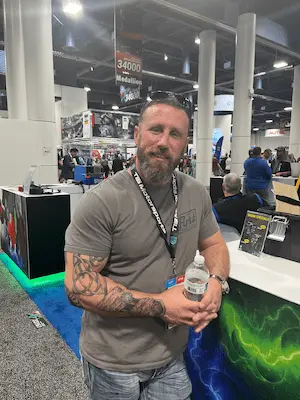
Grundman owns Pat’s Body Shop in Wausau, Wisconsin. In an interview with Autobody News at the 2026 SEMA Show, he described a process for recovering insurance short pays. The customer signs a post-loss assignment of benefits, and Grundman then sues the insurer on the customer’s policy in Wisconsin small claims court. He said the shop has recovered more than $40,000 over the last two years and has another $60,000 in cases he hasn’t filed yet.
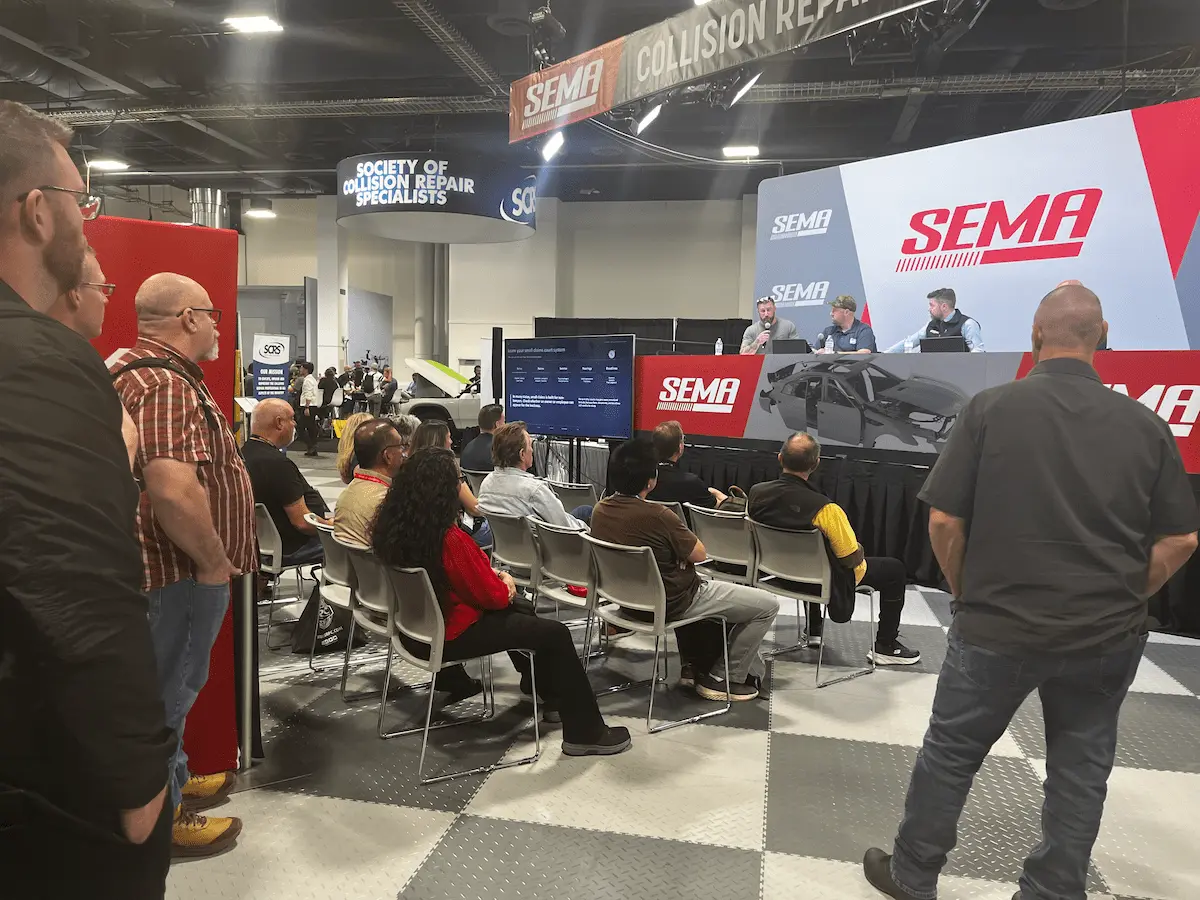
Grundman also spoke Nov. 5 at a Society of Collision Repair Specialists session on the show floor, “The Role of Small Claims Court in Consumer Disputes.” He founded a company, Good Faith Payment Systems, which he said is shifting into consulting for other shops on the process.
Why he stopped absorbing short-pays
Grundman said he will not join an insurer’s direct repair program.
“I refuse to ever sign a DRP because that takes away my ability to advocate for my customer,” he said.
Grundman said insurers have recently started asking customers to pay a copay to have repairs done a certain way. He said many shops absorb short pays rather than bill the customer, because billing could mean losing that customer.
“So a lot of shops are like, I’m just going to eat it. I’m just going to not take that money,” Grundman said.
“If small shops continue to do that, they’re going to go out of business,” he added
Grundman, who has served as president of the Wisconsin Collision Repair Professionals, said the shop challenges labor rate reductions, unpaid repair procedures, paint and materials short pays, and OEM parts disputes.
Stepping into the customer’s shoes
“It keeps me first party,” he said.
In one case Grundman described, the insurer left $2,600 unpaid on a $30,000 repair to his cousin’s vehicle. He said his cousin signed an assignment and the case went to trial. Grundman said he recovered about $2,300. He said the court also awarded $300 in attorney fees and his expenses.
Grundman said that before signing, his cousin asked whether he would owe Grundman money if the case was lost, and he told him he would not.
He makes the same promise to every customer who signs an assignment, he said during the SCRS session.
“If I lose, I let them off the hook, and I make sure they know that,” Grundman said. He noted that other shops may take a different approach and hold the customer responsible for the bill. He said he may change that policy over time.
He said the promise reassures customers that he has their best interest at heart. “We’re fighting it together,” he said.
At the end of the process, Grundman said, he breaks down for the customer what the shop did and what the insurer paid. He said that once the customer signs, the amount the insurer told the customer to pay goes away.
Grundman said one insurer’s policy included a clause barring policyholders from assigning claims without the insurer’s written approval. He said he researched the issue with attorneys. In his view, the clause is aimed at assigning a policy’s benefits before any loss, and once a loss occurs, the insurer’s financial responsibility exists no matter whom it pays.
From recovery company to consulting
Grundman said he first set up Good Faith Payment Systems so other Wisconsin shops could pass their customers’ assignments to his company, which would then pursue the claims.
“The problem I ran into is that the shops don’t document the process,” he said. He said the application he designed for shops had about 15 items on it.
He said he is now shifting the company into consulting, going into shops to help them with their documentation. He said he is also writing a playbook of about 350 pages on recovering collision repair short pays through the Wisconsin small claims system. He said it will cover how to talk with customers, how to document a repair from start to finish, and how to file claims.
“So I’m not an attorney,” Grundman said. He said he can advise and consult on a state’s small claims process once he has learned it, but he cannot represent shops in court. He said he plans to work with attorneys in other states to learn their processes.
Filing claims in batches
Grundman told the SCRS audience that he first learned the small claims process as a landlord dealing with tenants. He said shops should learn their own state’s system thoroughly.
“Wisconsin has it all. We can do it online,” he said. He said he uploads his documentation through the online system. He said labeling documents and uploading them as exhibits is something filers learn along the way, and that the courts cut them a lot of slack.
Grundman said many shops look at a single short pay, such as $1,300, and decide to absorb it. He said a shop can instead combine several claims against the same insurer into one filing, up to the small claims limit.
Wisconsin’s small claims procedure currently covers most civil money claims of $10,000 or less. 2025 Wisconsin Act 105, signed by Gov. Tony Evers, raises that threshold to $15,000. Under the enacted bill, the increase takes effect Jan. 1, 2027.
“You gain a lot of respect with the courts when you’re doing that because you’re advocating for your customers,” Grundman said at the session.
Telling customers what the insurer will say
Grundman said shops need to explain to customers what is happening with their claim and make clear that the shop is advocating for them. Because shops deal with the same small group of insurers, he said, they can tell customers in advance exactly what their insurer is likely to say.
Grundman said shops need to explain to customers what is happening with their claim and make clear that the shop is advocating for them. Because shops deal with the same small group of insurers, he said, they can tell customers in advance exactly what their insurer is likely to say.
Following up matters as much as the first conversation, Grundman said, because what an insurer tells customers can shift.
“So you want to make sure that you get feedback and you’ll see that sometimes the insurance companies will change what they’re saying,” he said.
He pointed to one insurer in his area whose representatives used to tell customers headed to his shop that it couldn’t guarantee coverage of all repairs or his labor rate. After he raised the issue with the insurer several times, he said, they stopped. “They do not mention any other shops,” Grundman said.
“You can’t speak for my business’s behalf,” he said he told the insurer.
Grundman said he copies the customer on every email with an insurer, whether the issue is labor or parts availability.
Starting with the right customer
For shops trying the process for the first time, Grundman told the SCRS audience to start with a claim where the insurer’s error is obvious. He also advised starting with a longtime customer, a friend of the shop, or a family member.
“Not only can you make a mistake with the courts, you can make a mistake with that communication process with the customer,” he said.
Grundman said he has won a number of cases and has scared away a couple of customers over the years by getting too excited about the process. He recalled a customer complaining about an insurer, and he offered to sue it on the customer’s behalf.
“OK, I got a little too aggressive,” he said.
He said shops should expect to make mistakes along the way and not be afraid of them.
What recovery has meant for a five-employee shop
Grundman said Pat’s Body Shop does under $1 million a year in business and has five employees. He said he has worked at the shop for more than 20 years and in the industry for 30, and he teaches at the local technical college.
In a 2024 Autobody News roundtable, Grundman said the shop had been in business since 1953 and that his father had passed it on to him. He said his early success recovering short pays led him to tell his father he would buy Pat’s or buy another shop. He said his father, still his most productive employee, agreed to sell.
“Now he makes more money than he’s ever made because of the money we recovered,” Grundman said.
How to start recovering insurance short pays
- Learn your state’s system. Grundman said shops should know their state’s small claims process thoroughly.
- Document the full repair. He said shops without documentation can’t take a claim to court.
- Use a post-loss assignment. He said the assignment lets the shop act in the customer’s place under the policy.
- Start with an obvious case and a loyal customer. Grundman said a friend, family member, or longtime customer is less likely to be scared off if something goes wrong.
- Protect the customer. He said he releases customers from the bill if he loses and makes sure they know it.
- Group claims by insurer. He said combining claims up to the small claims limit and filing them together means one court appearance instead of several.
- Prepare customers for the insurer’s message. He said shops should tell customers what their insurer is likely to say, then follow up.
- Copy the customer. Grundman said he includes the customer on every insurer email.
- Know your limits. He said that as a nonattorney, he can advise and consult but cannot represent shops in court.
Want to share your shop’s advocacy story? Every edition of The Advocate profiles a collision repair shop that went to bat for a customer in an insurance dispute, total loss reversal, denied supplement, or claims confusion. If your shop has a story like this, email us at lisa@autobodynews.com to be considered for a future feature.






Lisa McArdle