


With insurance claims down, collision repairers are working to capture more of the growing share of repairs paid for directly by customers, a recurring topic at industry meetings during SEMA week and since.
At the Collision Industry Conference (CIC) in Las Vegas in early November, Lauren Kolak of CCC Intelligent Solutions said her company’s data shows the average customer-pay invoice amount is $1,900, a number that has changed little over the past eight years. What has changed, however, is the prevalence of customer-pay jobs.
“So, $1,900 has kind of been the threshold for a while, but we have seen a movement from around 15 percent [of jobs] in the industry over the past decade being customer-pay to now about 26 percent,” Kolak said.
Jacob Dalton of Dalton Collision, which has two locations in the Knoxville, Tennessee, market, said customer-pay work accounts for about 14 percent of their business, but the average ticket is higher than the CCC data at just north of $4,000.

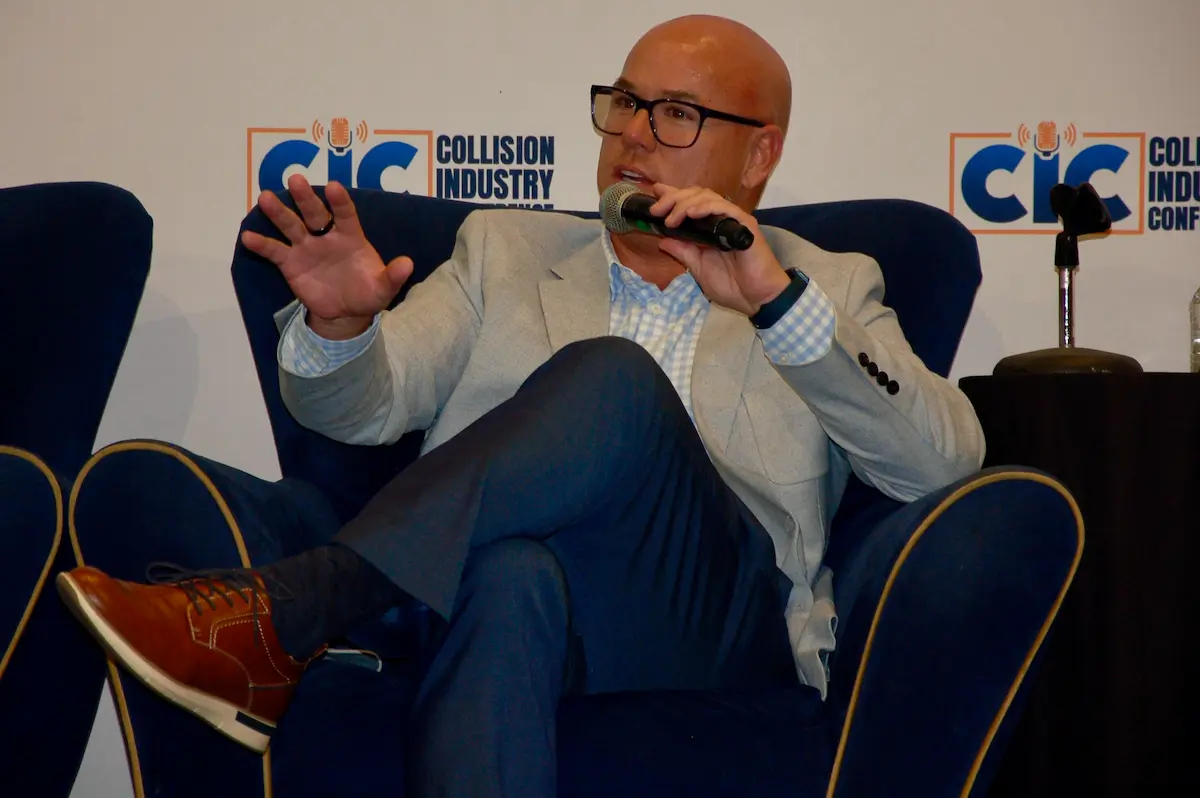
Jacob Dalton of Dalton Collision in Tennessee said capturing customer-pay work does require spending more time up front with the customer.
“You have to spend a little bit more time up front with them, explaining the repairs, looking over the repair procedures,” Dalton said. “We tell them, you don’t have to get this fixed, but it could potentially turn into more damage, such as rust, so they’re investing in their vehicle.”
John Reeves, chief strategy officer for B Street Collision Centers, which operates 15 large shops in the Midwest, said his company’s average customer-pay job has remained around $3,000 over the last four years.
“But the frequency of customer pay has grown from 9 percent to 15 percent of our total ROs,” Reeves said.
Reeves said showing a customer what filing a claim could do to their insurance premiums for several years is an effective way at capturing a job as customer-pay.
Largest MSOs remain focused on insurance work
In good news for smaller MSOs and single-location shops, some of the larger consolidators acknowledge they haven’t been structured to go after customer-pay work aggressively.
During a quarterly earnings call with investors in November, for example, Brian Kaner, CEO of Boyd Group Services (the Canada-based parent company of Gerber Collision & Glass), was asked if the company was seeing a change in the level of its customer-pay work.
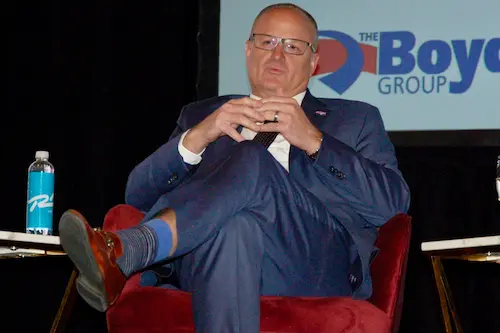
Brian Kaner, CEO of Boyd Group/Gerber Collision, said his company has taken steps to offer customer financing, but remains focused primarily on insurance-paid work.
Kaner said self-pay is still "a small piece of our business," but it's growing faster than insurance volume, though "off of a much smaller base." He added that the average self-pay ticket is much lower than an insurance-paid job.
Insurance work is still the company's largest segment and its main focus, Kaner said. Gerber has started offering tools such as the Sunbit financing program so consumers can pay for self-pay repairs over time.
"So, we're taking steps toward being able to be more amenable to a consumer," he said, "but the focus of the business still remains heavily on our insurance partners."
Crash Champions CEO Matt Ebert made a similar acknowledgement related to customer-pay work during the MSO Symposium held during SEMA week. Ebert said he sees performance on insurer metrics as the most compelling opportunity for his company to grow when claims volume is down.
Ebert said scorecard performance is the only way to win in DRP work. Customer-pay is a different story, and he admitted plainly, "Large MSOs are really bad at capturing customer-pay work."
He said part of the problem is the administrative load placed on staff, who are "just trying to get the file off of their desk." Crash Champions now tries to hire people with stronger sales skills, because the company sees true salespeople as the ones who win customer-pay jobs, and that work is becoming a bigger share of the market.
"But smaller companies can move a lot quicker at that than we'll be successful doing," Ebert said.
Financing helpful, but not widely used
Boyd/Gerber is certainly not alone in adding free or low-cost customer financing options as one way to capture more customer-pay work. Among about 300 shops responding to a survey conducted by CRASH Network in March, about 27 percent said they offer customer financing, which is nearly twice the percentage that said that a year earlier.
Unfortunately, however, many of those shops also acknowledged that financing option is not something a lot of customers use. Nearly 9 in 10 of the responding shops offering financing said no more than “a few” customers take advantage of it.
That was echoed by a number of the collision repairers discussing their efforts at pulling in more customer-pay work.
“We have Sunbit, but not a lot of people use it,” Dalton said at CIC.
“We rolled [customer financing] out last year and I don’t think we’re getting everything out of it that we can,” Reeves similarly acknowledged. “I think we need to do a better job with it. I want to try to automate the process of putting that in front of the customer and not rely as much on our staff to sell that option. Make it more just a transaction that a customer can deal with on their own that will notify us when it’s done.”









John Yoswick