


A couple of months after she was rear-ended, a Merced Auto Body customer called the shop just to share some news: her deductible had arrived in the mail. She told Israel Garcia, the shop's co-owner, that she never expected to see the money again.
"Trust the process," Garcia recalled telling the customer. "It's a lengthy process, but it'll work."
Merced Auto Body, which Garcia co-founded in June 2024 with two partners, built its early reputation on process discipline in the paint booth. Garcia didn't have a single high-dollar dispute to point to the way some shops in this series have. What came through instead was this kind of follow-through on the smaller, easily missed parts of a claim, applied consistently across customers navigating the process for the first time.
Explaining the basics nobody explains
"It's either their first time or they haven't done it in years, or they ... just flat out don't know," Garcia said of customers filing claims. "There's so much misinformation." He pointed to how unreliable online research can be: "Even if you Google or YouTube it, there's so many different people telling you so many different things. It just gets crazy."
Garcia said self-pay repairs at his shop have roughly tripled recently, by his own informal estimate, as customers grow terrified to file claims at all. Separately, Merced Auto Body is producing short videos breaking down concepts like deductibles and the difference between collision and comprehensive coverage, aimed at customers with no insurance background.
"We just want to make it so the average person who's not in the industry understands it,” he said.
Documentation is the argument
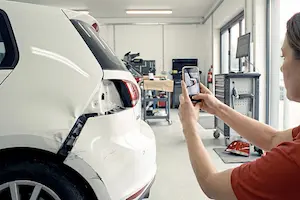
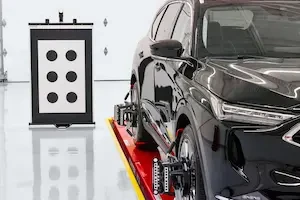
Garcia said the shop checks manufacturer position statements for ADAS calibrations and scanning requirements through platforms like RepairLogic before writing an estimate. For structural repairs, such as quarter panels and rear bodies, he pulls procedures from Alldata or directly from the OEM. When an insurer pushes for aftermarket parts, Garcia said the shop will order the aftermarket part, photograph it to document inferior quality, and use that documentation to argue for an OEM or CAPA-certified replacement instead.
Garcia said having a photo on file has settled disputes on the spot more than once, recalling a case where an adjuster called about something missing from the file: "I just looked through my file. Oh, I have a picture of it."
If you make that adjuster's life easier, they're going to make your life easy, Garcia said. "Put it on the silver platter. Do the research for them so ... it’s done."
Total loss, explained before the phone rings
Garcia said a common source of customer confusion is a total loss determination on a vehicle that doesn't look badly damaged, since the decision hinges on whether repair costs exceed the vehicle's value, not on how bad the damage looks. He also has to explain that the number insurers use is current fair market value, not what the customer originally paid for the car. He walks customers through their options if they choose to retain a salvage title vehicle, including the safety inspection required to put it back on the road in California.
"I want to make sure you're not making a bad choice that's going to put you in a bad situation," Garcia said.
That includes customers who don't realize retaining a salvage vehicle can reduce their settlement, or who aren't told they can surrender a salvage vehicle instead of storing and disposing of it themselves. Garcia said the shop tries to prepare customers for that call before it comes.
"Insurance isn't for right now," Garcia said. "It's for the what if. What if you get into an accident? What if my car gets totaled out? What if?"
For other shops, Garcia's advice centers on communication as much as paperwork: check in with customers even when there's nothing new to report, and document everything, including photos of every part fitting or not fitting before repairs begin.
"You can never over-communicate," Garcia said. "Customers absolutely love when you text them and call them and let them know what's going on, because you have probably their second most expensive possession in your hands, and something that they interact with day to day and day out."
How to build customer education into everyday claims work
- Explain subrogation before a customer asks. Most customers don't know a paid deductible can come back to them if the other driver was at fault. Raising it early sets expectations and builds trust, even if the outcome takes months.
- Pull documentation before writing the estimate, not after a dispute starts. Garcia checks position statements through platforms like RepairLogic and pulls structural procedures from Alldata or the OEM as a standard step in every estimate, not a reactive one.
- Photograph aftermarket parts as evidence, not just paperwork. When an insurer pushes for a cheaper part, ordering it and documenting its quality gives shops a concrete basis to push back for an OEM or CAPA-certified replacement.
- Walk customers through total loss math before the insurer calls. The confusion isn't usually about the damage. It's not understanding that a total loss is based on current fair market value, not what they paid, and not on how the car looks.
- Over-communicate, even with no news to report. A quick check-in call or text with no update still reassures customers and reduces the number of anxious calls a shop fields later.
- Confirm your state's appraisal rules before relying on them. California doesn't currently require insurers to include an appraisal clause in every auto policy the way Washington, Texas, Alaska, Rhode Island, and Massachusetts now do. Shops outside those states should verify what's actually available to their customers, and even within them, some major insurers have carved appraisal clauses out of their policies, before pointing customers toward this option.
Want to share your shop's advocacy story? Every edition of The Advocate profiles a collision repair shop that went to bat for a customer in an insurance dispute, total loss reversal, denied supplement, or claims confusion. If your shop has a story like this, email us at lisa@autobodynews.com to be considered for a future feature.



Lisa McArdle