


In numerous examples across the country, collision repair facilities are reporting disagreements between their customers and their customers’ insurance companies over repair costs or total loss values. In a small but growing number of instances, customers are choosing to invoke the Right to Appraisal (RTA) clause, a provision in their insurance policy that outlines a structured process to resolve disputes over the value of the loss.
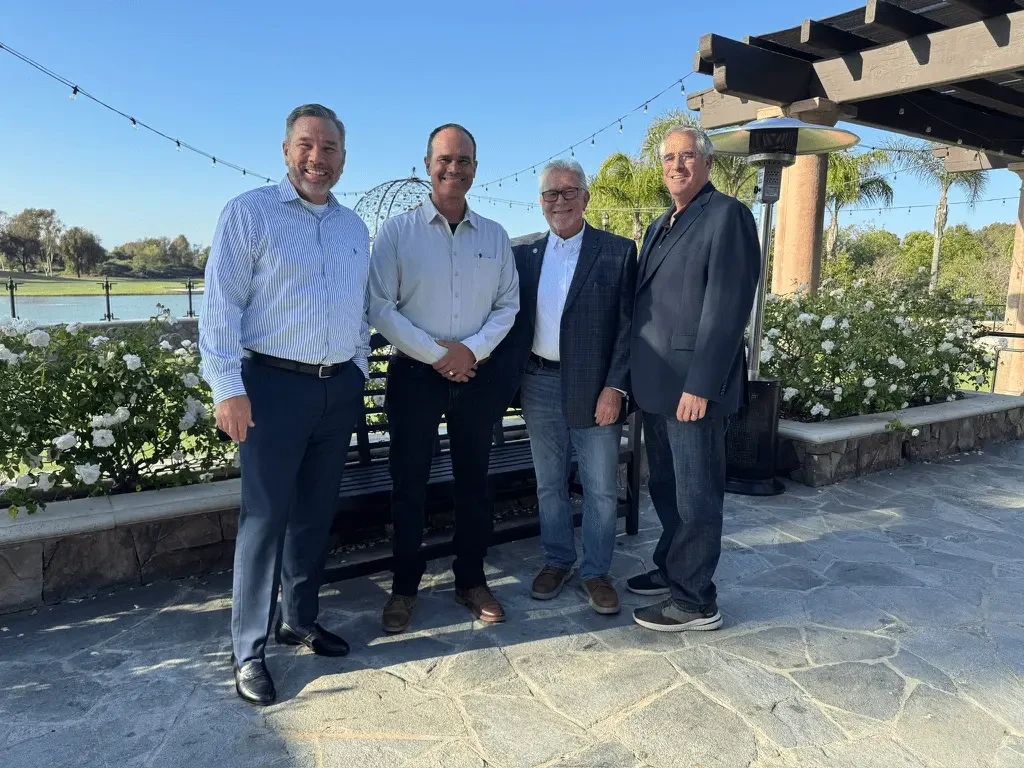
Bryan M. Thomas, Esq., a partner at Del Tondo & Thomas LLP who specializes in automobile and insurance law, recently shared insight about the appraisal clause during a California Autobody Association (CAA) Los Angeles/Orange County chapter meeting in May. The event was held in Seal Beach, CA. He was joined by Mark Olson, CEO of Vehicle Collision Experts (VecoExperts) and president of Future Forensics, and Peter Vann, an appraiser and estimator for Milo Claims, a licensed public adjusting company focused on automotive claims.
Anthony Guinn, president of the CAA Los Angeles chapter, stressed the importance of having chapter meetings to provide members the opportunity to voice their opinions and learn about topical issues, such as the RTA.
How the appraisal clause works
During the meeting, Thomas explained that the appraisal clause is an informal arbitration resolution method available only for first-party claims when it’s found in the customer’s policy under the collision/comprehensive coverage section. This right is not available for third-party liability or claimant claims where the at-fault party’s insurer is paying for repairs.
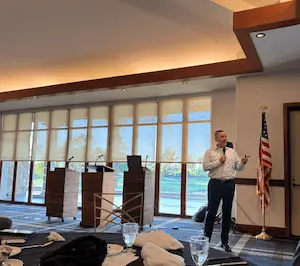
Bryan Thomas, a partner at Del Tondo & Thomas LL
A first-party claim is one in which customers file with their own insurance company following an accident. In a third-party claim, customers file with the other at-fault driver’s insurance company or can seek damages through a civil court action directly with the at-fault party.
“The RTA is a cost-effective way to resolve disputes with a customer’s insurer over the amount of loss,” said Thomas. This includes underpayment of repair costs, actual cash value (ACV), and total loss charges, storage, etc. In many respects, Thomas said, it levels the playing field since the insurer is not the final decision-maker of the cost of repairs or the total loss value.
Generally, this is a valuation-only process, since the RTA cannot resolve causation disputes (unrelated damage) or coverage issues. Thomas acknowledged that there are a few exceptions, such as Mercury Insurance, which allows appraisers to also determine the cause of damage.
When an insurance policy creates the right to appraisal, Olson noted that each policy dictates its specific process for the RTA and whether it can be invoked.
He emphasized that standard RTA language is typically not standard across insurance policies and can vary from state to state. As a result, he encouraged shops to have their customers read their insurance policies.
Appraisal clause is contractual, not guaranteed by law
Thomas said the RTA is contractual in nature. While most auto policies include an appraisal clause, Thomas mentioned some notable exceptions, including State Farm and the Automobile Club of Southern California.
“If a policy doesn’t have it, the customer/insured has no independent legal right to an appraisal,” said Thomas. However, some states — Alaska, Rhode Island, Massachusetts, and recently, Texas, and Washington — mandate the appraisal clause in every auto policy.
Olson outlined the typical RTA process:
- Invoke the RTA
- Both parties hire an appraiser
- If the appraisers agree, the process ends
- If they do not agree, they use an umpire
- If two out of the three parties (two appraisers and umpire) agree, the decision is binding
Thomas shared the standard appraisal clause language, which typically looks like the following:
If we and you disagree on the amount of the loss, either may make written demand for an appraisal of the loss. In that event, each party will select a competent and impartial appraiser. The two appraisers will select an umpire. The appraisers will state separately the actual cash value and the amount of loss. If they fail to agree, they will submit their differences to the umpire. A decision agreed to by any two will be binding.
Each party will:
- Pay its chosen appraiser; and
- Bear the expenses of the appraisal and umpire equally
How the customer formally invokes the right to appraisal
If a dispute with the customer’s insurer over the cost of repairs exists, Thomas said the customer/insured can invoke the appraisal clause by demanding in writing that the dispute be resolved by appraisal. He said the exception is Farmers’ auto policies, which require the insurance company to agree to the appraisal.
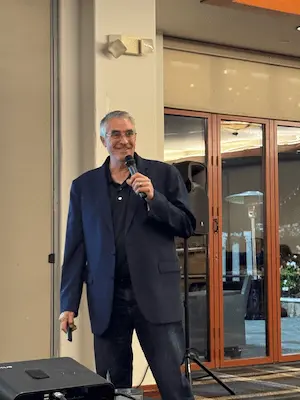
Mark Olson, CEO of Vehicle Collision Experts
(VecoExperts) and President of Future Forensics
Thomas cautioned shops to make sure the customer is the “Named Insured” under their policy, not just an insured or additional insured. This is because most policies require the “Named Insured” to be the one demanding an appraisal. “A body shop cannot demand an appraisal,” he pointed out, noting that Mercury recently removed a body shop’s right to invoke appraisal.
Each side must then hire (at their own expense) an independent and competent auto appraiser.
“An insurer’s material damage adjuster is not independent and cannot serve as its appraiser,” he explained. “Likewise, a shop’s estimator cannot be the customer/insured’s appraiser.” He or she must be independent and neutral and cannot be affiliated with either party.
Olson’s tips for choosing an appraiser:
- Ensure he/she has experience with the RTA clause
- Ensure he/she has prior insurance and shop experience
- Be aware of appraisers who make big promises, which are generally not delivered
The two designated appraisers then select a third auto appraiser to act as the independent umpire if needed. Each side is responsible for paying half of the umpire’s expense. If an umpire cannot be mutually selected, then either party can petition the court to appoint one.
In California, as in many states, an appraisal is treated as a form of arbitration and is governed by the state’s arbitration laws, as well as the Federal Arbitration Act (FAA).
“This means the disclosures required of an umpire are the same as a neutral arbitrator, such as personal or professional relationships with either side, prior cases or business dealings, especially prior employment by the insurance company,” said Thomas.
How appraisers negotiate and finalize the award
Each appraiser is required to state the ACV and the amount of loss. During the negotiation, the appraisers work toward an agreement on the dollar amount of repairs or the vehicle’s value if it’s a total loss. “Once they have come to an agreement, the award is signed by both appraisers and must clearly state the amount of loss,” said Thomas.
If the appraisers cannot reach an agreement, the dispute goes to the umpire for a decision. The umpire may hold an arbitration hearing, where he/she evaluates the submitted evidence (usually each appraiser’s estimate, photos of damage, parts invoices, etc., or the appraisers’ ACV reports), and listens to each appraiser’s arguments.
“It’s not uncommon for both sides to agree to simply have the umpire issue an award based on the submitted documents without the necessity of a hearing,” Thomas noted. Ultimately, the umpire will issue an award stating the amount of loss and ACV.
“The umpire typically signs an appraisal award for the repair amount and prepares a repair estimate supporting the award amount,” he said. “Then, if either appraiser accepts and signs the umpire’s award, it is binding.”
Once the award is signed by any two, it is typically sent to the insurer with a written demand for payment, including instructions on how to pay. One challenge Thomas discussed is when the customer is paid directly but doesn’t pay the body shop, which is required in California under California Insurance Code 560(a). To avoid this scenario, Thomas recommends hiring legal representation. If the insurer refuses to pay the balance due, the insured/customer can petition the court to confirm the arbitration award and have judgment entered against the insurer.
Olson has encountered companies that deny payment after the RTA process is finished and some will total the car regardless of the amount of the award.
He offered the following advice for shops:
- Never let an insurance company do a line adjustment or concession line
- Never write an estimate for what you assume they will pay
- Never agree to repair a vehicle incorrectly
- Never agree to repair a vehicle without following the OEM procedures
- Never delete an operation from the estimate because you are not charging for it
Thomas estimated that the cost of appraisal arbitration typically ranges from $500 to $1,500, depending upon the repair complexity. Each side pays for their appraiser and 50% of the umpire fee. As a good business practice, many of Thomas’s body shop clients pay all appraisal expenses to keep the customers happy and returning.
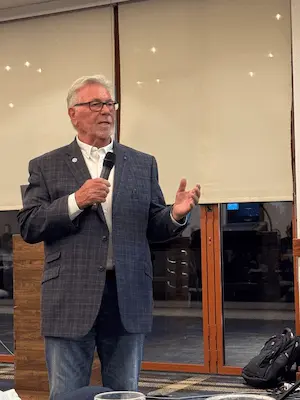
Anthony Guinn, president of the CAA Los Angeles chapter
Vann has also found that in most cases, the shop pays for the appraisal clause. “The shop is keeping the job and usually getting paid well for the repairs once the appraisal clause is completed,” he said. “Most customers are looking for the easiest and fastest way of getting their car repaired. Adding the cost of the appraisal clause to their deductible and other possible costs usually will not go over well.”
In Olson’s experience, the RTA process can take a few hours to several years but is typically about one or two months.
He described the difference between a traditional arbitration, which requires an attorney, versus the appraisal clause, which uses appraisers. “Some states allow public adjusters to be involved instead of an attorney in arbitrations,” he explained. In some cases, Olson indicated that the arbitration award can be appealed and converted to an appraisal clause. Typically, he said this applies to an uninsured or underinsured motorist for injuries and property damage depending on the policy.
Why most shops turn to an attorney for appraisal claims
Vann, who focuses on repairable vehicle disputes, has handled hundreds of appraisal clause actions. He noted that many shops are using legal services to assist their customers when choosing to invoke the appraisal clause and estimated that approximately 95% of the appraisal work he does is through an attorney who specializes in appraisal clause settlements.
Vann said there are several advantages to using an attorney, which include:
- Ensuring it is a smooth process invoking the appraisal clause and expediting the claim
- An attorney can address any resistance from the insurance company and, if necessary, petition the court
- The attorney will make sure that the money is issued promptly and properly to the shop
- It provides the shop the ability to continue and complete the repairs, keep the customer happy, and ensure the claim is paid
If a dispute cannot be resolved regarding the cost of repairs and the insurance company does not have an appraisal clause, Vann said the only alternative is to file a lawsuit for the difference. “If the difference is $12,500 or less, a lawsuit can be filed in small courts claim,” he said.
In the case of a third-party claimant, Vann said the options for resolution are limited to filing a complaint through the Department of Insurance (DOI) and/or filing a small claim. Milo Claims has assisted several shops and customers in small-claims lawsuits over the differences in repair costs.
Vann estimated that the process takes an average of 45 days to get to court. Once the case is heard, he said the results are usually received in about seven days. “There are no attorneys allowed in small court claims, giving the customer an even playing field without the expenses of an attorney,” he commented.
At the July 15 L.A./O.C. chapter meeting in Seal Beach, CA, Thomas will team up with Tim Ronak, senior services consultant for AkzoNobel, to share information about fair claims practices, current laws, and navigating the road ahead to create meaningful change.
For information about the meeting, contact Cindy Shillito cindy@calautobody.com.
For information about CAA membership and tools available for independent shops and MSOs, visit: https://www.calautobody.com/.




Stacey Phillips Ronak