


Henry Arroyo owns five Fix Auto USA locations across California's Coachella Valley: Fix Auto Cathedral City, Fix Auto Indio, Fix Auto Palm Desert, Fix Auto Palm Desert South, and Fix Auto Palm Springs, running nearly 50 employees across the group. He started his collision repair business 30 years ago at 24 and joined the Fix Auto USA network in 2014.
For Arroyo, avoiding an insurance dispute starts long before one happens. He said customer education begins the moment a car is checked in, not after an insurer pushes back on a repair, and that habit of explaining the process early sets the stage for the insurance claim documentation his shops rely on when disputes do come up.
Documentation beats conversation
Arroyo shared a list of OEM certifications his shops hold, including Lexus, General Motors, and Honda, along with Infiniti, Nissan, Chrysler, and Fiat, and said he leans on that OEM training when an insurer questions a repair decision.
"This is where this documentation beats conversation," Arroyo said. "We can sit there and talk about it, but here's my document ... I can show you that what I'm saying comes from the OEM manufacturer. It's not something that I'm making up ... We need to put this car back on the road as safe as it came out from factory."
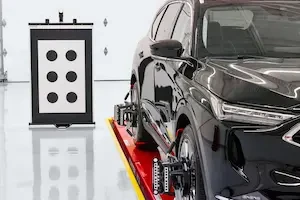
That extends down to small components. On vehicles with ADAS, Arroyo said even a bumper's built-in distance sensors need to be measured, calibrated, and relearned once removed and reinstalled. "Documentation, documentation, documentation," he said.
For Arroyo, that insurance claim documentation starts with the OEM paperwork his shops keep on file, ready before an insurer raises a question.
Starting the conversation before the damage is found
Arroyo said staff walk customers through the intake process, including photographing the vehicle and collecting their statement of loss, before any repair planning starts, since anything a teardown finds later needs to line up with that statement.
He asks customers granular questions up front, such as whether anything shifted inside the car during the crash, so the shop isn't blindsided by damage that doesn't match the reported story. He cited one example: on some Volvo models, he said, seatbelt indicators can register as off when only the driver is in the car, a detail he said the shop has to explain so it isn't mistaken for evidence of an undisclosed passenger.
Teaching customers what their own car can do
Arroyo said many customers don't understand the safety features already built into their vehicles, features insurers will ask about during a claim. He recalled showing a friend who'd just bought a BMW X7 that the vehicle could change lanes, brake, and accelerate on its own, features the dealership never walked him through.
He said striking that balance is difficult. Some customers, he said, are receptive to a full technical explanation; others resist it. "You have to make sure that you do because this is a safety issue that we need to address, and your insurance needs to put it back the way it's supposed to work," Arroyo said he tells them regardless.
Arroyo said the most common gap he sees is customers who don't understand what they bought. He described cases where drivers didn't realize their deductible was $1,000, or that their policy carried only a $20,000 minimum on a $30,000 vehicle. Others don't know whether their policy endorses OEM parts or defaults to aftermarket.
An active example: repair or replace
Arroyo described an in-progress negotiation over a liftgate he first estimated at around $2,000 before correcting himself to roughly $1,800, where his technician believes he can repair it for about three-quarters of the replacement cost if given additional labor hours.
The insurer's pushback centered on the number of hours quoted for the repair. Arroyo said estimated hours can vary by which technician does the work, so he assigns his most experienced technician, what he calls his "A tech," rather than a less experienced one, since his shops also work against the clock on cycle time.
Like Merced Auto Body in an earlier installment of this series, Arroyo didn't point to a single resolved dispute with a final dollar figure, unlike Center Collision in Tacoma, Washington, which did. What came through instead was a standing operating habit, applied the same way across five shops: photograph everything, keep the OEM paperwork on hand, and explain the repair to the customer before the insurer ever calls.
How Arroyo builds documentation into everyday claims work
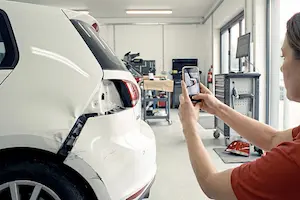
- Photograph small parts, not just big damage. Keep evidence for every line item, not just the expensive ones.
- Collect the customer's statement of loss before repair planning starts. It gives the shop a baseline to check newly found damage against, and a way to flag discrepancies before the insurer does.
- Pull OEM certifications and procedures as a default, not a reaction. Arroyo's shops keep OEM training and certification records on hand as standard documentation, so it's ready before an insurer questions a repair decision.
- Document small components, not just major repairs. On ADAS-equipped vehicles, even a bumper's built-in sensors need measurement and calibration once reinstalled, and Arroyo's shops keep records of that work too.
- Explain built-in safety features the dealership skipped. Customers who understand their own car's cameras and sensors are less confused when a claim involves recalibrating them.
- Walk customers through deductibles and parts coverage early. Confusion about OEM versus aftermarket endorsements and coverage minimums is common and avoidable before a claim starts.
- Match technician skill to the job, not just the clock. Arroyo assigns his most experienced technician when an insurer disputes the hours a repair should take.
Want to share your shop's advocacy story? Every edition of The Advocate profiles a collision repair shop that went to bat for a customer in an insurance dispute, total loss reversal, denied supplement, or claims confusion. If your shop has a story like this, email us at lisa@autobodynews.com to be considered for a future feature.




Lisa McArdle