


Collision repairers and others in the industry in the first half of 2026 submitted more than 1,000 inquiries related to missing or potentially incorrect information in the three primary estimating systems — and the impact is showing up in the estimates shops write today.
Those inquiries were collected and processed through the Database Enhancement Gateway (DEG), a free service offered to the industry in the interest of improving the accuracy and completeness of the estimating databases. Although the major estimating system providers have long offered a way for anyone in the industry to submit such inquiries directly to them, the DEG was developed about two decades ago as a centralized system to enable the industry to monitor what happens to those submissions.
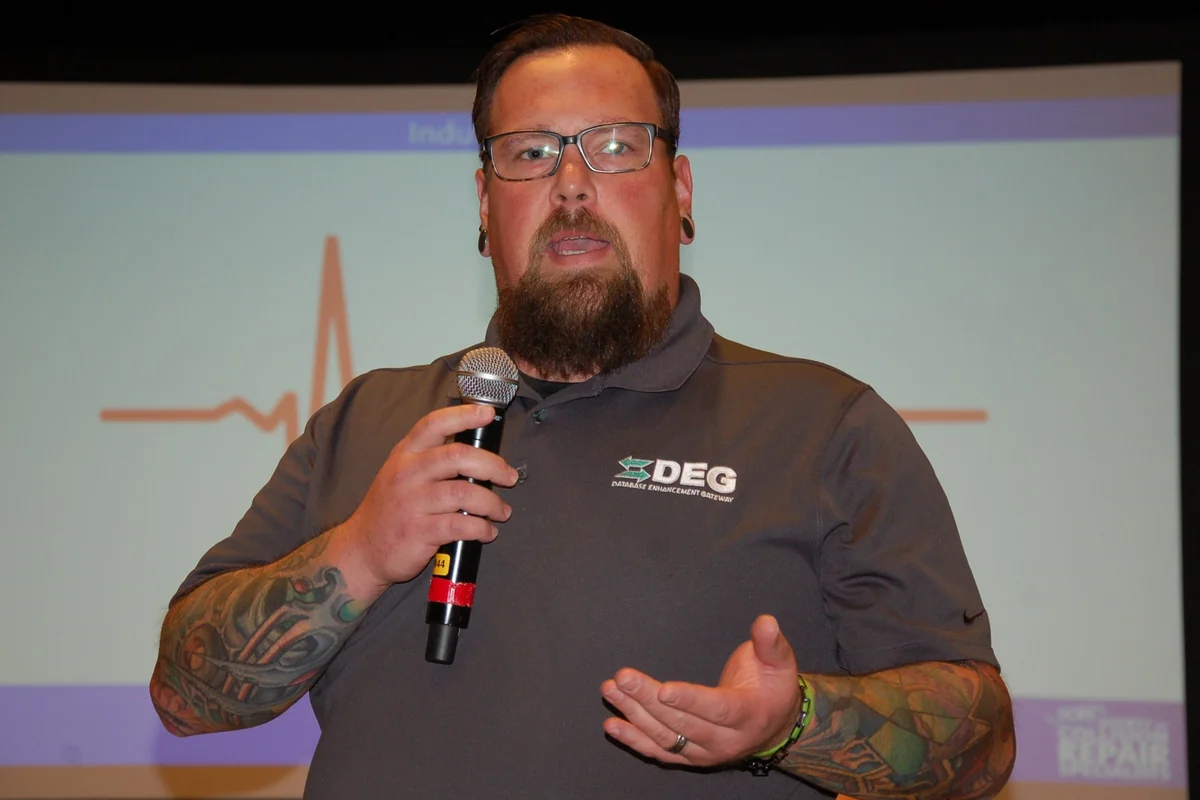
Danny Gredinberg, the current administrator of the DEG, said the 1,030 inquiries submitted in the first six months of this year was about 10% fewer than the same period last year, but the number of inquiries submitted this year that resulted in changes to the estimating systems is up.
“Overall, 46.7% of the inquiries have resulted in an update or correction of some sort within the three estimating systems,” Gredinberg said, an increase from 43% in the first half of 2025. “Combined, 745.1 labor units were corrected within the body or mechanical hours. About 166.6 total units of labor were added to the paint column. And $10,227 were added in terms of parts [that had been missing] to all three databases combined.”
Repeat submitters are flagging included operations
Gredinberg said one DEG user noticed “a flaw across” many vehicles in one of the databases, in which “the door check is coming up included” when replacing the outer door skin, but the system’s guide does not list it as included.
“He’s working hard to get that fixed for the industry because I get 20, 30, sometimes 40 inquiries a day from him,” Gredinberg said. “Those little inquiries result in anywhere from about one to three [labor] hours [added] per inquiry. We have another user that identifies body opening weather strips on a liftgate that, again, sometimes shows up as an included operation. And that’s an easy submission to get corrected.”
MOTOR adjusted times on the 2026 4Runner and 2025 Accord
Gredinberg pointed to a number of other recent inquiries resulting in changes that improve the estimating systems. One was related to replacing a nameplate on a 2026 Toyota 4Runner tailgate. The replacement nameplate arrives in two rows, not laid out as it needs to be on the vehicle.
“What that means is you have to go to Toyota TechInfo and print out a 5-page procedure on how to install the nameplate,” Gredinberg said. “That procedure comes with measurements that you must follow to ensure that you have proper spacing.”
The person submitting the inquiry related to the labor time for the nameplate in the MOTOR Information Systems database (used by the CCC estimating system) suggested the three-tenths of an hour labor time should be three times that; after review, MOTOR changed the 0.3 hours to 0.4. But Gredinberg also noted that while the procedure calls for the use of a laser level and that is included in the positioning process, “the assembly or setup of the laser level itself is not included.”
Sometimes inquiries result in changes to labor time allowances in the estimating system for commonly repaired vehicles. An inquiry submitted in June noted that the lower cladding on the rear cover of the 2025 Honda Accord is finished, but there was no refinish time in the MOTOR database. After review, MOTOR added a refinish time of 1.3 hours along with a footnote that states, “Refinish time is provided for those instances when refinishing is required or for some repair situations.”






John Yoswick