


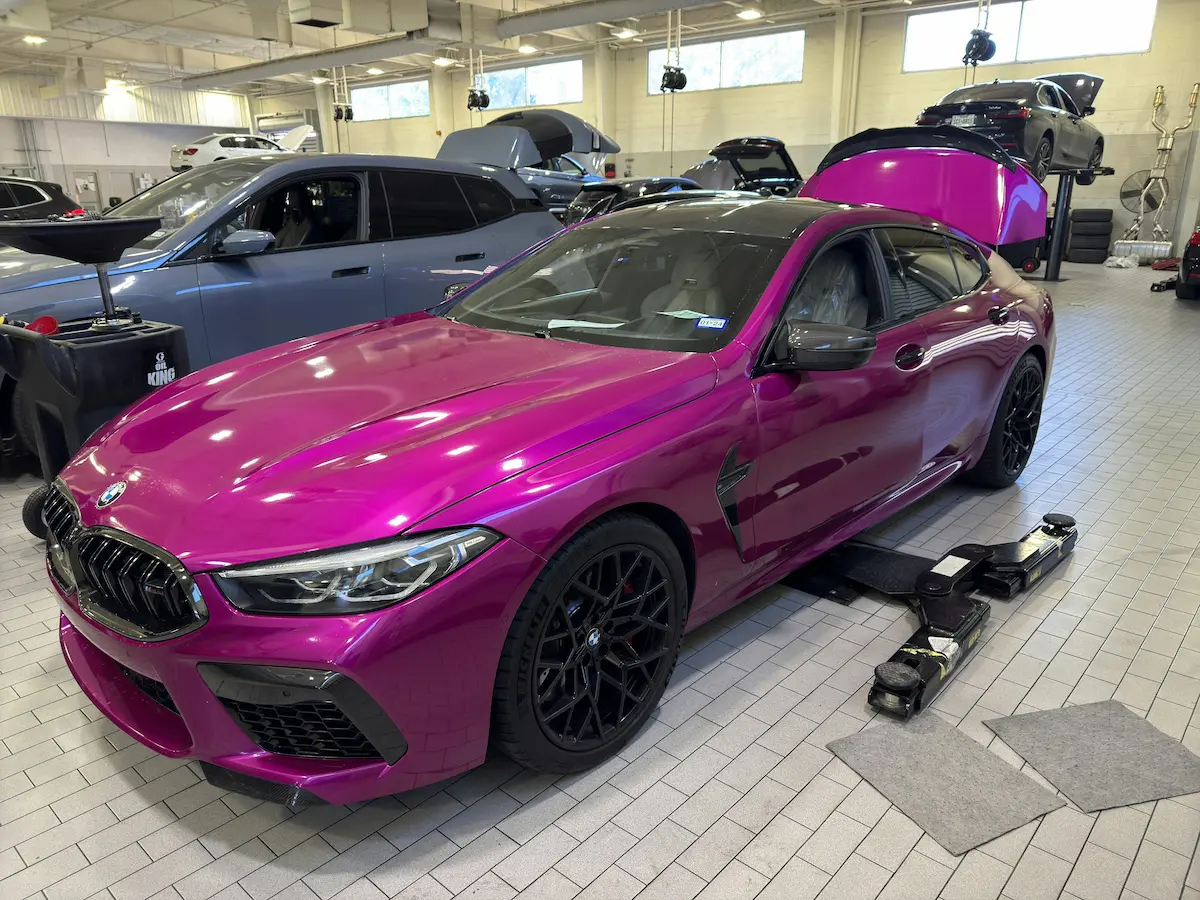
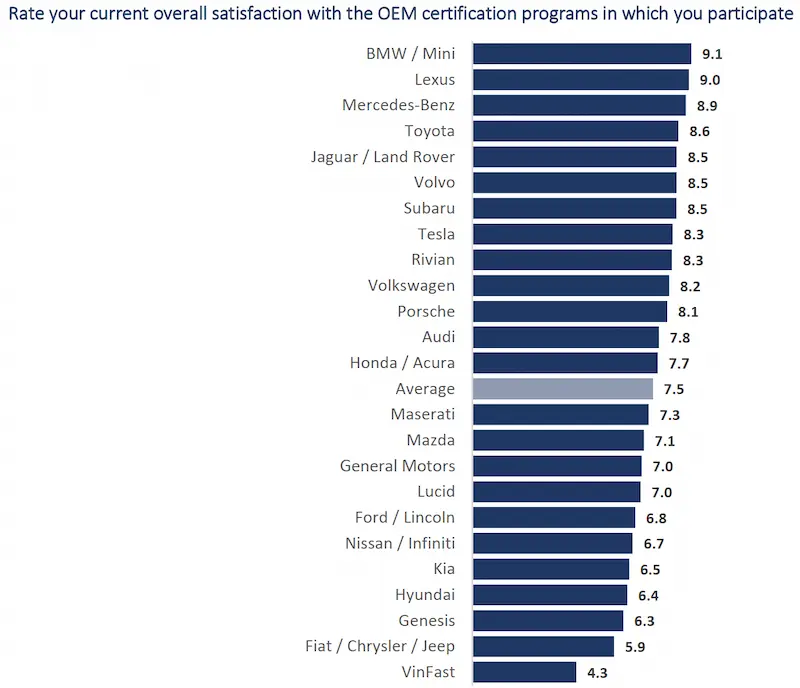
Collision shops certified by BMW-Mini, Mercedes-Benz, Toyota, and Lexus are the most satisfied with those OEM certification programs, according to findings from the "Who Pays for What?" survey conducted this past summer.
"Mercedes offers great educational training, and are more loyal to their certified shops," the manager of a large independent shop in the Southeastern U.S., said of that automaker's program.
The top spots in this year's ranking are a change from the survey results in each of the prior two years, when Porsche-certified shops gave that program the highest marks. In fact, 10 OEM certification programs received a higher rating than Porsche's did this year.
Average score hits a new low
The survey asks shops to rate their satisfaction with the OEM certification programs in which they participate on a scale from 1 (low) to 10 (high). Across two dozen such programs, shops rated their satisfaction level at an average of 7.5, down for the second year in a row. (Falling from 8.3 in 2024, 7.5 is the lowest average score since the surveys began asking about OEM certification program satisfaction in 2021). About half the automaker programs saw a decline in the average satisfaction rating they received compared to the prior year in 2025 and again in 2026.
Toyota and BMW are the only two programs to be among the top five from 2024 through 2026. "Great training, restricted parts, great dealer and corporate support, and good referrals," the manager of a BMW-certified shop in Oregon said of that program.
"Impressed with their OEM tech info, training, and network as a certified shop," the manager of an independent shop in Ohio said of the Toyota program. "Good interaction and communication from OEM to shop," the owner of an independent Toyota-certified shop in Northern California said.
But Toyota's average score, though still among the highest, has declined from 9.0 in 2024, to 8.9 last year and 8.6 this year. The manager of a Toyota dealership shop on the East Coast voiced frustrations with the program. "We were originally told the telematics would help drive more work here. It has not," he said. "We were told they were going to begin working on insuring new drivers and pushing the business to OEM certified shops. They have not. We were told they were not going to let non-dealer shops get certified. They are."
The Hyundai, Kia, and Genesis programs are the three consistently among the lowest-rated from 2024 on. "Unimpressed with their tech info," the manager of a Hyundai-certified shop in the Midwest said (a number of Kia-certified shops expressed a similar sentiment).
What shops value, and where programs fall short
As in past years, about 54 percent of the more than 440 shops responding to this year's survey said they were certified by at least one automaker. Across a range of program benefits they were asked to consider, shops continue to cite four as the most important to them: added credibility with the consumer, free or discounted access to OEM repair information, access to technical support or a help line, and OEM training opportunities.
Shops were also asked if they'd chosen not to renew any automaker shop certifications within the prior 12 months. Only about a dozen shops said they did, and no more than two of them named the same automaker.
But many certified shops expressed disappointment with what they see as a lack of return on investment, particularly in terms of customer referrals.
"Strongly dislike that they do not require their dealers to refer to a certified facility or have their fleet/warranty/leased vehicle repairs completed at a certified facility," the owner of a Colorado shop certified by one of the domestic automakers said of that OEM's program.
"Zero training and no work being brought to the door," the manager of an MSO shop in Utah said of another automaker's certification program.

John Yoswick