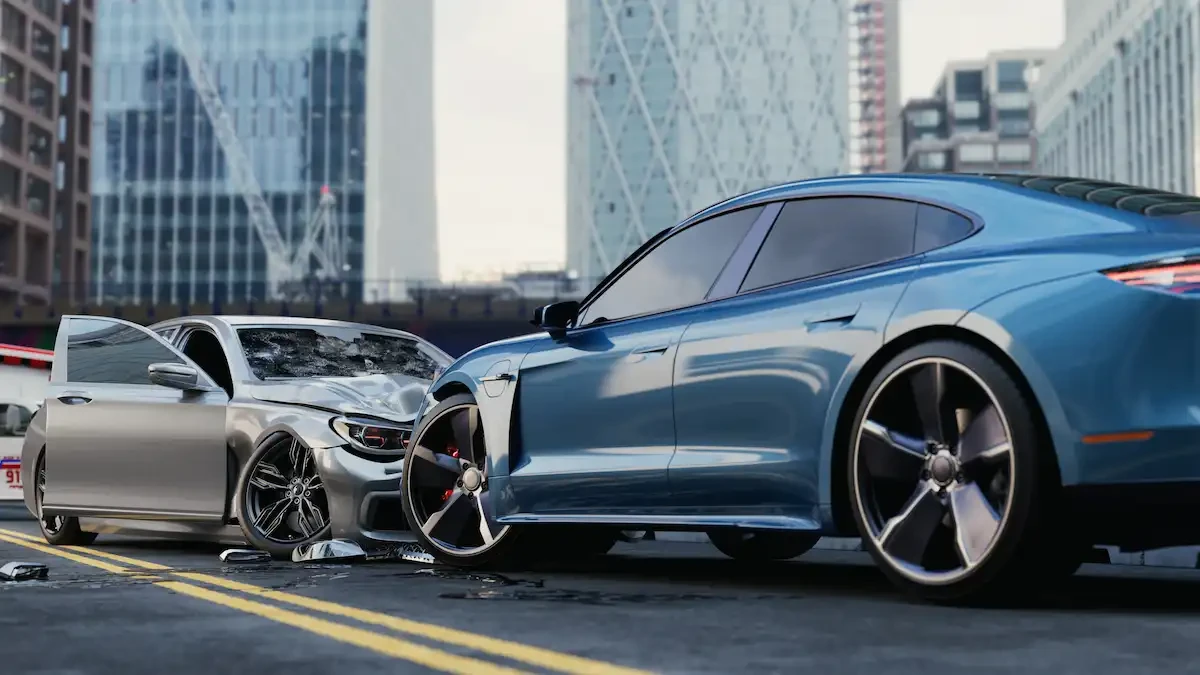
Collisions involving gig-economy vehicles now represent 10% of all commercial auto claims in the United States, up from 6% in 2021, according to Verisk's annual ClaimSearch Trends Report released April 14.
The data describes two categories of collision repair work moving in opposite directions. Personal auto claims, historically the core of most shops' volume, continue a multi-year decline that multiple data sources now confirm independently. Commercial auto claims tied to gig-economy vehicles are growing steadily and represent a larger share of the collision repair pipeline each year.
Gig-related collisions nearly doubled in four years
The report, which draws on data from Verisk’s ClaimSearch database, found that gig-related commercial auto claims resulting from collisions involving ride-hailing and delivery vehicles rose 96% over that four-year period, climbing from 89,000 claims in 2021 to 175,000 in 2025.
Food delivery-related claims drove the sharpest increase, surging 300% over that period. Ride-hailing claims rose 66%. By contrast, non-gig commercial auto claims grew 15% during the same period, with 1.8 million claims in 2025.
Verisk attributed the growth to the expansion of commercial vehicle usage tied to ride-hailing and food delivery platforms such as Uber, Lyft, and DoorDash, which it said have reshaped transportation services and influenced commercial auto loss trends.
The gig share of commercial auto claims grew each year from 2021 through 2025: 6%, 7%, 8%, 9%, and 10%, respectively.
Personal auto claims continue multi-year decline
On the personal auto side, claims fell to 31.6 million in 2025, down 8% from their 2022 peak of 34.4 million, according to the report. The volume has declined each year since 2022, falling from 34.4 million to 34.0 million to 32.5 million to 31.6 million.
The Verisk data provides independent confirmation of trends that CCC Intelligent Solutions documented in its Crash Course 2026 report, which found repairable claims down 9.7% in 2025 and total loss frequency at a record 23.1%. Record-low consumer confidence in April has reinforced the affordability pressures that CCC identified as driving coverage downgrades, higher deductibles, and fewer filed claims.
Commercial auto claims volume, meanwhile, rose steadily from 1.6 million in 2021 to 1.94 million in 2024 before pulling back slightly to 1.84 million in 2025. Even after that decline, commercial auto volume remained 14% higher than in 2021.
Autonomous vehicle claims quadrupled
The report also tracked the emergence of claims involving autonomous vehicles. The number of claims involving self-driving cars quadrupled from approximately 100 in 2021 to more than 400 in 2025, according to Verisk. Claims spanned multiple policy types, including personal auto, commercial auto, and workers' compensation.
Within that total, claims associated specifically with autonomous ride-hailing vehicles increased twentyfold during the same period. Verisk noted that deployment of autonomous driving technologies increased in 2025, with robotaxis and driverless shuttles becoming more common in cities such as San Francisco, Phoenix, and Austin.
Waymo, a subsidiary of Alphabet, is currently the front-runner in autonomous vehicle ride-hailing, the report said, with other significant players including Cruise from General Motors, Zoox from Amazon, and Tesla Cybercab. The expanding ADAS and autonomy sensor stack carries its own set of implications for collision repair procedures and equipment requirements.
The full Verisk ClaimSearch Trends Report is available now.