Consumer confidence fell to its lowest level on record in April, according to the University of Michigan's Surveys of Consumers, a national survey that has tracked household sentiment across the United States since the early 1950s. Rising energy costs and inflation concerns weighed on households across every income and age group.
The preliminary Consumer Sentiment Index for April dropped 11% to 47.6, the lowest reading in the survey's more than 70-year history. The University of Michigan will release the final April reading on April 24; the preliminary data was collected primarily before April 7, and conditions have shifted since then.
Buying conditions for vehicles and durable goods worsened specifically, with consumers nationwide citing high prices as the primary concern. Year-ahead inflation expectations jumped a full percentage point to 4.8%, the largest monthly increase since April 2025, according to the survey.
Survey Director Joanne Hsu noted that declines were broad-based, spanning all age groups, income brackets, and political affiliations. Assessments of personal finances fell 11%, with respondents reporting increased concerns over high prices and weakening asset values. One-year business condition expectations plunged 20%.
Why it matters for collision repair shops
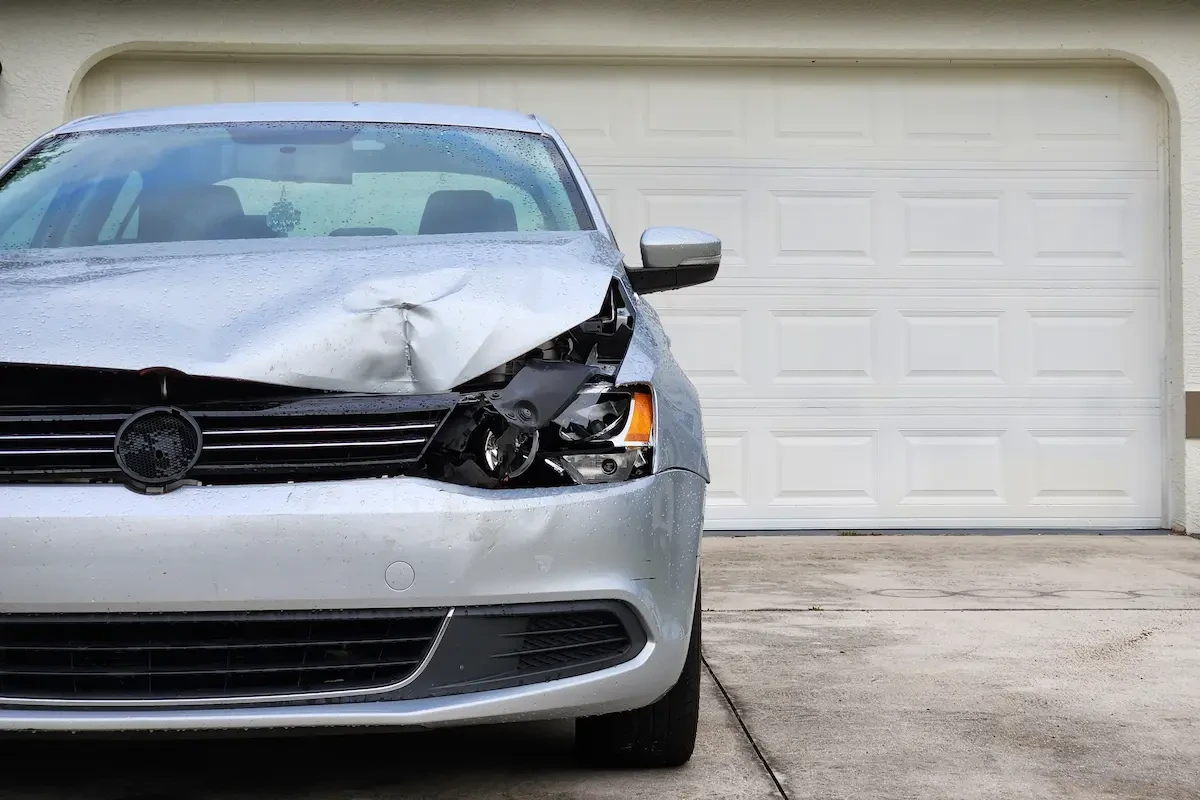
The sentiment data reinforces consumer behavior patterns that are already reshaping the work entering collision repair shops. CCC Intelligent Solutions' annual Crash Course 2026 report, released March 31, found that affordability pressures are driving consumers to downgrade coverage, raise deductibles, and skip filing smaller claims at rates that have measurably reduced repairable claim volume. The report found repairable claims declined 9.7% in 2025 across all coverages, while total loss frequency reached a record 23.1%.
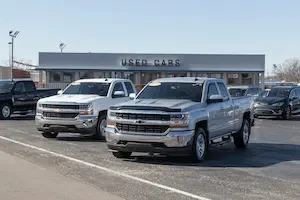
When consumers report that it is a bad time to buy a vehicle, fewer new cars enter the fleet. Q1 2026 new-vehicle sales fell roughly 6% year over year, and the average age of vehicles on U.S. roads reached 12.8 years in 2025, according to the Crash Course 2026 report. That keeps the repair mix tilted toward older vehicles, many of which are closer to the total loss threshold on any given repair.
Where those vehicles land on the repair-or-total-loss line depends in part on wholesale used-vehicle values. The Manheim Used Vehicle Value Index rose 6.2% year over year in March, already outpacing Cox Automotive's full-year projection of 2% growth. Vehicles between seven and 12 years old now represent nearly 41% of total loss valuations, up from 33.4% in 2020, according to CCC.
For shops, the practical effect is a narrowing band of repairable work. The share of repairable collision claims for vehicles six years old or newer fell to 58.3% in 2025, down from 67% in 2020, according to the Crash Course 2026 report.
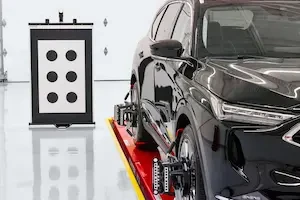
At the same time, calibrations appeared on 28.3% of repairable appraisals, up from 21.8% the year before. Fewer jobs are entering the system, and the ones that do require more from the shops performing them.
As the Crash Course 2026 report put it: "Fewer claims do not mean less risk — it means the risk that remains carries higher stakes, greater variability, and more financial consequence." CCC is reintroducing monthly Trends Reports in 2026, which will provide near-real-time data on whether these patterns are accelerating.