

The number of private equity firms and other investor groups placing a bet on success in the collision industry reached a new peak this past year, according to speakers at the annual MSO Symposium, held Nov. 3, the day before the SEMA Show opened in Las Vegas.
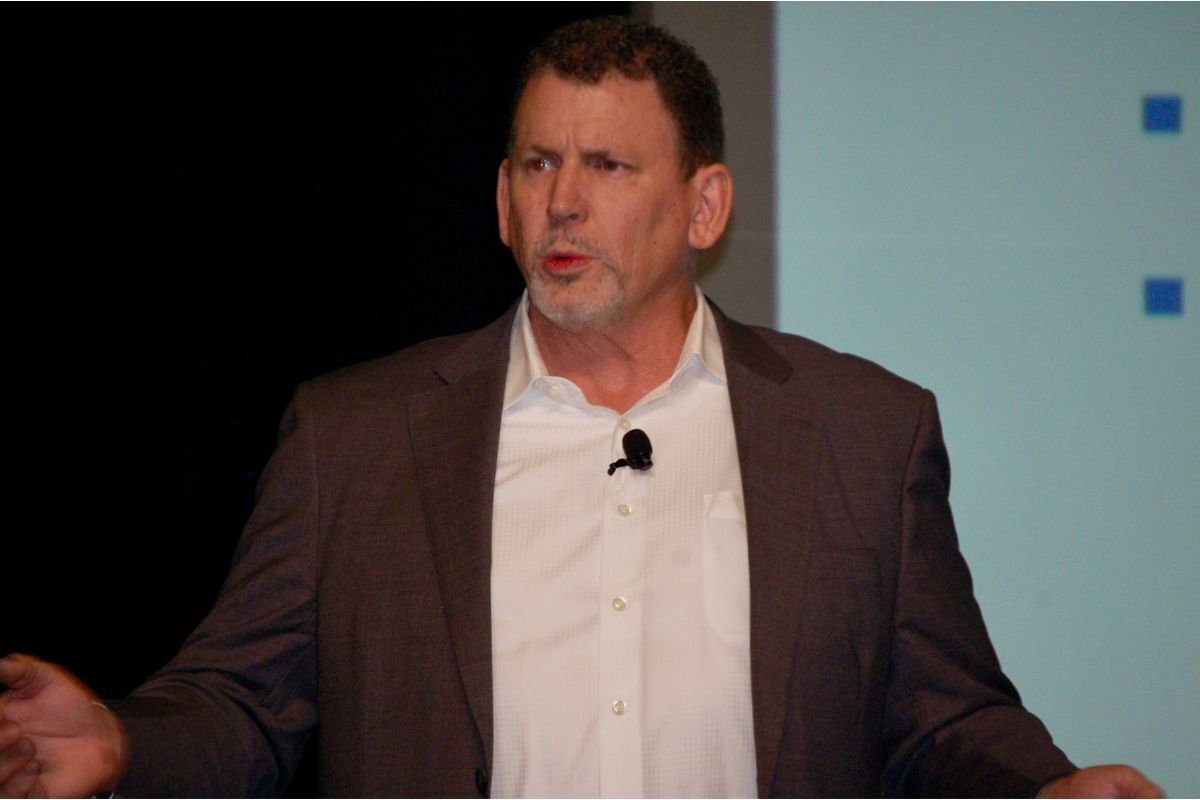
“There are four new groups that have been funded by private equity [in the past 12 months], and of course there was another one in Canada,” John Walcher of Focus Advisors, a merger and acquisition advisory firm focused on the collision repair industry, said during the event. “This is the longest list we’ve had since we started publishing this. So despite headwinds, despite a little bit of slowdown, despite some right-sizing [among the largest MSOs], we’re still continuing to see private equity interest.”’
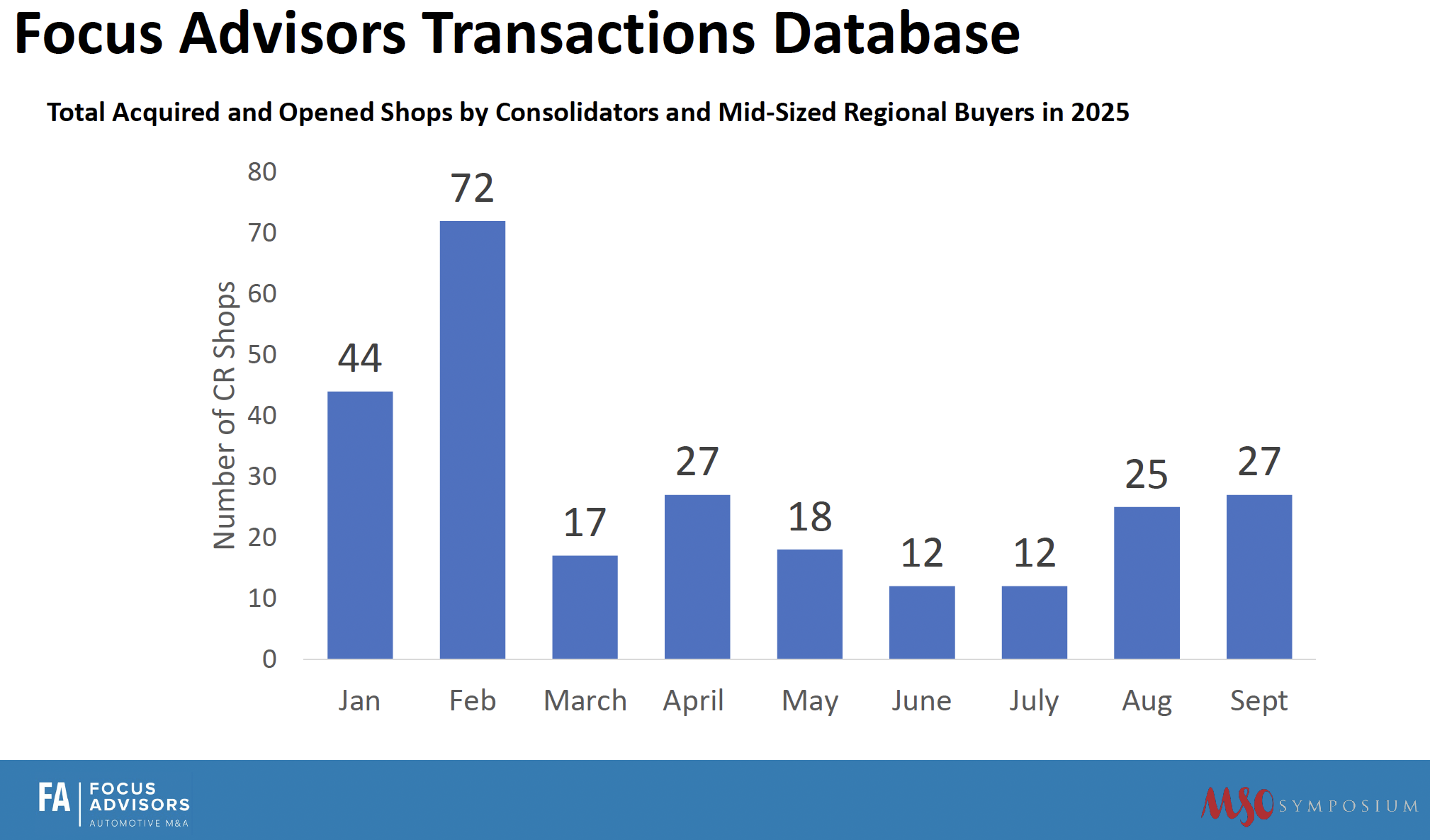 Focus Advisors’ data shows the pace of consolidation in the industry slowing after the first months of this year.
Apart from the nearly 4,000 shops operated by the largest four MSOs, the other dozen or so companies with private equity investment operate nearly 500 shops combined, Walcher said. He estimates their combined sales at about $1.8 billion, or about 3.8% market share. This is in addition to the four largest MSOs that combined capture about 33% total market share.
Speaking only about a week after Canada-based Boyd Group’s announcement of its acquisition of Joe Hudson’s Collision Center and its 258 shops, Walcher said the number of merger and acquisitions were “down significantly” this year. He shared data showing 44 new or acquired shops in January by consolidators and mid-sized regional buyers, followed by 72 in February. But the monthly total fell to just 17 in March, and didn’t climb back to above 27 over the next seven months until the Joe Hudson’s acquisition in October.
Walcher said that decline appears to be based on perceptions of the economy.
“In January, I think everyone was a little more optimistic about what would happen in the economy,” Walcher said. “March, April, May, June, July, we saw that dip, and I think that's indicative of that concern that people have had. In fact, we've talked with probably most executives of the large MSOs, and we’ve heard that regularly, that [economic] concern is causing a little bit of caution.”
Labor Rate Increase Slows
More than 450 people attended the MSO Symposium, created by and for multi-shop owners and operators, the most attendees in the event’s 14-year history.
The day kicked off with Michael Normyle, senior director of economic research for Nasdaq, offering a look at what global uncertainty and tariffs will mean for the U.S. economy. Normyle also shared explanations for record-high U.S. equity prices amid economic crosscurrents.
CCC Intelligent Solutions generally offers a look at the latest industry data at the MSO Symposium, and this year was no exception. CCC’s Kyle Krumlauf said the average total cost of repairs has risen about 1.6% this year.
 Kyle Krumlauf of CCC Intelligent Solutions.
“We are getting closer and closer to an average of $5,000,” he said.
Average labor rates are up about 3.1%, a much smaller increase than in the prior two years. The rate of parts price increase appears to be picking up, however, rising by less than 5% in the first six months of the year, but 6.2% in July. Preliminary data shows even higher increases in August and September.
“I would say that August is probably going to be in the 7% to 7.5% range, and we could see September somewhere in the 10% range,” Krumlauf said.
Other Speakers at the Event
Speaking remotely while recovering from an unexpected surgery the week prior, Matt Moore of the Insurance Institute for Highway Safety took a “look behind the numbers” in terms of accident frequency and severity.
In the afternoon, Dan Risley of CCC moderated a panel discussion focused on how artificial intelligence is a “positive disruption one claim at a time.” Representatives from Classic Collision, Tractable, Claims Genius and other companies shared real world experiences and results from the integration of AI in collision repair businesses.







John Yoswick