

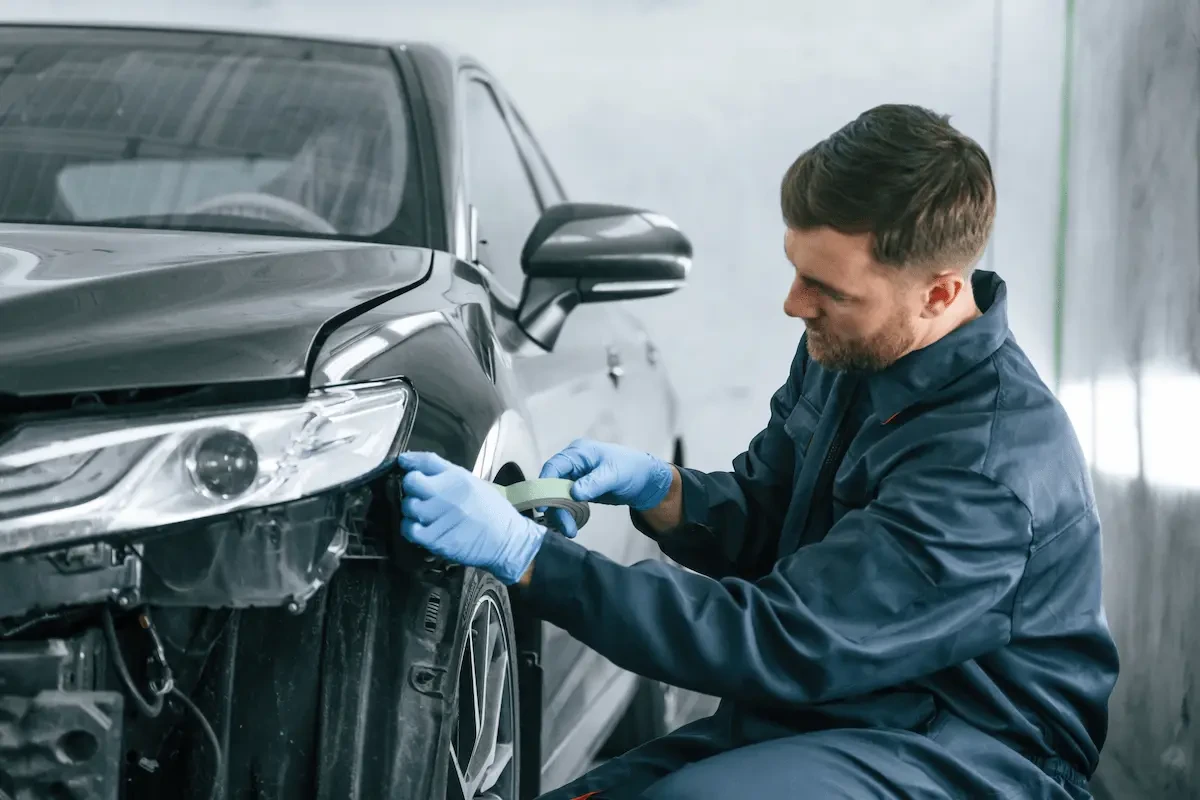
A category of consumer costs that includes vehicle maintenance and repair, insurance, and public transportation has contributed more to U.S. inflation over the past five years than new and used vehicle prices, parts, and equipment combined, according to Cox Automotive's 2026 Mid-Year Review.
Vehicle maintenance and repair, insurance and public transportation, a category the Consumer Price Index calls "transportation services," accounted for about 11% of all U.S. inflation over the last five years, according to Jeremy Robb, chief economist at Cox Automotive.
By contrast, new and used vehicle prices, along with parts and equipment, made up only about 3% of inflation over the last five years, according to Robb.
"Much of that is driven by gains and maintenance and repair costs as it takes more time and more skilled technicians to repair vehicles," Robb said in a presentation, referring to the transportation services category. He said the category is also being driven by increases in auto insurance costs since the pandemic, though he noted the insurance component itself is down 2% over the last 12 months.
Collision repair shops have cited rising calibration and diagnostic requirements as a factor in labor time for years; calibrations were present on 35.6% of estimates in the third quarter of 2025, up from 26.9% a year earlier.
Hybrid sales reach record share
The Mid-Year Review also found that hybrid vehicles have become what Cox Automotive Director of Industry Insights Stephanie Valdez Streaty called "the most important growth story in the market today." There are now 49 hybrid electric vehicle models available for sale, up seven since 2023, offered across 12 makes, according to Valdez Streaty. Eight of those models are sold exclusively as hybrids.
Hybrid market share has reached a record 14.1%, with hybrid volume up 82% since 2023, Valdez Streaty said. In a Cox Automotive consumer survey conducted in May 2026, 56% of in-market shoppers said rising gas prices made them more likely to consider a hybrid or plug-in hybrid vehicle, according to Valdez Streaty. She said strong take rates were seen across models including the Toyota Highlander, Honda CR-V, Ford Maverick, Hyundai Santa Fe, and Kia Sportage.
By comparison, battery electric and plug-in hybrid vehicle share declined year over year following the expiration of federal EV tax credits, according to Valdez Streaty, who said the decline reflected demand normalization rather than weakening interest in electrification generally.
Used EV supply shifts
Separately, Mark Strand, deputy chief economist at Cox Automotive, said the lease structure of EVs sold three years ago is likely to push a larger share of those vehicles into the wholesale auction market as their leases mature, rather than being purchased by lessees or dealers.
Strand said EV lease residual values were set when EVs cost significantly more than internal combustion or hybrid vehicles, meaning many off-lease EVs are now worth less than their contract buyout price.
Because of that gap, he said, "this means a high percentage of off lease used EVs should end up entering the used market via auction." Strand said EV and plug-in hybrid vehicles are expected to account for "a significant and growing share of used supply in the years ahead."
An earlier Cox Automotive finding revealed that wholesale EV values rose 13.7% year over year in mid-June, noting that a growing share of EVs entering the used vehicle pipeline carries implications for shop staffing, calibration and high-voltage repair capabilities. The lease equity dynamic described in the Mid-Year Review offers additional detail on the mechanism behind that projected supply increase.









Lisa McArdle