
The collision repair industry enters 2026 facing a changed landscape: fewer vehicles in the repair stream, more complexity on each one, and cost pressures from multiple directions.
Industry data from multiple sources tells a consistent story about where the market stands and where it’s heading. For shop owners planning for the year ahead, the numbers from the past 12 months offer concrete signals about what’s coming and what’s worth monitoring closely.
The Repair Pool Is Shrinking From Multiple Directions
Repairable claims were down 10.4% through August 2025 compared to the same period the year before, per Kyle Krumlauf, director of industry analytics at CCC Intelligent Solutions. Total claims volume fell 8.5% through July. At the same time, total loss frequency reached 22.8% through October 2025, on pace for a second consecutive record.
The shift in what’s being filed compounds the decline in how much is being filed. Repairable appraisals for damages of $2,000 or less fell from 41.5% in 2019 to just 25.5% through mid-2025, a trend analysts attribute to consumers moving toward higher deductibles.
The J.D. Power 2025 U.S. Auto Claims Satisfaction Study confirmed this: Twenty-six percent of auto insurance customers now carry deductibles of $1,000 or more, and 7% said they avoided filing claims for fear their rates would rise.
The result is a measurable shift toward out-of-pocket repairs. Customer-pay work is representing a growing share of shop volume for some operators.
When claims are down, more vehicles are being totaled, fewer small jobs are being filed, and customers are increasingly paying out of pocket, the actual pool of insured repairable work may be contracting faster than any single metric suggests.
What to Watch in 2026:
- - Quarterly total loss frequency figures will indicate whether the 22.8% rate plateaus or continues climbing.
- - Used vehicle values remain a key variable; rising values would ease total loss frequency, while flat values would mean more write-offs.
- - Customer-pay percentage at your own shop is becoming a leading indicator of broader market shifts.
- - State-level minimum coverage increases that took effect in 2025 in California, North Carolina, Virginia, and Utah may eventually influence the uninsured/underinsured rate.
Calibration Complexity Has Reached a Tipping Point
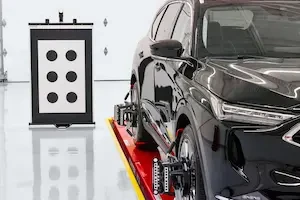
The proportion of Direct Repair Program (DRP) estimates that include at least one calibration reached 35.6% in Q3 2025, up from 26.9% in the same period the year before, a jump of nearly nine percentage points in 12 months. Diagnostic scans now appear on 87.7% of estimates.
But a gap remains between what vehicles need and what estimates capture. A Revv benchmark study released in December found that roughly 61% of vehicles arriving for collision repair require some form of ADAS calibration. "Since DRP shops tend to be more operationally mature than the industry at large, the gap is likely even wider across the entire repair landscape," said Adi Bathla, founder and CEO of Revv.Joel Adcock, director of partnerships and business development at Revv, warned during an Automotive Service Association webinar in September that nearly half of all U.S. shops miss required post-repair calibrations, and that an average lawsuit or settlement can cost $200,000 to $1 million or more. ADAS-related lawsuits grew from three cases in 2018 to 61 in 2024.
Federal action may be coming. In December, bipartisan legislation called the ADAS Functionality & Integrity Act was introduced, directing the National Highway Traffic Safety Administration (NHTSA) to work with OEMs to establish modification ranges, tolerances, and test procedures for ADAS calibration ahead of the 2029 automatic emergency braking mandate.
What to Watch in 2026:
- - The ADAS Functionality & Integrity Act may advance; the Senate Commerce Committee is expected to discuss ADAS-related repair costs early in the year.
- - Scan-to-calibration variance on estimates remains a key indicator of supplement and liability exposure.
Supply Chain Volatility Isn’t Over
Average parts prices rose by more than 6% in Q2 and Q3 2025, increases that analysts attributed to tariff impacts being passed through to supplier pricing.
According to PartsTrader, about 44% of OEM collision parts sold in the U.S. are manufactured overseas. The company estimates tariffs add roughly $100 to the parts line of an average repair order. An April survey by market researcher IMR found that 38.6% of shops have felt a direct tariff impact, with the figure jumping to 70% among shops with eight or more bays.
The Detroit Three absorbed billions in tariff charges in 2025 but signaled this was a short-term strategy. General Motors booked a $1.1 billion hit in Q2 and warned the levy could swell to $5 billion for the year. Ford reported an $800 million charge; Stellantis flagged $1.7 billion.
Separately, semiconductor-related supply issues continue to simmer. The geopolitical standoff over Dutch chipmaker Nexperia has implications for ADAS sensor component availability. A global shortage of dynamic random access memory (DRAM), driven by memory chip manufacturers shifting production toward AI data centers, is creating additional pressure on automotive electronics for OEMs.
What to Watch in 2026:
- - The U.S.-Mexico-Canada Agreement (USMCA) joint review, scheduled for July 1, 2026, has implications for parts-sourcing strategies involving components sourced from Mexico and Canada.
- - OEM earnings calls in Q1-Q2 will signal whether automakers continue absorbing tariff costs or begin passing them through more aggressively.
- - Lead times for parts suppliers of electronic modules would be an early indicator of broader supply constraints.
The EV Slowdown Is Real, but Hybrids Are Surging
The federal EV tax credit expired Sept. 30, 2025, and the market response was immediate. November EV sales collapsed while hybrid sales surged to record levels.
Among brands that report monthly, the pattern was consistent: Hyundai’s Ioniq 5 fell 59% compared to November 2024; Subaru’s Solterra cratered 78.3%; Ford’s EV sales plunged 60.8%. In contrast, Hyundai reported its best month ever for hybrid sales (up 42%), and Kia’s hybrid sales surged 70% in the first half of 2025.
Ford announced in December it would take a $19.5 billion write-down and end production of the current-generation F-150 Lightning, pivoting to hybrids and extended-range electric vehicles.
For collision shops, the volume question matters more than per-repair economics. Battery electric vehicle (BEV) repair severity runs approximately $1,000 higher than ICE vehicles, per Mitchell data, but the vehicles arriving at shops are increasingly hybrids. Mitchell’s Q2 2025 report found mild hybrid claims up 21% from the prior year.
What to Watch in 2026:
- - Off-lease EV volumes from 2022-2023 leases are returning to market and will need repairs.
- - OEM hybrid model launches continue expanding as automakers respond to softening EV demand.
Workforce Pipeline Infrastructure Is Being Built
The TechForce Foundation projects U.S. employers will need nearly 1 million new entry-level automotive, diesel, aviation, and collision technicians between 2025 and 2030, with collision accounting for roughly one in 10 of those openings. The demand is primarily driven by the need to replace retiring or transitioning workers. Two developments in late 2025 may help address that challenge.
The U.S. Department of Education finalized the Workforce Pell Grant program on Dec. 12, making federal financial aid available for short-term automotive technician training programs beginning July 1, 2026. The department specifically cited “automotive mechanics” as an example of eligible training pathways.
Separately, the National Institute for Automotive Service Excellence (ASE) and WrenchWay announced ASE Connects, launching in January 2026 to link shops with more than 3,200 training programs while providing industrywide compensation data.
These are supply-side solutions that won’t produce immediate results. But for shops that connect with training programs early, they represent potential pipeline advantages.
What to Watch in 2026:
- - ASE Connects launches in January and can help create meaningful school-to-shop connections.
- - Federal Workforce Pell Grants become available in July and may influence enrollment at local training programs.
- - Retention metrics at your own shop may prove more critical than hiring, given the imbalance between technician demand and supply.
Looking Ahead
The trends shaping 2026 have been building for years. What changed in 2025 is that they began compounding: fewer claims, more total losses, more calibrations, higher parts costs, a shifting vehicle mix, and persistent workforce constraints all hitting at once.
The metrics that mattered in 2025 will continue to be the leading indicators in 2026. Shops tracking them closely will be better positioned to anticipate what’s coming.