Rising deductibles, longer repair times on ADAS-equipped vehicles and a shifting customer claims mindset are combining to create challenges for collision repair shops, according to the latest J.D. Power 2025 U.S. Auto Claims Satisfaction Study.
The study found that 26% of auto insurance customers now carry deductibles of $1,000 or more, and 7% say they’ve avoided filing a claim because of fear their rates will rise. Meanwhile, overall customer satisfaction with the claims process stands at 700 on a 1,000-point scale, rising just 3 points year-over-year.
The fact that more drivers carry $1,000+ deductibles is especially acute among younger policyholders: 43% of Gen Z customers who experienced premium increases now carry high deductibles.
After auto insurance rates peaked near record highs in April 2024, they steadily declined during the remainder of the year and into 2025. However, the study said, many customers have yet to feel the effects of those decreases. In fact, J.D. Power found 44% of auto insurance customers with a claim said they experienced a price increase in the past 12 months.
Shaun Arroyo, general manager of Aurora Collision Center in Stockton, CA, told Autobody News he has seen a rise in claims involving hit-and-runs and uninsured motorists, with deductibles around $500 to $1,000.
“I don’t believe that customers are seeing any decreases in their premiums,” Arroyo said. “A lot of them will have a policy limit on uninsured motorists of $3,500 to $5,000 and are on the hook for the rest. Interesting times.”
Arroyo said he thinks some drivers are getting insurance only long enough to renew their vehicle registration, then dropping the policy due to cost.
“Customer pay jobs have outweighed claims as well,” Arroyo added. “People would rather pay out of pocket then take a hit on their insurance.”
The J.D. Power Study showed total losses now account for 27% of claims, up 3% year-over-year. At the same time, small claims of $2,000 or less now account for only 20% of claims, down from 33% in 2022.
Arroyo said he has seen a lot of customers cash out on the “quick and easy” jobs, whether they’re the claimant or insured.
“To them, it can pay a bill or the rent, but the car still drives,” he said.
CCC Intelligent Solutions’ Crash Course Q3 2025 report also confirmed total loss frequency is still rising after hitting a record in 2024, despite gradual increases in used vehicle values, thanks to a decline in lower-dollar claim filings and vehicle age mix.
Average Cost of Repairable Claims Increases, Cycle Times Improve
In other metrics affecting insurance customer satisfaction, J.D Power found the average cycle time for a repairable vehicle is 19.3 days, down from 22.3 a year earlier. Enterprise recently reported the average length of rental for collision-related rentals decreased to 15.5 days in Q3 2025, a year-over-year decline of nearly a full day.
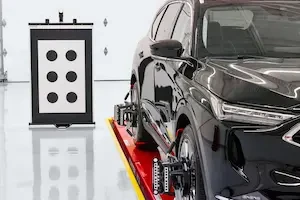
However, J.D. Power said, cycle time is heavily influenced by the number of affected ADAS features. Average cycle time for vehicles from model year 2015 and older with no ADAS features is 17.9 days, while average cycle time for newer vehicles (model year 2019 and newer) with three or more ADAS features is 21.5 days.
CCC’s report showed the average total cost of repair (TCOR) finished 2024 at more than $4,730 — a 3.8% increase year-over-year, but the lowest increase since 2017. Through the first half of 2025, average total repair costs are up 1.4% year-over-year.