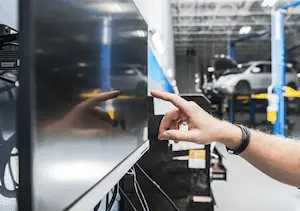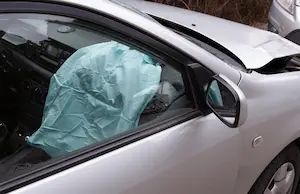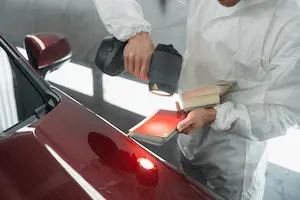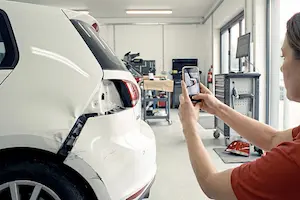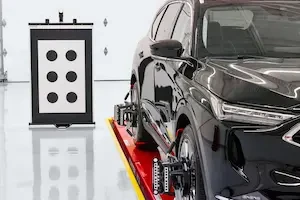

A bipartisan bill introduced in the U.S. House of Representatives would require federal regulators to establish standardized guidelines for ADAS calibration, directly addressing a gap that has left collision repair shops and calibration centers uncertain about how to handle vehicles with aftermarket modifications.
The ADAS Functionality & Integrity Act (H.B. 6688), introduced Dec. 15 by Rep. Diana Harshbarger (R-Tenn.) and co-sponsored by Rep. Gabe Vasquez (D-N.M.), Rep. Jay Obernolte (R-Calif.), and Rep. Norma Torres (D-Calif.), would direct the National Highway Traffic Safety Administration to create modification ranges, tolerances, and test procedures for new vehicles starting with model year 2028.
The Specialty Equipment Market Association (SEMA), which worked to engage lawmakers on the legislation and get bipartisan support, said the bill is critical to ensuring that aftermarket businesses have the information needed to properly calibrate advanced driver assistance systems after vehicles are modified or repaired.
"The introduction of the ADAS Functionality & Integrity Act is a landmark moment for anyone who owns, repairs, or modifies a vehicle," said Jim Moore, SEMA vice president of OEM and product development. "Currently, the industry lacks clear standards governing ADAS calibration, and aftermarket businesses and vehicle owners need access to the necessary calibration information and procedures needed to keep modern safety features functioning."
Calibration providers have sought clearer guidance
The lack of clear federal standards has created challenges for collision repair shops and calibration providers. At a Collision Industry Conference panel earlier this year, multiple calibration center operators said they refuse to calibrate vehicles with aftermarket modifications such as lift kits due to liability concerns and the absence of OEM guidance.
The bill would require NHTSA to establish modification ranges and tolerances that would give repairers and calibration providers clearer parameters for when recalibration is necessary and what standards must be met. It would also require NHTSA to create test procedures that aftermarket businesses can use to validate that ADAS systems have been properly calibrated.
Bill arrives ahead of 2029 AEB mandate
The legislation is especially timely given FMVSS 127, the federal motor vehicle safety standard that will require automatic emergency braking on all new passenger cars and light trucks starting with model year 2029. As AEB becomes standard equipment, the volume of vehicles requiring proper calibration after collision repairs will increase significantly.
SEMA has been advocating for federal ADAS standards throughout 2025. In August, the organization sent a letter to the U.S. Department of Transportation requesting that ADAS policies be included in the upcoming highway bill. In October, SEMA representatives met with 15 congressional offices to advocate for the legislation.
According to SEMA, more than 50 million vehicles in the U.S. are modified or accessorized each year, underscoring the need for ADAS standards that account for real-world modifications across the repair, collision, and customization segments.
SEMA said it has invested more than $25 million in SEMA Garage facilities in Diamond Bar, Calif., and Plymouth, Mich., which include dedicated ADAS labs for testing how modifications affect sensor performance. The organization has published white papers examining ADAS impacts on the Chevrolet Silverado 1500, Ford F-150, Ford Bronco, Toyota Tacoma, and Ram 1500.
What's next
The bill must still pass through Congress before becoming law. Collision repair industry groups will likely be called upon to support the legislation as it moves through the congressional process.
In the meantime, shops investing in ADAS calibration capabilities should monitor the bill's progress and consider how federal standards might affect their operations. SEMA's white papers on specific vehicle models offer some guidance on how modifications affect sensor performance, though the organization has emphasized that its research is ongoing and findings are vehicle-specific.
For collision repairers, the stakes extend beyond modified vehicles. As ADAS technology becomes standard on virtually all new vehicles, clear calibration guidelines will be essential for ensuring repairs meet safety standards — and for demonstrating to insurers that calibration procedures are necessary and properly performed.