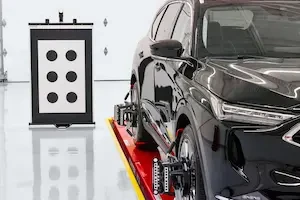

Collision repair shops closed out 2025 caught between two intensifying pressures: fewer vehicles entering the repair stream as total losses climb toward a second consecutive record, and significantly more complexity on the vehicles that do get repaired — with calibrations now appearing on more than one-third of all DRP estimates.
CCC Intelligent Solutions' Q4 2025 Crash Course report, released this month, frames these converging trends as part of a fundamental reshaping of the repair ecosystem. The report characterizes 2025 as a year when "pressures that once felt separate began to collide."
Calibrations accelerate — but timing remains a challenge
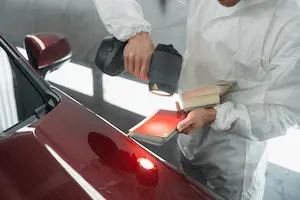
The share of DRP estimates that include at least one calibration reached 35.6% in Q3 2025, up from 26.9% in the same period last year — a jump of nearly nine percentage points in 12 months. Diagnostic scans, meanwhile, appeared on 87.7% of DRP estimates, up from 84.7% a year earlier.
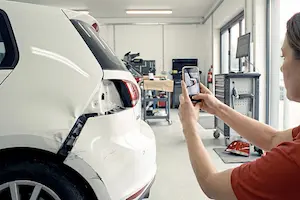
But the timing of when calibrations are identified continues to create workflow challenges. According to CCC's data, just 48.5% of calibrations appear on initial estimates, while 51.5% show up on supplements — requiring additional insurer review and approval while vehicles are already in the repair process. By comparison, 92.1% of scans are included on initial estimates.
The cycle time impact is measurable. CCC's Q3 2025 report found that repairs involving multiple calibrations averaged more than 17 days keys-to-keys, compared to 13 days for repairs with no calibrations. Repairs with a single calibration averaged 15.5 days.
"The proliferation of ADAS has made diagnostic scans and calibrations a routine part of the repair process," the Q3 report states. "Calibrations are not only costly but also add significant time to the repair cycle."
The variability compounds the challenge. Differences in vehicle make, model, trim, sensor placement, and damage type create a widening range of calibration requirements — making it difficult for estimators to anticipate needs without consulting OEM repair procedures or calibration identification tools for each specific vehicle.
Total losses on pace to break 2024's record
While calibration complexity is rising on repairable vehicles, fewer vehicles are making it into the repair stream at all. Total loss frequency reached 22.8% through October 2025, up from 22.1% in the same period last year — and on track to exceed 2024's record, which CCC called the highest in its historical data.
The increase is occurring despite modest gains in used vehicle values. Average adjusted vehicle values on non-comprehensive total loss valuations were up 0.6% year-over-year through October, with vehicles six years old or newer showing stronger gains.
Instead, CCC attributes the continued rise to an aging vehicle mix and a sustained decline in lower-dollar claims being filed. Over 72% of total loss valuations are now for vehicles seven years or older. Meanwhile, CCC's Q3 2025 report notes that the share of repairable appraisals for damages of $2,000 or less has fallen from 41.5% in 2019 to 25.5% through mid-2025 — a shift the report links to consumers moving toward higher deductibles.
"The notion of an 'average vehicle' grew less meaningful as the car parc diversified," the Q4 report states.
Repair costs stabilizing — for now
Despite the complexity pressures, overall repair cost growth has moderated. The average total cost of repair reached $4,768 through Q3 2025, up just 1.4% year-over-year. CCC expects the full-year increase to come in below 2% — the lowest since 2017.
The slowdown reflects several offsetting factors: the rise in total losses removes some higher-cost repairs from the data, while the aging repairable fleet (nearly 46% of repairable vehicles are now seven years or older) generally requires fewer parts and labor hours than newer vehicles.
However, underlying cost pressures persist. Average part prices showed increases exceeding 6% in Q2 and Q3 2025, which CCC attributes to tariff impacts being passed through supplier pricing. Labor rates rose 3.0% year-over-year through September.
The report notes that shops have seen some relief on cycle times as backlogs improve — the average time between estimate assignment and vehicle arrival at the shop is now about half what it was in Q1 2023. But overall repair days remain elevated compared to pre-pandemic levels, with supplement handling and vehicle complexity contributing factors.
The gap between scan inclusion on initial estimates (92.1%) and calibration inclusion (48.5%) points to where workflow challenges remain. With calibration frequency continuing to climb and cycle times lengthening on calibration-heavy repairs, identifying those requirements earlier in the process could help reduce supplement-related delays.