


With claims count declining and total losses increasing, many collision repair shops are reassessing how they generate work and maintain profitability.
During a panel discussion at the recent Collision Industry Conference (CIC), several industry leaders shared how shops are adjusting their strategies to adapt to changing market conditions.
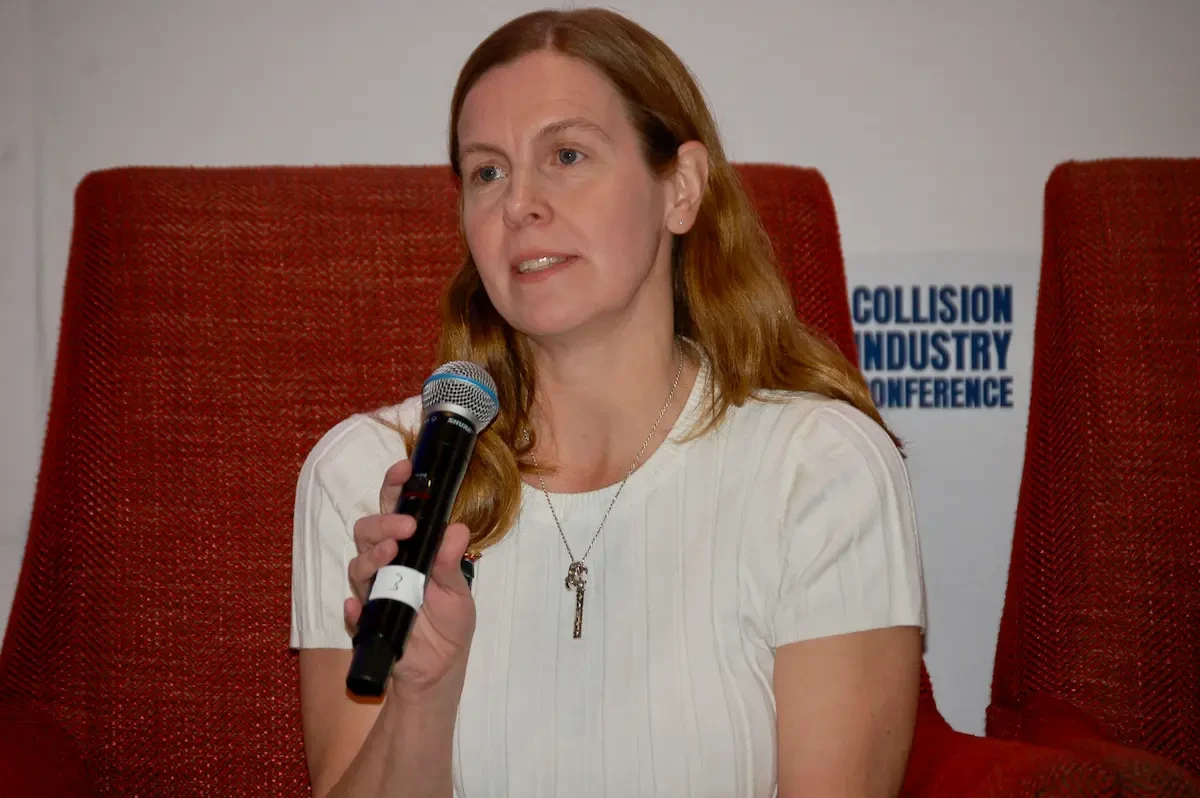
“I spent a lot of time last year trying to figure out in my own facility how to handle some of these things,” Amber Alley, manager of Barsotti’s Body & Fender in San Rafael, Calif., said during a panel discussion at CIC. “We all hear in these meetings that you should just ask your paint company, that they can give you advice and help you with consulting, etc., so I went through that process, and they did an evaluation of my local market.”
Understanding the market
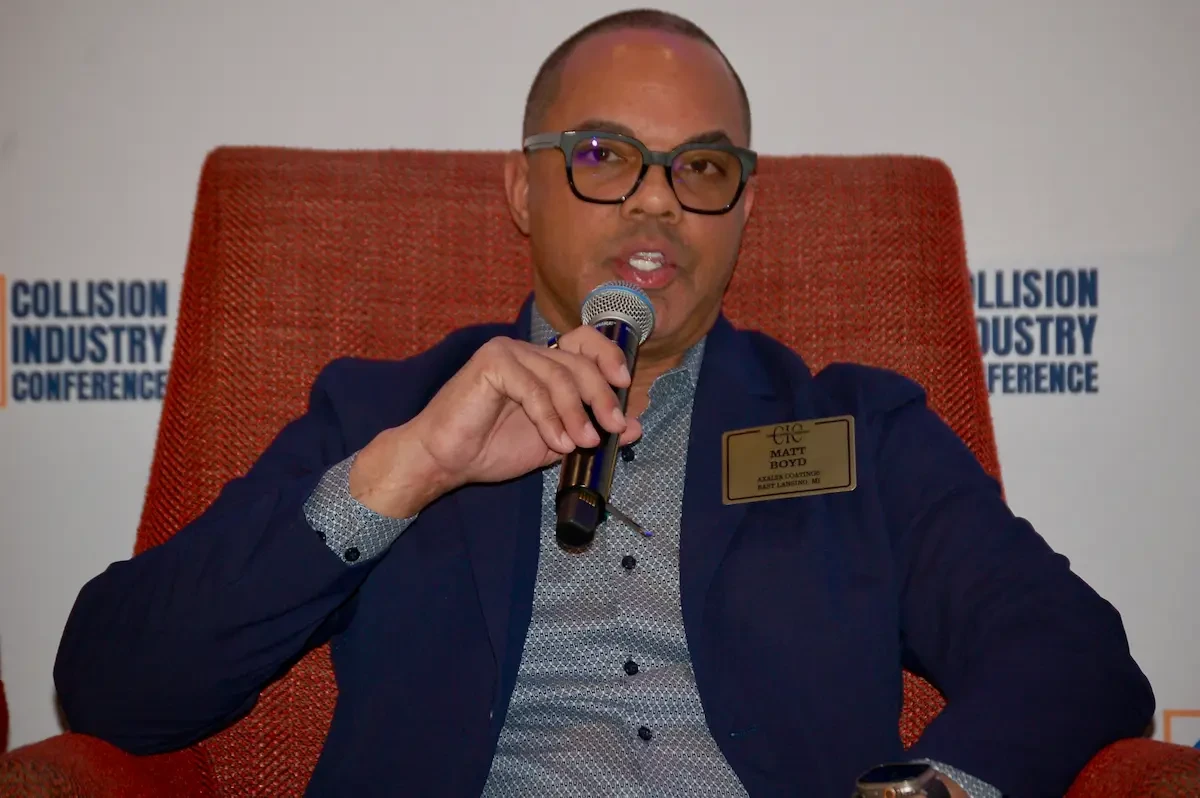 Matt Boyd of Axalta said the paint companies can offer targeted analysis reports a shop can use to better understand their market.Matt Boyd, national strategic sales manager for Axalta, the paint company Alley’s shop works with, walked through the types of information in the market report his company offers (noting that other paint companies offer something similar).
“We use it for customers to understand the market they are in, or also if they’re looking to expand into another market,” Boyd said.
The report breaks U.S. neighborhoods down into 13 “life mode” groups (based on residents’ age, education, income, lifestyle indicators, etc.), and 61 distinct segments (“high-rise renters,” “loyal locals,” “single thrifties,” etc.).
The market report for Alley’s shop indicated there are 205,000 registered vehicles, 1.88 vehicles per household on average, and an average commute time of 22 minutes. While 18,100 residents have commute times of 35 minutes or more, a significant portion of the population (51%) in this Bay Area market work from home (or at least don’t drive to work).
“So that means fewer vehicles on the road,” Boyd noted. “The total number of accidents reported is 4,143 [over a year]. Those are just reported accidents; some are not reported.”
The report uses that data to estimate full market potential based on accident rates, percentage of two-vehicle collisions, and average repair order.
“So out of that, when she’s looking at her market, how much of that is she getting?” Boyd said of Alley. “This gives her just a look into what her market looks like, and the potential of collision repair dollars that are in that area.”
Is it a market with significant electric vehicle population? Alley’s report shows there were 6,000 EVs in the market in 2020, but more than twice that number (14,149) in 2024, and 24,000 now, 58% of which are Teslas.
“So does that make sense for her to possibly get a Tesla certification? Could be,” Boyd said. “But just knowing what’s in that market as far as the EV segment opened my eyes to how big it is in her area.”
The report can also take six months or a year of a shop’s repair orders and map them, showing where the shop’s work is coming from, and what insurance companies paid for that work.
Focus on customer-pay, dealer referrals
Tracy Dombrowski of the training and consulting firm Collision Advice said one thing she sees the company’s shop clients doing in response to the downturn in repairable claims is focusing on customer-pay work.
“Another thing we’re spending a lot of time talking about it in our groups these days is that insurance isn’t the only way customers find us anymore,” Dombrowski said. “A lot of customers are turned off by insurance these days and are willing to pay more out of pocket. Does our sales process turn those customers away?”
She said while they see some specialization of shops by vehicle make, most are still repairing a variety of vehicle types.
“I think more what we see is shops really looking at what can they stop subletting outside their four walls, what can they bring in-house in order to capitalize on that opportunity,” she said. “Is there glass work that they can do in-house? Is there mechanical work they can do in-house? They’re bringing in more of what they used to sublet out to keep that in the business.”
She also recommends shops keep an eye out for any declines in referrals from dealerships with which the shop has a relationship.
In one exercise, members of a Collision Advice peer group placed “mystery calls” to dealerships to ask which collision centers they recommend. In some cases, the dealership employees referred customers to competing shops — even when the dealership itself owned a collision center.
“It’s a really good exercise if you haven’t done that,” she said. “If you think you have a good relationship, but you’re not sure who they’re referring to, call your dealer and ask who their preferred collision center is.”
Interact with dealers’ sales team
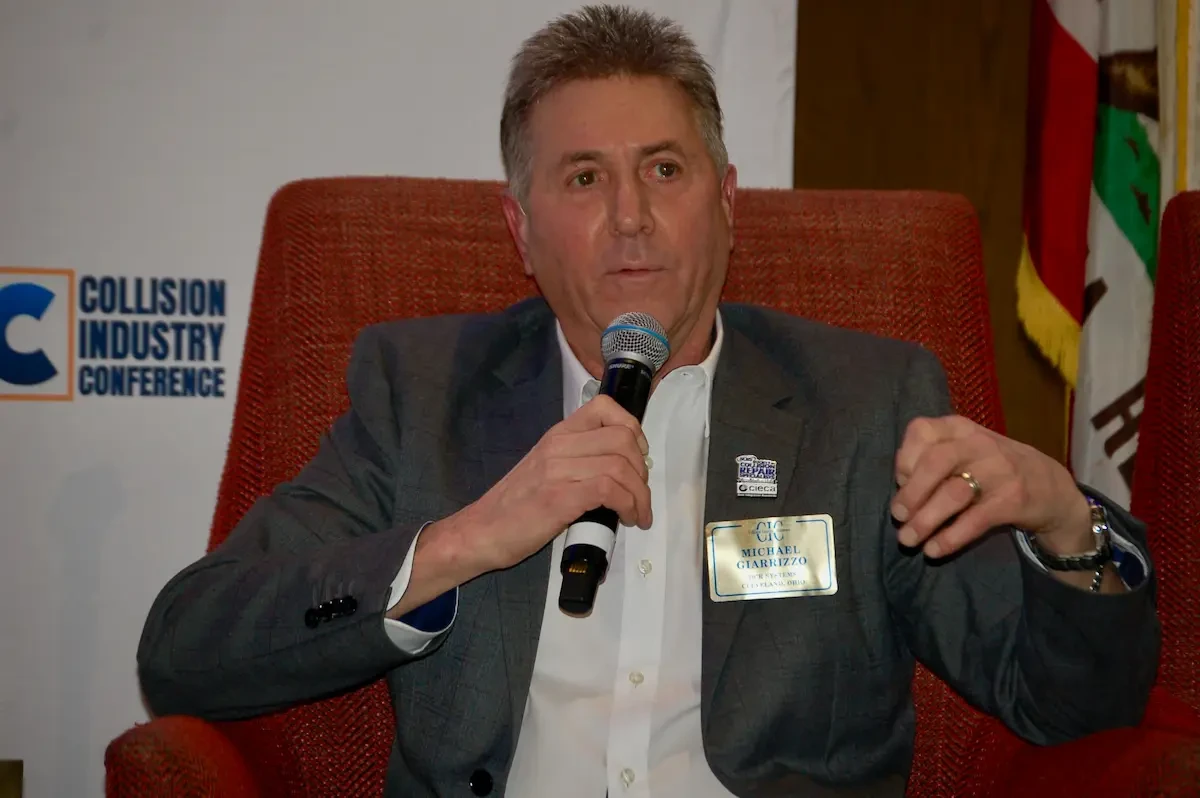 Michael Giarrizzo of DCR Sytems said it’s not just the fixed ops departments of dealerships that can refer customers to shops.Michael Giarrizzo, CEO of DCR Systems, which operates 10 collision repair shops under partnerships with new car dealers, agreed with Dombrowski that monitoring referrals from dealerships a shop partners with is especially important now.
“I could tell stories all afternoon about how you have to constantly maintain the relationships,” Giarrizzo said.
He said most shops that work with dealers generally interact with the dealer’s fixed operations team in parts and service, and he said his company does as well.
“But we have found much greater opportunity with sales [departments]” at those dealerships, he said. “Not only helping them understand that opportunity [for the dealer] to retain the customer, but the risk if they go elsewhere [for collision repairs].”
He said it’s important to start educating the salespeople, since that’s who many people will call if they get in an accident in the first year or two of buying a new vehicle.
“The sales team understands the risk of losing that customer,” he said. “If the customer does not understand their right to choose [a shop] and why that choice is so important today, the [salesperson and dealer] risk losing that customer for life.”
Giarrizzo said his shops track who in each dealership refers work, and constantly interacts with the dealerships either onsite or providing information on “how many customers came over, which ones were closed, sales referrals provided for cars that aren’t repairable, service referrals, along with the OEM parts that we purchased because we are an all-OEM-parts model.”
“So every opportunity we get, we’ll interact with them and then feed them back statistics monthly,” Giarrizzo said.
The takeaway
Overall, panelists said shops that better understand their markets, pursue more customer-pay work, and maintain strong dealership relationships may be better positioned to offset declining repairable claims. Those strategies may help shops capture more of the repair opportunities that still exist within their local markets.



John Yoswick