U.S. new-vehicle sales fell for the fifth consecutive month in February, with preliminary estimates putting total volume near 1.2 million units, down roughly 2% from the same month a year ago. The pattern that emerged after the Sept. 30 expiration of the $7,500 federal EV tax credit continued to define the market: pure EV sales cratered while hybrid volumes set records at nearly every brand that reports monthly results.
Cox Automotive had forecast February's seasonally adjusted annual rate at 15.6 million, up from January's weather-impacted 14.9 million pace but below last year's 16.0 million. Charlie Chesbrough, senior economist at Cox Automotive, said in the report that the continued headwinds to high vehicle prices, economic uncertainty, and the lingering drag from the EV tax credit expiration.
Toyota, Honda, Hyundai, and Kia all posted year-over-year gains. Ford declined for the second straight month, and Subaru fell for the seventh consecutive month.
Toyota
Toyota Motor North America reported February U.S. sales of 180,950 vehicles, up 3.2% year over year, marking 12 straight months of growth. Electrified models accounted for 51% of total sales volume for the month, according to the company's report.
Sales of the all-new 2026 RAV4, which now comes exclusively with a hybrid powertrain, were constrained by limited supply during the model transition, with volume falling sharply from the prior-generation model's year-ago results. Camry, Corolla, and pickup trucks offset the RAV4 shortfall.
Honda
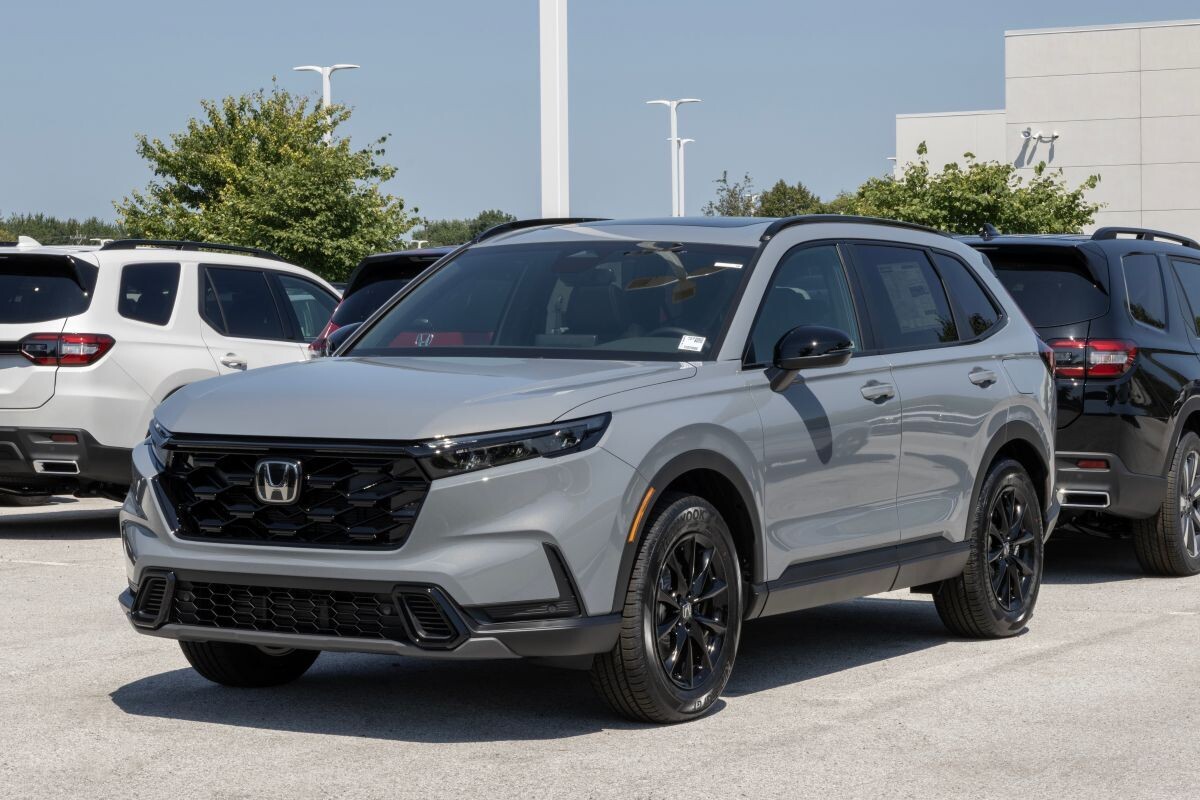
American Honda posted February sales of 108,162 units, up 1.1% year over year. Honda set an all-time February record for hybrid-electric vehicle sales at 30,671 units, driven by the CR-V, Accord, Civic, and the all-new Prelude hybrid sports coupe. The CR-V led all Honda models at 31,625 units.
Passenger car sales rose 8.9%, led by the Civic with more than 18,000 units and the Accord at nearly 11,000. The Passport posted its best February ever at 4,746 units, with TrailSport models accounting for more than 80% of the mix.
The Acura brand posted its best February in five years at 10,936 units, up more than 17% year over year.
Hyundai
Hyundai Motor America reported record-breaking February total sales of 65,677 units, up 6% and the brand's third consecutive month of record total sales. Electrified vehicle sales surged 56% to 22,357 units, with hybrid sales alone up 79%.
The IONIQ 5 was a bright spot in an otherwise bleak EV landscape, with sales up 33% year over year, driven in part by aggressive discounting that included $10,000 off or 0% APR financing for 72 months on 2026 models. The IONIQ 6 continued to struggle, falling 77% to just 229 units.
Randy Parker, president and CEO of Hyundai Motor America, pointed to record performances from hybrid versions of the Sonata, Elantra, Santa Fe, and Tucson.
Kia
Kia America posted record February sales of 66,005 units, up 4%, extending the brand's record streak. Hybrid sales hit a new February record, up 53%. Seven models posted year-over-year gains, led by the redesigned 2027 Telluride, which set an all-time monthly sales record at 13,198 units, up 37%. The Carnival rose 31%, the K5 gained 21%, and the Niro climbed 20%.
EV sales remained weak. The EV6 fell 53% to just 600 units, and the EV9 also declined despite strong critical reviews.
Ford
Ford Motor Co. reported February sales of 149,962 vehicles, down 5.5% year over year. EV sales plummeted 71% to just 2,122 units, with the F-150 Lightning moving only 522 vehicles. Hybrid sales also declined, falling 21.8% to 12,010 units, a notable departure from the hybrid surge at competing brands.
Ford's large SUVs were the bright spot, posting their best February in 26 years. Expedition rose 27%, Explorer climbed 33%, and Bronco was up 28%. F-Series sales fell nearly 14%, impacted in part by an aluminum supply shortage tied to fires at a Novelis facility in New York that disrupted truck assembly. The now-discontinued Escape dropped 71.2%.
Subaru
Subaru of America reported February sales of 45,113 vehicles, down 8.2% and the brand's seventh consecutive month of year-over-year decline. The company cited the short selling month and severe winter storms in key markets.
The Forester was the exception, achieving its best February ever at 17,919 units, up 24.9%. Crosstrek, the brand's top seller in 2025, fell to 11,480 units, and the Outback declined to 8,787 as the all-new 2026 model continues its rollout.
Mazda
Mazda North American Operations reported February U.S. sales of 33,497 vehicles, essentially flat compared to February 2025. On a daily selling rate basis, sales were up 4%, as February had one fewer selling day than last year. Certified pre-owned sales rose 6.4%.
The broader market picture
Cox Automotive projects full-year 2026 new-vehicle sales at 15.8 million units, down 2.4% from 2025's stronger-than-expected results. The company has described a "fragmented" market shaped by affordability pressures, a stagnant labor market, and the continued absence of federal EV incentives.
Inventory levels vary widely by brand. At the end of January, Toyota and Lexus had among the tightest supply in the industry at 28 and 33 days respectively, while Ford sat at 97 days and Jeep at 107, according to MarkLines data.
What collision repair shops should watch
The hybrid surge is no longer a temporary blip — it is the dominant powertrain story across the industry. Hyundai's electrified mix hit 56% of sales in February. Toyota crossed 51%. Honda set hybrid records. Even with pure EV sales collapsing since October, vehicles with high-voltage battery systems and dual powertrains are arriving in shop bays in growing numbers.
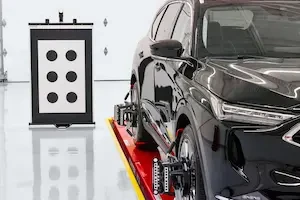
For shops weighing certification and equipment investments, February's data reinforces that hybrid-capable tooling and training are the near-term priority. The RAV4's move to an all-hybrid lineup, Ford's Explorer and Bronco volume, and the Korean brands' hybrid SUVs all point to a repair mix that will increasingly feature regenerative braking components, high-voltage disconnect procedures, and calibration requirements that differ from both pure ICE and full BEV vehicles.
Whether EV demand recovers without federal support remains an open question heading into the spring selling season. For now, the hybrid transition is accelerating faster than most forecasters projected.