


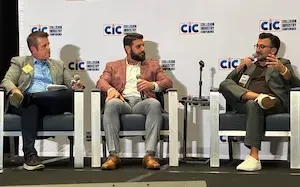
Collision repair shops are investing heavily in technology, with AI estimating tools, upgraded management systems, and automation platforms promising speed and efficiency. But according to a recent Collision Vision roundtable with Erin Solis, Sheryl Driggers, and Bill Brower of Solera, most operators are asking the wrong first question.
Instead of starting with software, the panel said, shops should start with structure.
Scheduling discipline, workflow clarity, and cultural alignment determine whether technology becomes a growth engine or an expensive distraction. Without those foundations, new tools can amplify existing weaknesses instead of adding benefits.
Scheduling is the foundation.
Driggers mentioned what stood out to her the most in the previous podcast with Sebastian Torres was on the conversation on scheduling.
“I think this is such a critical part of the equation when it comes to collision centers, but I really feel like a lot of shops don’t do this strategically,” she said, adding that she really liked that Torres brought his team into the strategy.
She emphasized scheduling as the critical discipline underneath growth. Scaling without consistent scheduling and capacity planning, she argued, simply multiplies inconsistency.
That means scheduling based on more than open calendar slots. It requires factoring:
- technician capacity and skill level
- consistent repair planning
- OEM procedure research and documentation
- post-collision safety requirements
Takeaway: If your scheduling process isn’t built on technician capacity, blueprint discipline, and OEM-driven planning, you may be amplifying chaos. Without those inputs standardized, adding locations creates more variability, more rework, and more missed promises.
Map the workflow before you buy the “shiny” thing.
One of the most practical takeawaysfrom the podcast was the repeated warning against impulse technology adoption.
Brower advocated mapping the claim process end-to-end (a “lean” or value-stream approach): define what happens today, define what “good” should look like, then identify where tools fit, instead of letting tools dictate operations.
High-performing shops, he said, don’t just buy what demos well. They ask hard questions about what’s powering the tool, especially for AI: does the product have the volume and quality of data required to produce reliable outputs?
Takeaway: Workflow mapping can expose gaps, unclear ownership, and inconsistent habits. Understand your system well enough to know whether a purchase is even necessary. But don’t let software define your operations. Instead, define your operations so precisely that you can evaluate software with discipline, and walk away from tools that don’t fit.
Pilot like you mean it.
Everyone agreed: implementation is where tech wins or dies.
Driggers shared a hard-earned example: her team switched management systems for better production capabilities, then switched back three months later when it created stress, didn’t fit workflows, and failed to support the team’s real-world operation. The lesson wasn’t “don’t change systems.” It was “don’t confuse features with fit.”
The panel outlined what a real pilot requires:
- Start with a small group of strong performers who can shape the workflow
- Run it long enough to get past the initial frustration curve
- Use daily feedback loops (short stand-ups) to surface friction quickly
- Create accountability so the process doesn’t become optional
Brower added that inconsistent adoption is a quiet killer: if someone uses the system and someone else doesn’t, the shop never gets to the truth about whether the change works.
Takeaway: Technology rarely fails because it lacks capability; it fails because leadership underestimates implementation. A real pilot requires discipline, cultural alignment, and consistent usage across the team. If adoption is optional, results will be inconsistent and conclusions will be flawed. Shops that commit to structure, feedback, and accountability are the ones that turn new tools into performance gains instead of expensive frustrations.
AI estimating is “human-guided,” not fully automated.
A recurring theme was that accuracy and speed don’t have to be enemies if the workflow is designed correctly.
In the model discussed, a customer-facing team member captures photos and initiates the AI estimate. The estimator then reviews the output, makes edits, and can visually verify details with the vehicle on site, like — raising the hood, checking questionable areas, and applying judgment before finalizing.
The panel stressed that supplements won’t disappear, and no tool should be sold that way. But AI can improve the first estimate quality and consistency, reduce missed line items, and shorten the time required to reach a workable repair plan.
“I think the more you can leverage that AI power with a human eye, the more accurate you're going to be in that first estimate so that you have less supplemental damages to be concerned with,” said Bower.
Brower also later described a claims experience where digital routing trapped him in voicemail loops when he needed a quick, time-sensitive answer — a reminder that customers need an “escape hatch” to a real person.
The same principle applies in the shop: customers want confidence, relationship, and clarity. AI can accelerate steps, but it can’t replace trust-building conversations.
Takeaway: AI estimating is not a replacement for skilled estimators. When paired with human oversight, it can accelerate estimate creation, improve consistency, and reduce missed items without sacrificing judgment. Shops that treat AI as a guided tool, — not an autopilot, — will gain speed and structure at intake while preserving accuracy and credibility with customers and insurers alike.
ROI isn’t about the software price. It’s about the bottleneck you remove.
Solis framed ROI in blunt operational terms: if AI-assisted intake allows a shop to process four vehicles in the time it used to take to process one, that’s not a “nice-to-have.” That’s throughput.
The value shows up when:
- vehicles enter production sooner
- technicians aren’t idle waiting for estimates or approvals
- scheduling becomes tighter and more predictable
- customer-pay conversions improve because the customer leaves with clarity
Takeaway:If a tool removes a bottleneck at intake, shortens the time between customer arrival and production, and prevents technicians from standing idle, it directly impacts revenue capacity.
Every hour saved at the front desk compounds across the shop floor in the form of tighter scheduling, faster cycle times, and improved customer confidence. Shops that evaluate technology through the lens of throughput and labor utilization, rather than price alone, are far more likely to see measurable returns.
Looking ahead
The panel’s message was consistent: growth in today’s collision repair environment isdriven by driven by operational maturity, not the newest tool.
Shops that treat scheduling as a discipline, map their workflows before investing, pilot technology with structure and accountability, and use AI as an enhancement rather than a replacement will create measurable gains in throughput and customer experience, according to the panel. Those that skip those steps risk layering complexity onto instability.






Lisa McArdle