
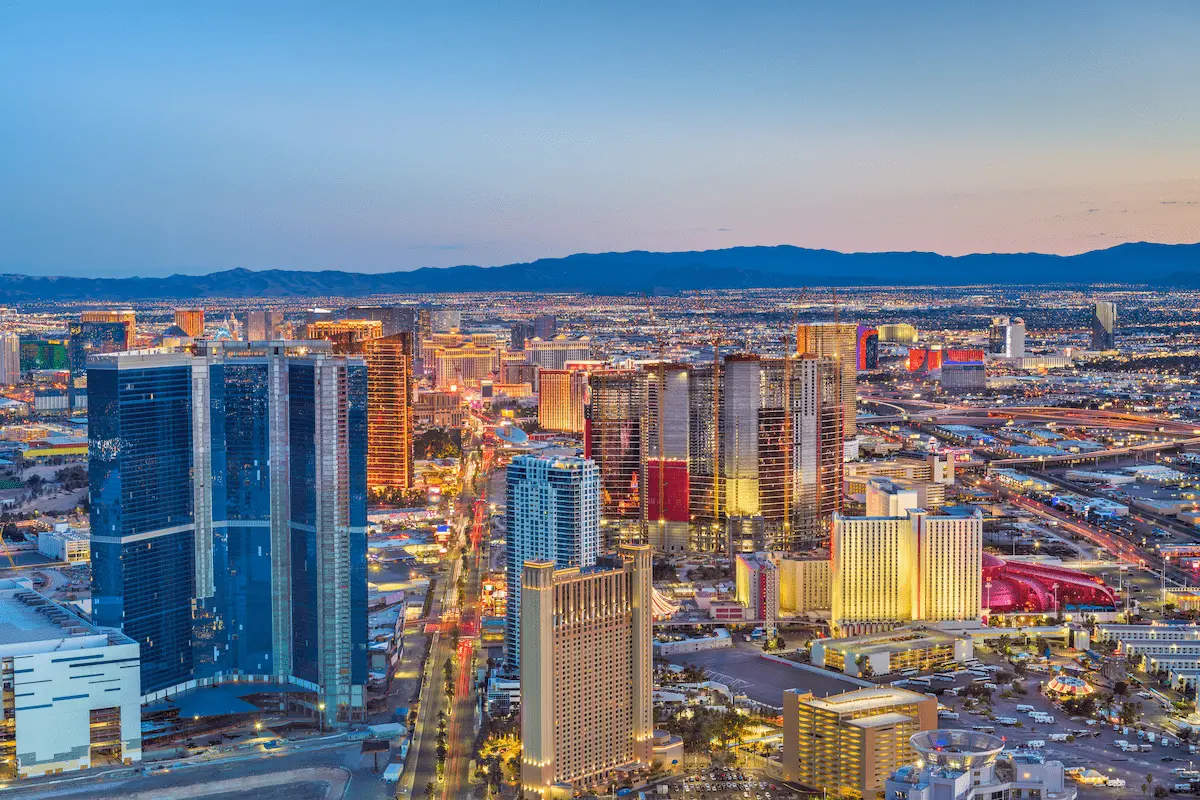
SEMA built its reputation on acres of custom builds and show-floor spectacle, but tucked inside that spectacle this year is some of the most substantial technical education collision shops will find all week.
The show runs Nov. 3-6, 2026, at the Las Vegas Convention Center, and collision-specific education comes from two tracks: SCRS’s Repairer Driven Education (RDE) series, running Tuesday through Thursday in rooms S229 through S231, plus Room S233 for the OEM Summit, and I-CAR’s recurring courses in rooms S224 and S225.
The ADAS Showcase (Booth #31200) runs Tuesday through Friday, and FutureTech Studio (Booth #24401) runs Tuesday through Thursday; both list their sessions without a “Register” link, which suggests drop-in access, though the schedule doesn’t say that outright.
RDE sessions run $95 each in advance ($125 onsite), or $375 in advance ($425 onsite) for an SCRS Full Series Pass covering one session in each RDE time slot, the IDEAS Collide Showcase, all three OEM Summit sessions, and a ticket to the SCRS Sky Villa Afterparty. Full details are on SEMA’s official education schedule.
Tuesday, Nov. 3
Reclaiming Technical Authority: The Collision Shop’s Fiduciary Role
Keith Manich (Automotive Training Institute), 9:30–11:00 AM, Room S231
As vehicle complexity rises and insurer negotiations get more contentious, Manich argues shops need to draw a hard line between technical decision-making (what the vehicle requires) and payment accountability (what someone will pay for), and operate as a fiduciary for the vehicle owner rather than reacting to whatever insurers do next.
Why it matters to shops: This is the same “who’s the technical authority” argument running through a lot of this year’s insurer coverage, and it gives shops a framework for that conversation instead of just a grievance.
Repair Planning That Pays: Protecting Revenue Through Research
Benjamin Roberts, Isaac Aronson (OEC), 9:30–11:00 AM, Room S230
Modern vehicles require extensive OEM research, conditional-procedure evaluation, and calibration consideration before a repair even begins, and the session uses patterns across thousands of repair plans to show where that front-end research most often breaks down.
Why it matters to shops: Inconsistent research habits are a direct line to supplements, delays, and insurer pushback, and this session is about catching that earlier instead of fighting it at the end of the job.
Fix Your Shop’s Digital Marketing: A Live Advertising Workshop
The Sokal team, 9:30–11:00 AM, Room S229
A live workshop, not a lecture, where shop owners and managers bring their actual advertising strategy into the room and get direct feedback on where it’s falling short and which digital tools would help.
Why it matters to shops: Marketing resources built specifically for collision shops are rare, and this trades the usual generic advice for feedback tailored to your shop’s actual numbers. All three of the above run at the same time, so pick your lane.
Capturing Mechanical Labor: Being Intentional About the Opportunity
Mike Anderson (Collision Advice), 12:00–1:30 PM, Room S231
Anderson walks through industry data on how often mechanical labor, pre-measurements, diagnostics, component removal, inspections, alignments, gets left out of the repair plan entirely or misclassified once it’s in there.
Why it matters to shops: This is revenue you’re likely already generating but not capturing or documenting, and it’s also a lever for shops trying to lean less on insurer-steered, DRP-term work.
Bringing Mechanical Repairs In-house
Steve Dawson (Hunter Engineering), with a second panelist still listed as TBD, 2:30–4:00 PM, Room S231
The direct sequel to the Anderson session, in the same room: leaders from shops that have already added mechanical capability talk candidly about why they made the move, what it cost to implement, and what it actually did to their cycle time and profitability.
Why it matters to shops: It’s the practical follow-up to “you’re leaving mechanical revenue on the table,” here’s what building that capability really takes.
Repair Transparency: The Key to Defensible Repairs and Better Outcomes
Arynne Kelly, David Martin, Michael Giarrizzo Jr. (DCR Systems), 2:30–4:00 PM, Room S229
Using a live claims package, the panel walks a real claim from intake to final billing and points out exactly where documentation gaps undercut a repair’s defensibility.
Why it matters to shops: It’s practical advice for the next time an insurer pushes back on your estimate, built around a real file instead of hypotheticals.
ADAS Showcase
Booth #31200, runs all day
Tuesday’s named sessions include GM’s “Small Changes, Big Consequences” (10:15 AM) on sensor alignment and mounting, and “Would You Calibrate It?” (11:30 AM), where GM walks attendees through real repair scenarios and has them vote on the right call before revealing the answer. Open-engagement blocks run between sessions all day.
Why it matters to shops: This is a rare chance to ask GM’s own engineers a specific calibration question and get a direct answer, not a help-desk ticket.
Wednesday, Nov. 4
The 3 Daily Mistakes Repair Shops Make That Empower Insurers
Sean Preston (Coverall Law), Tim Ronak (AkzoNobel), 9:30–11:00 AM, Room S230
Built around three categories, protection, payment, and process, the session lays out 30 specific, actionable steps shops can take to stop unintentionally handing insurers leverage in negotiations.
Why it matters to shops: It’s a collision-industry attorney naming the specific operational habits that weaken your position, not generic “know your rights” talk, and the panel format means you can bring your own scenario into the room.
Financial Success Starts with a Plan: Turning Numbers into Action
Tracy Dombrowski, Maria Quintero (Collision Advice), 12:00–1:30 PM, Room S231
Covers building a practical shop budget, calculating breakeven and target net profit, and setting technician production goals based on those budgeted numbers rather than guesswork. Why it matters to shops: it also covers how to spot gross profit drifting off target early, so you catch the small issue before it becomes a quarter-ending problem.
The Profit & Control Playbook: Bringing Auto Glass In-House
Shauna Davis, Jason Horne, Jorge Sandoval (Kaizen Glass Solutions), 12:00–1:30 PM, Room S230
Auto glass now sits at the intersection of ADAS calibration requirements, OEM repair procedures, and insurer expectations, and the session argues shops that still treat it as an outside sublet are leaving both revenue and repair control on the table.
Why it matters to shops: With ADAS tied so tightly to glass work now, who does that job affects your calibration liability, not just your bottom line.
The IDEAS Collide Showcase
2:30–4:00 PM, Room S229
A string of 10-minute talks you can catch back to back. Three worth planning around: Joel Adcock’s “The Scan Is Not the Story,” on why a clean diagnostic scan doesn’t guarantee a safe repair and the gap between running a scan and documenting it; Justin Allen’s “What Will You Do When the Cars Stop Crashing?,” on how advancing ADAS could shrink crash volume and what that means for a shop’s long-term business model; and Daniel Burkholder’s “The AI Takeover: Is Your Shop Ready to Be Found?,” on how AI-driven search is changing how customers find a shop at all.
Why it matters to shops: It’s the one session built specifically to surface ideas nobody’s pitched you yet, in a format short enough that a bad topic costs you 10 minutes, not an hour.
ADAS Unlocked: Ensuring ADAS Performance on Modified Vehicles
Michael Wayland (CNBC), with IIHS, AEV, AUTEL, and others, 1:00 PM, Room N255
Covers the aftermarket pathways for evaluating, diagnosing, calibrating, and validating ADAS-equipped vehicles that have been modified, along with updates on “Right-to-Modify” efforts and the evolving SEMA Certification program.
Why it matters to shops: If you touch lifted trucks, restorations, or anything else that’s been customized, this is where the ADAS rules for non-stock vehicles are actually being worked out.
Thursday, Nov. 5
OEM Summit
Room S233
Session I, 12:30 PM, “The National Safety Objective: Safer Vehicles, Safer Roads,” opens with NHTSA Deputy Administrator Lee White on the agency’s current vehicle and roadway safety priorities, followed by a one-on-one with SCRS Executive Director Aaron Schulenburg on where repair fits into that federal safety picture.
Why it matters to shops: It’s the regulator’s own read on where vehicle safety priorities are headed, straight from the agency that sets the standards your repairs ultimately have to meet.
Session II, 2:00 PM, “Engineering the Safety Benefit: From Requirement to Real-World Performance,” brings in GM’s Michael Carpenter and Jameson Collins, moderated by Jake Rodenroth, to explain how automakers decide what a safety system should do, set its performance requirements, and measure whether it’s actually delivering a real-world benefit.
Why it matters to shops: It builds toward the question every repairer eventually has to answer: if a vehicle entered a collision with a measurable safety capability, how do you know that capability’s been restored?
Session III, 3:30 PM, “Preserving the Safety System: Sensors, Calibration and Repairability,” closes with ADAS and service engineers from GM (Steven Vance, Chad Zagorski), Ford (Brian Perkins), and Rivian (Ryan Davenport) on how collision and repair variables, sensor position, structural dimensions, ride height, replacement glass, can alter what a vehicle’s sensors perceive.
Why it matters to shops: It’s the hands-on mechanics across three different OEMs in one room, which almost never happens outside SEMA week.
OEM certification is one of the two things shops told us they’re spending the most on this year, and Thursday is the one place all week you’ll hear directly from the engineers behind the repair procedures, not just the procedures themselves. A separate, informal OEM Summit discussion also runs at the ADAS Showcase booth (#31200) at 12:45 PM that day, open walk-up conversation rather than the ticketed panel series.
Defensible ADAS Calibration: Documentation, Measurements, and Risk Mitigation
Pam Oakes (Driven Evidence), 12:00 PM, FutureTech Studio, Booth #24401
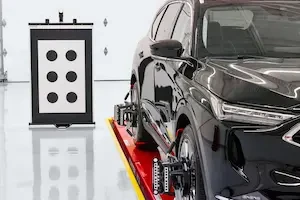
Covers how vehicle geometry, calibration data, and documented procedures combine to validate ADAS work and hold up when a repair’s performance or safety is questioned later.
Why it matters to shops: This is the documentation case for your calibration file, built for the moment an insurer or attorney asks you to prove the work was done right.
I-CAR’s recurring courses
Room S224 (diagnostics and ADAS calibration) and Room S225 (blueprinting, glue pull repair, and welding), running multiple times a day Tuesday through Thursday
Introductions to Diagnostics and Scan Tools and Requirements and Considerations for ADAS Calibration (Room S224): covers pre-, in-process, and post-repair scans, how trouble codes relate to calibrations, and the shop and vehicle conditions that make a calibration actually hold, using video from technicians who perform calibrations daily. Both count toward ADAS Technician ProLevel 1 and are sold as a bundle at a discount.
Understanding the Blueprinting Process and Glue Pull Repair (GPR) (Room S225): I-CAR’s pitch is that disciplined blueprinting reduces supplements and cycle time, and GPR is a genuinely new technique for most shops, not just a new tool to buy, with the course covering how it differs from traditional paintless dent repair. Also bundled; the blueprinting course counts toward Estimator ProLevel 2 and Non-Structural Technician ProLevel 1.
GMA/MIG Welding Basics (foundational technique and safety protocols) and Advanced Features (specialized techniques for aluminum and mild steel) (Room S225): live demonstrations near the I-CAR booth (#33139) on the show floor, with an I-CAR welding expert on hand.
Why it matters to shops: It’s hands-on practice against OEM standards with someone qualified watching, not a session in a chair.
Course fees run roughly $46 to $95 depending on the day and whether you bundle, with per-session credit toward annual I-CAR training.
Two spots worth building your route around
ADAS Showcase
Booth #31200, South Hall Upper, all four days
A dedicated area just for ADAS, with OEM-led demonstrations each day (GM, Rivian, Ford, and Toyota all appear across the week) running alongside open-engagement blocks where you can simply walk up and ask an engineer a question. Friday’s standout is an 11:30 AM hands-on Toyota demonstration, run with SCRS’s ADAS Council, covering calibration, measurement, or shop setup procedures.
Why it matters to shops: It’s worth a stop any day if calibration touches any part of your business, since the specific OEM presenting rotates by day.
Collision Repair Stage
Booth #32145, South Hall Upper
Where I-CAR leaders and experts present throughout the week, and the physical anchor for most of what’s on this list.
Why it matters to shops: If you only have time to park yourself in one spot on the floor, this is the one most likely to put something relevant in front of you without having to go looking for it.
Worth knowing about, even if it’s not on your must-see list
SEMA Kickoff Breakfast
Tuesday, Nov. 3, 7 a.m., Westgate Las Vegas Resort & Casino
The Best New Product Awards, honoring innovation across 15 categories, are presented at this year’s breakfast, with Collision Repair & Refinish among the categories the awards have historically recognized.
Why it matters to shops: Even skipping the breakfast itself, the winners are a quick read on which new collision-specific products the industry is already paying attention to.
SCRS Sky Villa Afterparty
Thursday, Nov. 5, 9 p.m., Westgate Sky Villa
The premiere collision-industry networking event of SEMA week, held in one of the most sought-after suites on the Strip, and a fixture for high-profile figures across the collision repair community.
Why it matters to shops: It’s less about the party and more about who’s in the room, the kind of access to OEM, insurer, and vendor contacts that doesn’t happen during a normal week. Tickets are limited and included in the Full Series Pass.
Leave room to wander
Beyond this list, SEMA is simply a lot of show: a sprawl of new parts, wild builds, and curiosities you won’t find anywhere else, spread across acres of convention center floor. It’s easy to lose an afternoon just wandering, and that’s not wasted time. Some of the best finds come from the booth you didn’t plan to stop at or the conversation that starts because you’re standing next to someone at the right moment. Treat this list as your anchor points for the week, not the whole itinerary, and leave room to follow whatever catches your eye in between.
Room assignments and any late changes to this lineup will be confirmed as SEMA finalizes its official schedule. Check back with Autobody News throughout SEMA week for on-the-ground coverage of these sessions.


Lisa McArdle