Larry Jaskowiak has close to 50 years in collision repair, starting with trade school and an apprenticeship. He went on to run the collision operation at a Mercedes-Benz dealership, helped grow one store into six, and then helped start Cars Collision. He later spent five years building OEM certification programs, a stretch he said totaled 2,200 programs.
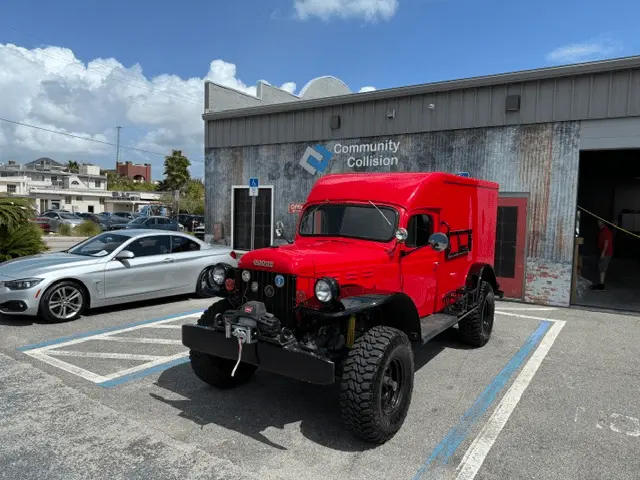
About four and a half years ago, Jaskowiak opened Community Collision in Leesburg, Florida. A second Leesburg shop followed in December, and the two locations load balance work, including car washes and estimates, and cover for each other when a detailer calls off sick. Jaskowiak said he is now working on a third store.
Community Collision is an independent shop with 15 employees across its two locations and holds 13 OEM certifications, including Acura, Ford/Lincoln, General Motors, Honda, and Hyundai. About 68% of its work is owner pay, Jaskowiak said.
Jaskowiak said all four of his technicians are certified in Tesla and C8, so a single departure doesn’t cost the shop a certification. He manages the shop’s OEM certification, including audit preparation and making sure available training gets completed, and plans to turn one of his Tesla technicians into a trainer once the business reaches six stores.
THE STACK
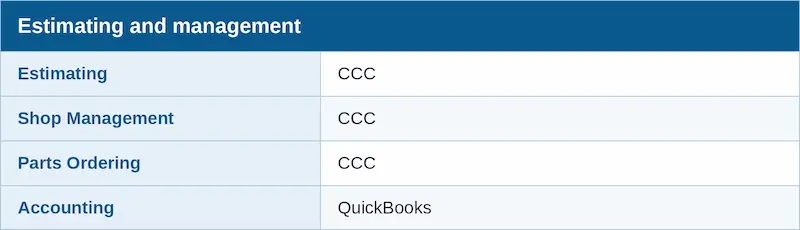
Asked why the shop runs estimating, parts ordering, and scheduling through CCC, Jaskowiak said it’s “the common thread in the industry right now for all insurance companies.”
For parts, he said the shop has trimmed its vendor list to about five suppliers that order through CCC. Because OEM certification requires OEM parts, he looks for vendors that help with price matching. At statement time, staff go online and check off what to pay. Parts credits are also handled electronically rather than by phone, which Jaskowiak said has made month-end statements quick.
“It’s seamless,” Jaskowiak said.
At Cars Collision, Jaskowiak said the company developed its own management system, but it was costly; for now, CCC’s shop management platform works, with everything flowing into QuickBooks for accounting.
Every two weeks, Jaskowiak gets a CCC report comparing estimates written to repairs captured, then works to find out why customers left. If the reason is money on an owner-pay job, he said he can sometimes find a solution; if an insurer steered the customer elsewhere, he can’t.
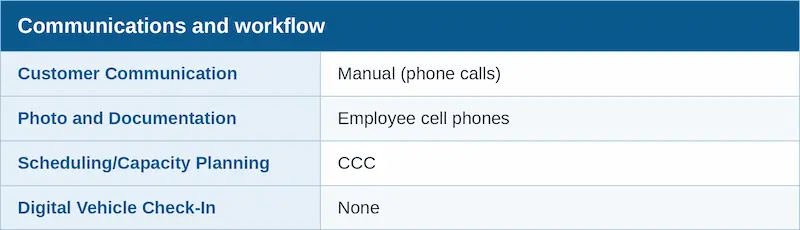
Jaskowiak said the shop’s average customer is 65 to 75 years old, which shapes how it communicates. Instead of automated texts, each staff member handling files makes a weekly Wednesday update call to every customer on their list and records notes in the file, which the shop audits for compliance. He said going through all of one’s files takes about an hour.
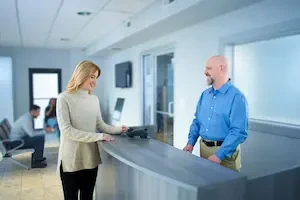
For intake, Jaskowiak said the shop sends customers home exclusively by Uber, then washes and blueprints the vehicle before calling back with a full estimate. The shop also talks customers through whether to file a claim at all, such as when an $1,800 estimate is set against a $1,000 deductible. When the shop opens a fourth store, he said he plans to have one person dedicated to update calls and post-delivery follow-up.
For photos and documentation, employees use their own phones, and the shop gives each employee a $150 monthly phone allowance.
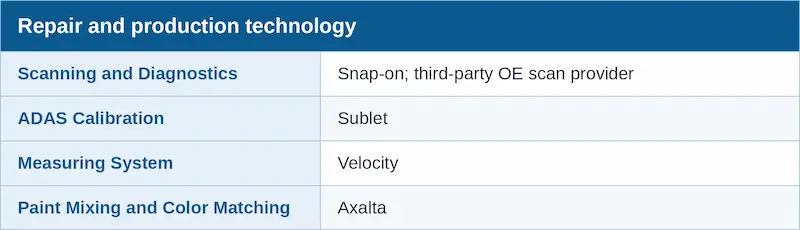
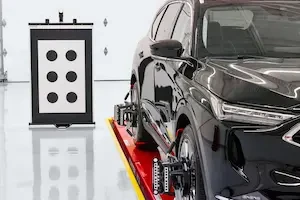
Jaskowiak said the shop scans every vehicle with its own Snap-on scanner, along with a scanning subscription required for some work. If the scan comes back clean, the repair moves forward. If more is needed, a local third-party provider comes in and supplies a scan along with the OE data supporting it, which Jaskowiak said makes the charge easier to get approved by insurers.
“So since we’ve switched to him and he’s all OE, it has helped us tremendously,” Jaskowiak said.
On paint, Jaskowiak said, “I’ve been using Axalta my entire life. I’m very loyal to them,” adding that the company gives him great service.
He said technology assists his technicians, but painters still have to do test panels. One challenge he described is matching a replacement bumper to metal panels on white vehicles.
The feature he highlighted is in Axalta’s software. When a painter finishes mixing and hits done, Jaskowiak said, the system sends an itemized material cost report to the file handler, who compares it against the insurer’s payment and uses it to support a supplement.
“So you know that to me is seamless,” Jaskowiak said.
What’s next for the stack?
Jaskowiak said he would like a cleaner check-in process, possibly with tablets running dedicated check-in software in place of employees’ phones.
He said he expects technology to help shops that handle tasks manually, but he doesn’t see it replacing people on update calls.
“I myself don’t want a robot asking me how I liked my, you know, my seal coat on my driveway,” Jaskowiak said.
One concern is reaching younger customers, who he said have been harder to win through the relationship-building his shops rely on. When he asked one younger customer how they found the shop, the customer first said online, but further questions revealed they came through a friend of their father’s who had a car repaired there.
“As techy as everything is, you can’t get the neighbor telling the dad, the dad telling the daughter, this is where you need to go,” Jaskowiak said.
Want to see your shop’s setup featured in Shop Stack Breakdown? Every edition profiles a collision repair shop and the technology behind its operation. Fill out our intake form and we will be in touch.