


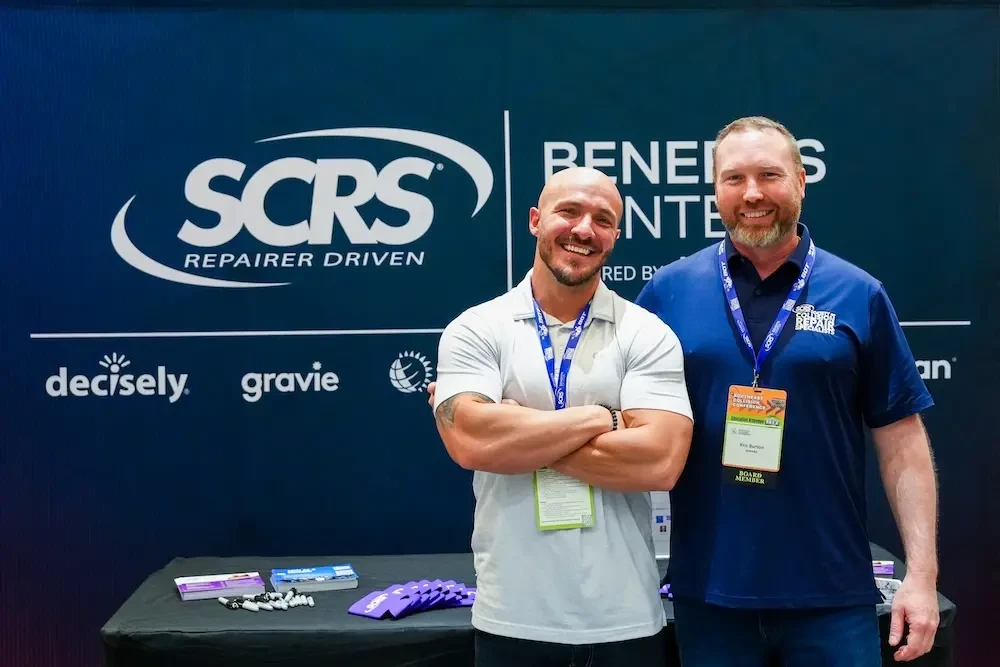
Industry experts from coast to coast discussed some of the challenges the collision industry is facing during the Southeast Collision Conference (SCC) in May. The 4th annual event, held in Richmond, Va., was planned by the Carolinas Collision Association (CCA) and the Washington Metropolitan Auto Body Association (WMABA).
“The partnership continues to exceed our expectations,” said Kris Burton, WMABA president and owner/operator of Rosslyn Auto Body. Burton said the goal of the conference was to plan a thought-provoking and inspiring event. “We want to see lives and minds changed for the better,” he shared.
If you missed attending the SCC, highlights from the managerial sessions related to business profitability, held as part of WMABA’s Collision Professional Repairer Education Program (P.R.E.P.), are summarized below.
The Costs of Not Getting Paid
Three board members from CCA and WMABA talked about the costs of not getting paid and recommended tactics to implement in a changing marketplace during a panel discussion moderated by Aaron Schulenburg, executive director of the Society of Collision Repair Specialists 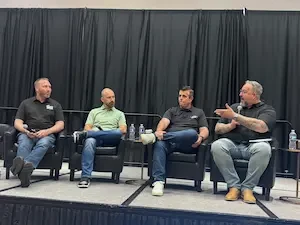 Left to right: Kris Burton, owner of Rosslyn Auto Body; Michael Bradshaw, vice president of K&M Collision; Barry Dorn, vice president of Dorn’s Body & Paint; and Aaron Schulenburg, executive director of the Society of Collision Repair Specialists (SCRS) (SCRS). Panelists included Michael Bradshaw, vice president of K&M Collision; Kris Burton, owner of Rosslyn Auto Body; and Barry Dorn, vice president of Dorn’s Body & Paint.
Bradshaw, Burton, and Dorn said the gap between what insurers are willing to pay and the cost of a safe, OEM-compliant repair is widening into an existential threat. During their session, the speakers explored how to break the "defensive cutting" cycle and secure the margins necessary to fund the annual retooling and technician development required for 2026 vehicle technology.
They recommended that shop owners and managers shift from a reactive stance to a proactive, documentation-heavy strategy that justifies the business's value to carriers and customers, while clearly knowing who the business works for — the vehicle owner.
Takeaways
- Combat “AI scrubbers”: Tactical documentation techniques can help bypass automated insurer refusals and “slow shop” rollback tactics.
- The return on investment (ROI) connection: Suppressed reimbursements often stifle the ability to invest in the mandatory tooling, specialized training, and apprenticeships needed for modern repairs.
- Customer advocacy and empowerment: Involve vehicle owners in the repair process and educate them on OEM requirements to build a unified front against underfunded claims.
- Strategic reinvestment: Develop a framework to protect your margins, ensuring your shop remains a viable competitor as material and technology requirements evolve
A Holistic Approach With Collision, Mechanical, and Glass Repair
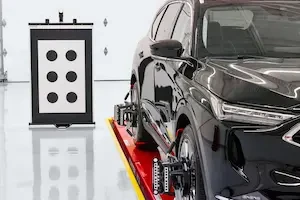
As the automotive industry evolves, Kris Griffin, owner of Calibration Consulting Associates, said the lines between collision, mechanical, and glass repair are blurring. Griffin moderated a panel exploring how these once-separate sectors now intersect. Panelists included Joel Adcock, Revv’s director of strategic partnerships; Kyle Bradshaw, director of fixed operations at K&M Collision; and Josh McFarlin, COO of AiroPro Diagnostics.
 Kris Griffin (right), owner of Calibration Consulting Associates, moderated a panel discussion with Kyle Bradshaw, director of fixed operations at K&M Collision; Joel Adcock, Revv’s director of strategic partnerships; and Josh McFarlin, COO of AiroPro Diagnostics. Photo credit: Cyber Eight LLCBradshaw, Adcock, and McFarlin emphasized that a safe, modern repair requires a holistic understanding of how each specialty affects the overall collision process.
Takeaways
- Cross-Industry Integration: Understand how ADAS, auto glass repair and replacement (AGRR), and mechanical systems must sync for a complete and safe vehicle restoration. “A simple windshield replacement is no longer just that,” said Griffin. “It is a highly complex operation consisting of the proper installation of the windshield.” He pointed out that it must meet the Federal Motor Vehicle Safety Standard for Roof Crush Resistance. He used the example of a roof skin repair, which requires an alignment, followed by multiple calibrations, depending on the manufacturer’s repair procedures (steering angle and windshield forward-facing camera at a minimum).
- Strategic Subletting: Learn to identify, vet, and maintain high-quality sublet partnerships that align with the shop’s standards. “Ensuring that those you are working with have access to OEM repair information and OE equipment is paramount for the safety and quality of the repairs,” he emphasized.
- Accountability & Completion: Implement workflows to ensure every facet of a repair —regardless of who performs it — is fully executed and documented.
Unlocking Hidden Paint and Material Profit
Business Development Coach John Shoemaker provided strategies for improving paint material profitability. Shoemaker pointed out how collision centers often limit their profit analysis to a simple “cost vs. sales” comparison, overlooking the nuanced factors that drive incremental improvement.
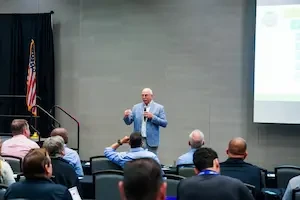 Business Development Coach John Shoemaker. Photo credit: Cyber Eight LLC During his session, Shoemaker taught owners and managers how to move beyond basic accounting and identify missed opportunities, reduce waste, and provide the repair team with the tools needed to document and communicate the full scope of the refinish process.
“You can look at paint material dollars in a couple of different ways — the price on your invoice (the expense) or the amount you consume (the cost),” he explained. “The problem with looking at the expense is that it’s difficult to realize the value because all you see are charges on an invoice.”
Shoemaker shared steps to reduce costs and gain expected gross profit. First, he recommended gathering the valid data. Next, he said to analyze that data, which involves comparing it to internal goals and determining trends. Then, a strategy can be developed and responsibilities assigned.
Takeaways
- Documentation Mastery: Decode the refinish procedure pages (P-Pages) to ensure every requirement is fully documented and billed.
- Process Efficiency: Understand how specific finishes dictate unique workflows, preventing costly rework and excess product usage.
- Data-Driven Oversight: Utilize reporting to monitor mixing accuracy, detect process deviations, and identify specific training needs.
- Material Accounting: Account for varied liquid costs and unique material requirements that are often absorbed as losses.
Unlocking Repairability With Glue Pull Repair
In her presentation, "Unlocking Repairability,” Emma White, MSO/OEM relationship manager at KECO Body Repair Products, explored how modern glue pull repair (GPR) techniques allow technicians to correct damage with greater control and reduced invasiveness. By focusing on KECO’s methodology — assessing damage, applying lateral tension, and managing metal flow — White's session demonstrated how to restore panel integrity without the need for traditional replacement or destructive stud welding.
“As collision repair facilities face increasing pressure from rising parts costs, extended parts delays, and evolving vehicle construction, glue pull repair is helping shops identify repair opportunities that may have previously been overlooked,” said White.
By following OEM procedures and applying modern GPR techniques, she said technicians can often repair panels that might otherwise be scheduled for replacement. In many cases, repairing rather than replacing can help reduce cycle time by eliminating the wait for replacement parts while preserving more of the vehicle's original structure.
Takeaways
- Training is critical to success. “Training is the most important tool in our system,” said White. “GPR is not difficult, but it is different. It requires training.”
- White said that KECO's rapid innovation and tools like the K-Power Lateral Tension Tools have increased repair capability tenfold, helping technicians repair damage once considered beyond GPR’s limits.
- Repairability matters more than ever. As total loss rates continue to increase, the ability to safely repair rather than replace major panels can sometimes be the deciding factor in whether a vehicle remains repairable.
Eliminating the Costs of Contamination
Rick Selover, national account manager for Garmat USA, explained how to identify and eliminate contamination-related costs in the shop. He discussed the three root sources of dust, dirt, and contamination that cripple shop production: the booth, the vehicle, or the painter.
During his presentation, Selover provided a tactical roadmap for identifying and eliminating surface contaminants before they reach the spray booth, protecting the business's margins from the devastating impact of rework and ultra-critical technician retention costs.
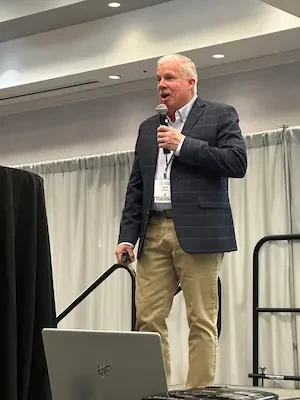 Rick Selover, national account manager for Garmat USA“The best way to drive consistently clean results in your paint department is to start with standard operating procedures (SOPs),” noted Selover. He suggested having an SOP for the booth environment to ensure all potential contamination sources are mitigated and an SOP for the refinish tech to ensure all necessary measures are taken. The goal is to ensure the vehicle and the painter are contamination-free before pulling the trigger.
According to Selover’s research, the average repair order value in 2026 is $5,147. He said the average cost of a redo includes paint and materials, energy, lost production revenue, and employee retention. “There is an average loss of almost $5,600 per redo or $67K annually due to avoidable contamination,” Selover mentioned, based on one redo a month.
He also mentioned that the nub/sand/rub/detail process most shops do before delivery costs ownership about $62 in labor and materials on every average RO they process for free. “Are we ‘rubbing away’ our profits?” Selover asked attendees during his presentation.
Because hidden costs do not show up on any spreadsheet, he pointed out that shops can’t see what they are losing. He estimated that a paint tech loses approximately $300 in potential income on every average repair order redo.
“Implementing a scheduled preventative maintenance program can reduce almost 50% of contamination issues,” he said.
Takeaways
Benefits of implementing a preventative maintenance program:
- Improved paint and material margins/profits
- Lower utility bills
- Increased daily output
- Improved employee retention
- Protection of your most expensive equipment




Stacey Phillips Ronak