


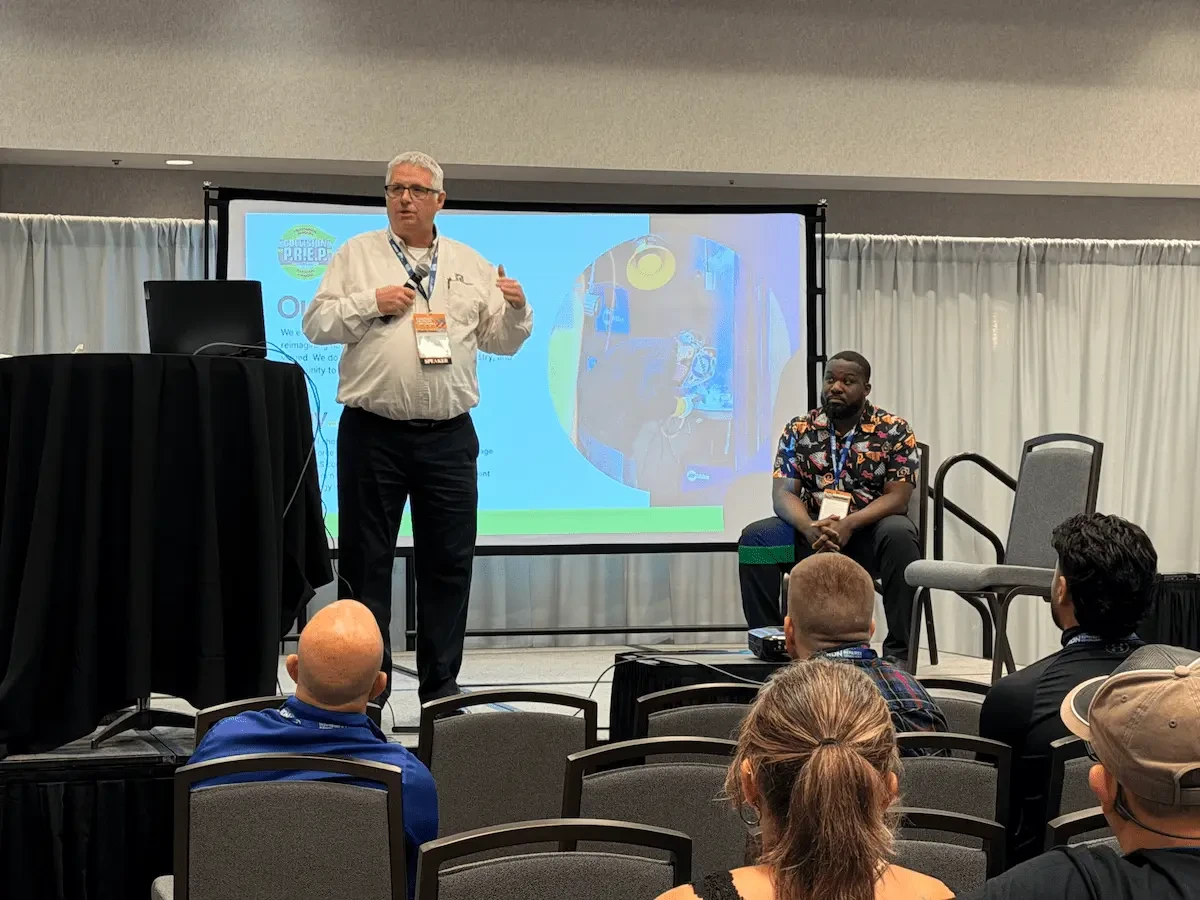
From leadership best practices to AI-powered solutions, a variety of educational presentations were held during the Southeast Collision Conference as part of the Collision Professional Repairer Education Program (P.R.E.P.). The fourth annual conference, held in Richmond, Va., was planned by the Carolinas Collision Association (CCA) and the Washington Metropolitan Auto Body Association (WMABA).
“Our associations working together has been a huge win for the Southeast Collision Conference and all of our area repairers,” said CCA President and Director of Fixed Operations of K&M Collision Kyle Bradshaw. “The endeavor is to focus on opportunities for shops to grow their insights, education, and connections.”
This year, there were two educational tracks: a managerial track for managers/owners and a technical track for estimators/technicians. If you missed the SCC, highlights from the managerial sessions focusing on business operations are summarized below.
Leadership Best Practices
Keynote speaker Mike Anderson, owner of Collision Advice, shared insights on leadership best practices.
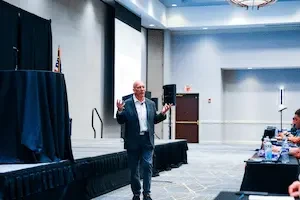 Mike Anderson, owner of Collision Advice. Photo credit: Cyber Eight LLC When business owners are making money and times are good, Anderson said it can be easy to let standards slip. As a result, businesses often stop paying attention to costs, take clients for granted, ignore market trends, and fail to improve inefficient systems.
“We relax and stop doing the things we know we could or we should be doing,” he shared. “Great leaders do not let this happen.”
Instead, he emphasized that great leaders are always looking at the present and, more importantly, into the future.
20 traits for leaders to adopt:
- Establish and increase trust by being transparent and keeping commitments
- Explain the “why” behind a decision rather than only addressing the “what” and “how”
- Recognize that everyone is inspired and motivated differently
- Encourage healthy debate and discussion that is respectful and professional
- Don’t let ideas be doomed for success and admit when they were wrong
- Use data to affect change
- Understand the power of words and praise in public while criticizing in private
- Observe and find the best time to talk to employees when they are struggling
- Know how to hold meetings to ensure they are productive
- Have a “less is more” philosophy
- Know how to delegate
- Take time to mentor
- Praise progress
- Take hiring seriously rather than just filling a spot
- Understand accountability by setting expectations and enforcing the rules
- Identify the need for training
- Retain what they read by taking notes and/or highlighting important points
- Realize that the customer is not always right and supporting their teams
- Recognize the difference between goals and wishes
- Share their visions of improvement
AI-Powered Solutions
James Spears, head of automotive for Tractable, helped attendees learn how to revolutionize customer intake and efficiency with AI-powered solutions like LumaScanner and Instant Quote.
 James Spears, head of automotive for TractableBy analyzing real-world case studies from leading MSOs, Spears explored how AI-powered visual assessments can transform the customer journey. He demonstrated how to eliminate operational bottlenecks and convert website traffic into high-quality jobs before a customer walks through the door.
Takeaways
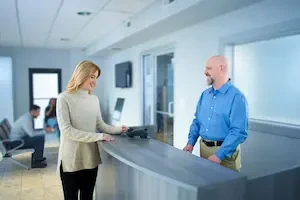
- Automated Lead Management: Shops using AI-powered intake tools can automate estimate requests by allowing customers to submit photos and vehicle details digitally before arriving in-shop. Spears said this helps staff prioritize higher-intent leads, automate follow-up communications and appointment reminders, and reduce manual back-and-forth, ultimately reclaiming staff time and reducing appointment no-shows.
- Seamless Implementation: A practical approach, according to Spears, is to introduce AI-driven intake alongside existing workflows rather than replacing them immediately. “Many shops begin with customer-facing tools like digital photo estimating and appointment scheduling, then gradually connect those workflows into repair planning and management systems,” noted Spears. “This minimizes disruption while allowing teams to adopt the technology incrementally.”
- Performance Metrics: Tools include AI-powered visual damage assessment, Instant Quote functionality, automated customer intake, and digital scheduling/communication tools. Together, Spears said these solutions can improve lead conversion, reduce administrative workload, shorten touch time through earlier repair visibility, and enhance the overall customer experience with faster response times and greater transparency.
Environmental and Safety Essentials
Some of the environmental, health, and safety (EHS) risks faced by independent shops were shared by Jason Fritz, CSP, regional manager at KPA, and Zach Pucillo, CSP, CHMM, regulatory director at KPA.
Fritz and Pucillo contend that the Occupational Safety and Health Administration (OSHA) and Environmental Protection Agency 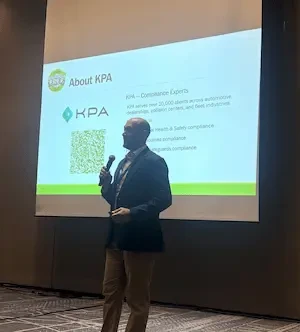 Zach Pucillo, CSP, CHMM, regulatory director at KPA(EPA) aren't slowing down when it comes to collision shops and said that if you're not paying attention, it can cost you. Their session focused on two areas where shops tend to get tripped up: respiratory protection and hazardous waste tracking.
The goal was to give attendees a clear picture of where gaps typically are and what steps they can take to get ahead of regulatory requirements before they become expensive problems and a significant injury or illness occurs to a shop owner's biggest asset: their people.
During their presentation, Fritz and Pucillo talked about EPA's e-Manifest system and why shops should prepare for the transition.
“Think of e-Manifest as the EPA's way of taking hazardous waste tracking out of the filing cabinet and putting it online,” they shared. Instead of paper manifests, shops will need to track waste, such as solvents, paint materials, and other regulated substances, digitally through RCRAInfo from the moment it leaves the shop to its final disposal.
They pointed out that many shops don’t realize they can’t hand waste to a hauler. “As the generator, you own that waste cradle to grave, no matter who's hauling it,” they said. “If something goes wrong down the line, don't expect that hauler to show up and go to bat for you, because they won't.” They advised shops to begin familiarizing themselves with the platform and make it a priority.
"Most shop owners want to do the right thing,” said Pucillo. “They just don't always know what 'right' looks like from a regulatory standpoint.”
Takeaways
- Risk Identification: The speakers noted that one of OSHA's observations during paint and sanding operations is a technician with a beard under a tight-fitting respirator. They said that facial hair that breaks the seal is the same as wearing no respirator at all and recommended a clean shave or switching to a Powered Air-Purifying Respirator (PAPR).
- Respiratory Standards: “Having a box of respirators on the shelf doesn't cut it with OSHA,” the speakers pointed out. Instead, the right cartridges are needed for the job (isocyanate-rated for two-stage paints), fit-tested employees, and a written program that's being followed. They said to think of it like a three-legged stool. “Kick out any one of those legs, and you're looking at a citation,” they added.
- Modern Waste Management: The days of scribbling on paper manifests are numbered, according to the speakers. The EPA is moving hazardous waste tracking to the digital e-Manifest system through RCRAInfo. Shops that get familiar with it now will be in a much better spot than those scrambling when it becomes mandatory.
- Operational Protection: Fritz and Pucillo said a solid compliance program keeps the team safe, regulators off your back, and money in your pocket instead of paying fines or workers' comp insurance premiums. Shops that build EHS into their daily routine tend to sleep much better at night.
Rebuilding the Technician Pipeline
Representing the Collision Engineering Career Alliance (CECA), National Program Director John Helterbrand discussed a U.S. Department of Labor-recognized apprenticeship training model focused on strengthening the future collision repair workforce through structured education, work-based learning, and employer engagement.
Rather than relying solely on traditional education or reactive hiring practices, the program connects students, schools, and industry partners through an associate-degree pathway that combines classroom instruction with paid apprenticeship experience and industry-defined curriculum standards.
The discussion focused on the importance of building long-term workforce development systems rather than continuing to rely on finding experienced technicians after shortages already exist.
For shops that want long-term workforce stability, Helterbrand said they must begin participating earlier in technician development. “Programs like CECA allow employers to help shape future talent through mentorship, apprenticeship opportunities, and direct engagement with education partners,” said Helterbrand. “The industry’s future workforce will not be built through recruitment alone — it will be built through intentional development.”
Takeaways
- Develop talent earlier by participating in apprenticeship and work-based learning opportunities instead of relying only on post-graduation hiring.
- Create structured onboarding and mentorship processes that help entry-level technicians grow into long-term employees.
- View workforce development as a continuous investment in the business, and not a short-term staffing solution.



Stacey Phillips Ronak