Collision repair shops struggling to find career-ready technicians now have a stronger hiring pipeline to draw from.
The Collision Engineering Career Alliance has received formal recognition from the U.S. Department of Labor for its apprenticeship training model, which grants graduates a federally issued credential. It gives shops access to technicians who have completed a rigorous, standardized two-year program combining classroom instruction with paid, hands-on shop rotations.
The St. Louis-based nonprofit announced in March that the Department of Labor approved its National Guidelines for Apprenticeship Standards. The designation means students who complete the alliance's two-year program will earn a Collision Engineering Technician Certificate directly from the federal government, in addition to an associate degree.
The certification also establishes a replicable framework other institutions can use to launch their own programs in compliance with federal workforce law, according to the alliance.
A Federal Credential in a Field Facing a Long-Term Shortage
The recognition arrives as the collision repair industry grapples with a persistent technician shortage. Research by the TechForce Foundation shows 110,000 new technicians will be needed by 2028. The TechForce Foundation's 2024 Transportation Technician Supply and Demand Report noted that the demand is primarily driven by the need to replace retiring or transitioning technicians, with less than 25% stemming from sector growth.
Against that backdrop, the Collision Engineering Career Alliance's president, Mary Mahoney, said that the federal recognition changes how the program positions itself with colleges, employers and public-sector workforce partners.
“It moves the program from being seen only as an industry-built pathway to being recognized as a workforce-development model with broader credibility,” Mahoney told Autobody News.
Mahoney said the certificate is distinct from existing trade credentials, such as those offered by I-CAR or ASE. While those programs test specific technical competencies, the federal certificate recognizes completion of the full apprenticeship pathway. Industry certifications remain part of the student experience and are built into the curriculum, she said, describing them as stackable skill validations within the broader federal credential.
How the Program Works
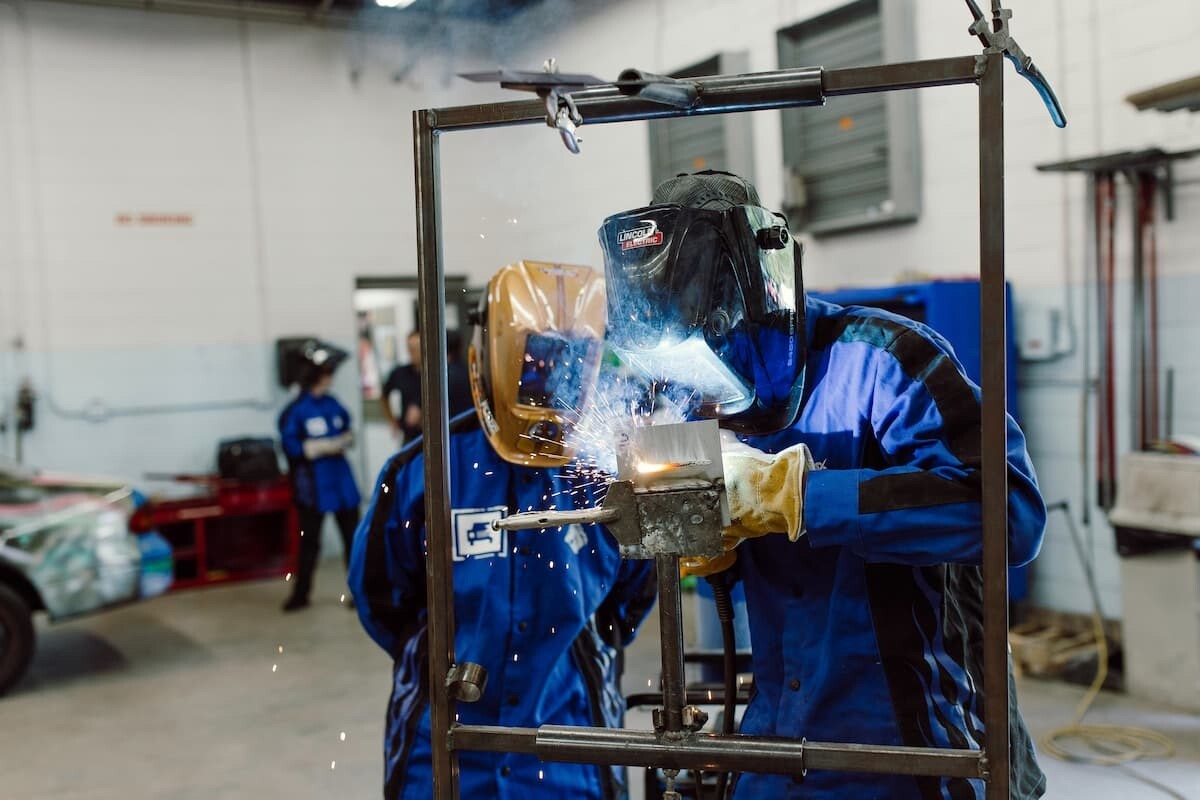
Under the alliance's model, students rotate every eight weeks between classroom instruction and paid shop assignments, enabling them to earn income and gather live shop experience before graduation. The program leads to an associate degree and, now, the federally recognized technician certificate.
Mahoney said the Personal and Professional Development component of the curriculum is designed to address communication, accountability, and workplace readiness, which she described as retention barriers that traditional technical education often leaves uncovered.
For shops, participation begins with employer onboarding, followed by student-employer matching. Once matched, shops assign a qualified mentor who guides the apprentice through each eight-week rotation and provides structured feedback. The alliance maintains ongoing contact with partner facilities throughout the placement.
Mahoney said partner shops are expected to view the arrangement as an investment in the profession's future.
"The shops that succeed as Collision Engineering partners view training apprentices as part of their responsibility to strengthen the profession," she said, noting that alignment translates into better mentorship, more intentional learning opportunities and higher student retention and success rates.
A Graduate's Path
Mahoney shared the experience of a recent graduate named Andrew, who completed the program in May 2025 at Metropolitan Community College in Omaha, Neb., and is currently working at a local repair shop. Andrew entered the program after a mentor recognized his potential and encouraged him to formalize his training. The rotation between classroom and live shop work pushed him to grow, she said, with instructor visits providing structured feedback along the way.
Andrew's long-term goals include owning or co-owning a shop with members of his cohort and eventually becoming an instructor himself.
Partner Schools and Expansion
The alliance is currently active at seven partner schools: College of Lake County in Grayslake, Illinois; Contra Costa College in San Pablo, California; Parkland College in Champaign, Illinois; Metropolitan Community College in Omaha, Nebraska; Sandhills Community College in Pinehurst, North Carolina; North Dakota State College of Science in Wahpeton, North Dakota; and El Camino College in Torrance, California.
El Camino College is set to begin offering the program in August 2026, with enrollment opening in May.
Mahoney said she expects the NGS recognition to accelerate interest from additional institutions. Colleges considering the program go through a discovery phase to assess fit and regional employer-market opportunity, followed by structured onboarding covering student recruitment, employer coordination and resource planning, including support for tuition stipends and tool vouchers.
"Our NGS creates the framework that enables other educational institutions to launch collision engineering apprenticeships meeting federal standards, ensuring students everywhere receive comparable training," Mahoney said.
The alliance, which officially became an independent 501(c)(3) nonprofit in 2024, grew out of an initiative with foundational support from the Enterprise Mobility Foundation. Mahoney joined as president effective Feb. 1. following a 40-year career at Enterprise Mobility.
Building a Talent Pipeline
Shops looking to address technician pipeline challenges may consider the following steps based on the Collision Engineering Career Alliance program:
- Explore apprenticeship hosting. Shops can contact the alliance to begin the employer onboarding process, which includes student-employer matching and mentor assignment.
- Designate a qualified mentor. Partner shops are required to assign a mentor who provides structured feedback and communicates with the program when additional student support is needed.
- Understand the credential now issued to graduates. The federally recognized Collision Engineering Technician Certificate is a new data point for shops evaluating candidates from the program, distinct from I-CAR or ASE credentials.
- Consider program expansion in your area. Shops in markets where no partner school yet exists can contact the alliance to explore whether a local college might be a candidate for onboarding.
- Support the program financially. The alliance accepts tax-deductible donations to fund student certifications, tuition reimbursement, tool vouchers, and other quality-of-life support.