


Eduardo Lopez doesn’t have to imagine what his students are thinking. Not long ago, he sat in those same seats.
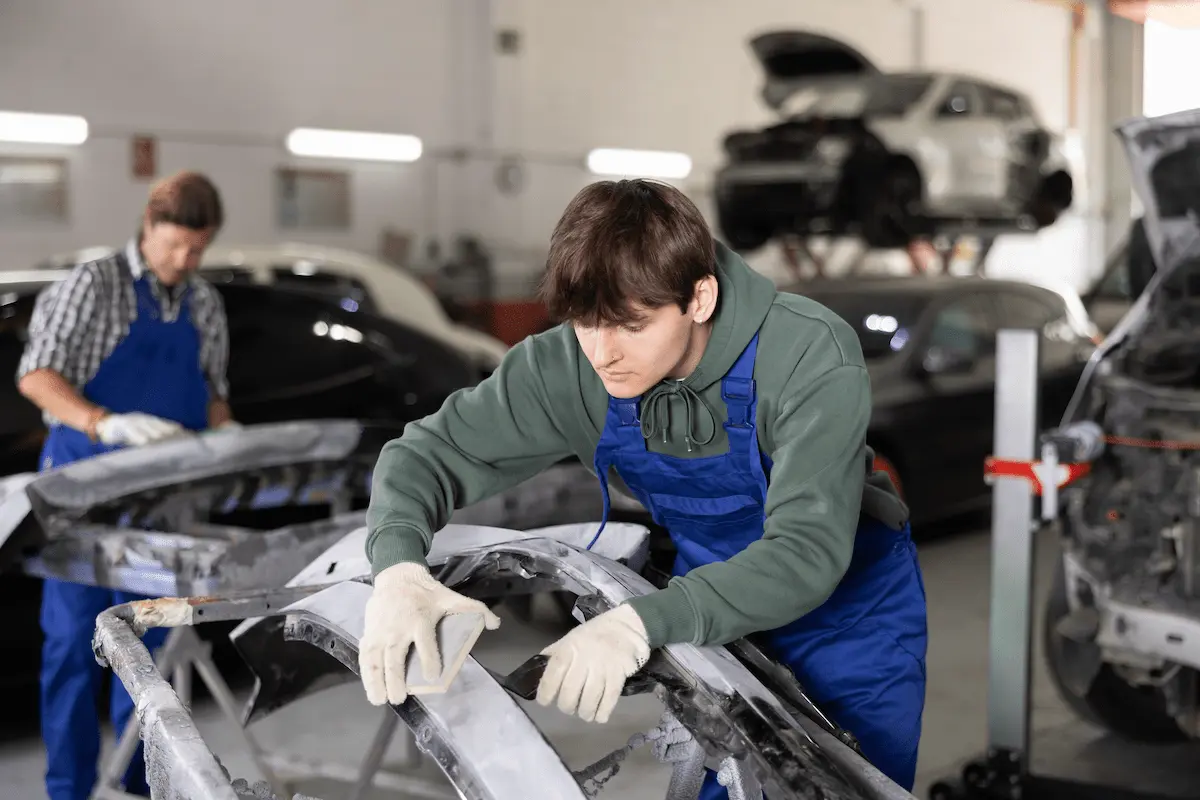
At 21, Lopez is in his first eight-week term as an instructor in the collision repair program at Collin College’s Technical Campus in Allen, Texas. He completed that same program in spring 2025 while working full-time at Planet Ford 635 in Garland. Now he teaches plastic repair and welding, tag-teaming the course with Raven Luna, discipline lead/professor of collision technology, who taught him.
“I liked the program so much that I decided to give this a try and see if I could do for other people what the program did for me,” he said.
Finding his path
Like many teenagers, Lopez didn’t know what he wanted to do after high school. He liked cars, but that was all he had planned. At Poteet High School in Mesquite, he enrolled in the auto body program at nearby Vanguard High School, and it clicked.
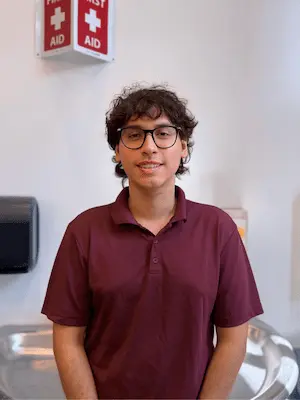
Eduardo Lopez, 21, is the newest instructor to join the faculty at Collin College’s Autobody Program.
His instructors there, including Abraham Fuentes, also impressed him. Inspired by how they worked with students, he decided he wanted to teach one day. At the time, he assumed it would come much later.
“I was thinking maybe after being in the field for a few years, I’d transition once my body gave out,” he said. “It’s a demanding job.”
In 2023, his high school program toured college collision programs, including Dallas College and Collin College. Collin’s new facility and high-end equipment won him over, but so did the program’s expectations.
“They want the best of the best,” Lopez said. “I wanted to get pushed, especially knowing I was going into a fast-paced field.”
Learning while earning
Lopez was hired at Planet Ford’s collision shop straight out of high school and spent nearly three years there while completing his college program. The shop supported his schooling, which let him put classroom lessons to work right away.
“I could use what I learned in class in my work and make money throughout,” he said.
He loved the work. Every job was different, which was exactly what he had been looking for. “I wanted something I could wake up to every morning and not be bored,” he said, “something that would drive me to be better.”
An industry that won’t sit still
Even in the few years between his time as a student and his first term as an instructor, Lopez has seen the industry shift. New materials, repair techniques, and OEM procedures keep coming, along with more hybrid vehicles and aluminum repairs.
That means instructors have to keep learning, too.
“Now that I’m on the other side, I’ve noticed that for us to keep up with what’s going on in the industry and stay relevant, we have to learn as we go,” he said.
The stakes go beyond keeping up. “When you’re working on cars, it’s not like being a doctor, but you’re dealing with people’s lives,” Lopez said. “You want to stay on par with safety and all the safety precautions the cars require.”
What shops are looking for
From his own time in a shop, Lopez knows employers want technicians who are certified and current on what the industry requires, including I-CAR training and welding skills.
Collin College students work toward credentials they can list on their resumes before they ever apply for a job, including I-CAR Academy coursework and ASE Entry-Level certification. Those credentials show shops that new hires have already started the training they’ll need on the job.
“Once students put that on their resume, shops know what to expect from them,” he said.
The unexpected call
When Luna messaged him to ask whether he’d be interested in teaching, Lopez wasn’t sure. He was doing well at Planet Ford, liked his coworkers and had never taught anything before.
“Honestly, at first I was doubtful,” he said. “To this day, I’m a little scared when I’m teaching a class. I’m working on my nerves.”
After talking it over with his parents, he decided to take the opportunity. “It was one of those opportunities that don’t come around often,” he said. “So far, so good. I love it.”
“I recruited Eduardo because I was aware of the work he was doing in the field,” said Luna. “We were looking for someone who was a body technician so he could teach non-structural classes for us.
“Eduardo brings a different perspective to the program because he was a student. He has first-hand experience transferring what he learned in our program and applying it in the field. He also can give recommendations on how to teach because he’s been in the student role. He has a valuable perspective that will help our program.”
Learning to lead
Lopez has been sitting in on classes taught by Luna, Marcus Godinez, and Joshua Valle, noting how differently each one teaches and blending what he learns into his own approach.
“In my opinion, they’re top-notch in the industry,” he said. “That sets an example of what’s expected of me, and I want to be on par with them.”
His age is also an asset. Students tend to feel more comfortable with him, which makes it easier to connect, though he’s quick to draw a line. “When it’s time to work, it’s time to work,” he said.
Beyond technical skills, Lopez wants students to see how many directions a collision career can take. Working as a painter or body tech is one route, but so are estimating, quality control, teaching or working as a paint rep.
“I want to show students they can do different things with what they learn,” he said.
What it means for shops
For shop owners and managers, Lopez’s story offers insight into the technicians entering the workforce. Graduates of programs like Collin College’s arrive with I-CAR coursework and entry-level credentials already on their resumes. They’re also learning that the industry’s technology changes constantly and that safety depends on following current procedures.
His story also shows what shops gain when they support technicians in school. Planet Ford let him attend college while working, and the payoff went both ways: he brought classroom skills to the shop floor and real-world shop experience back to the classroom. Now he’s passing both on to the next group of students.
“The program was so good, and I learned so much from it, that it made a change in my life and in my work,” he said. “I want to do that for other people.”


Leona Scott