


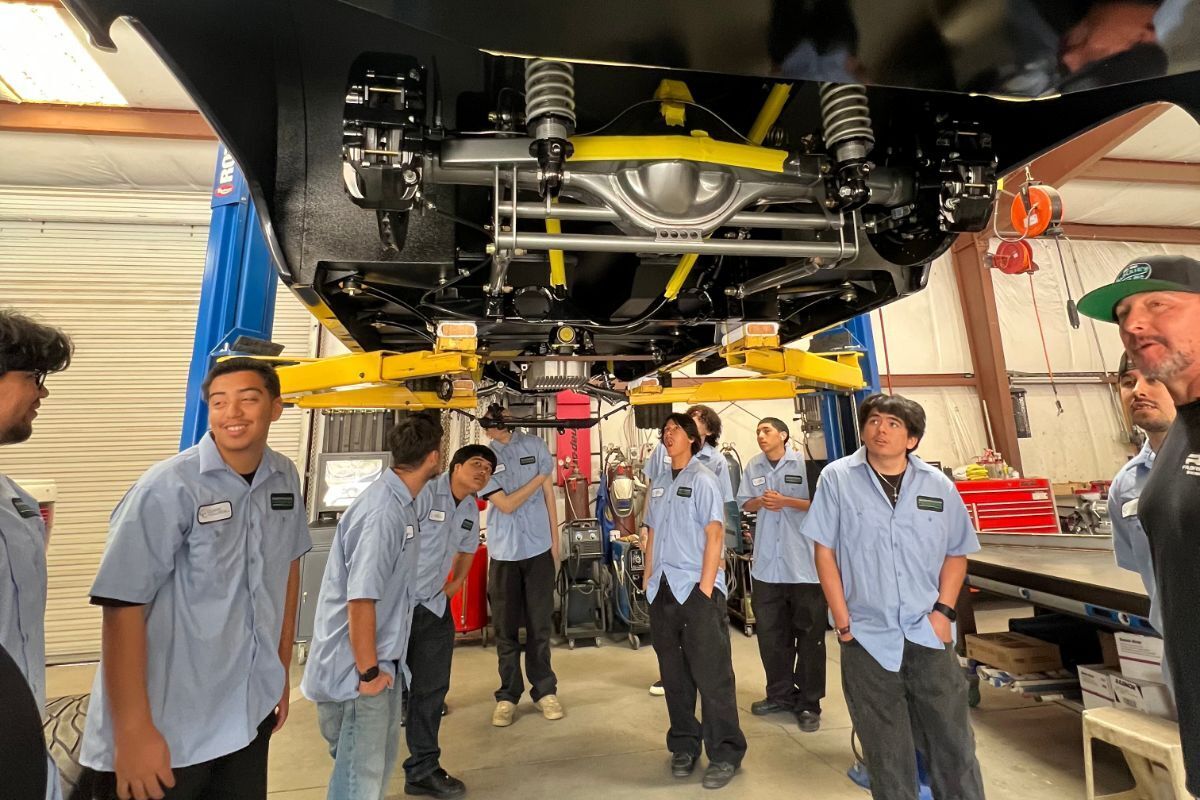
The sixth annual virtual Positivity Summit, hosted by Dave Luehr, founder of Elite Body Shop Solutions, and Ryan Taylor, founder of BodyShop Booster, was held earlier this year. In the fourth article of a four-part series, speakers shared information about being innovative, developing the next generation of technicians and shaping the future of collision repair through education.
Innovating Collision Repair
Luehr and Taylor described Kyle Al-Rifai, CEO of Swift Collision, as an “out-of-the-box thinker.” During the Positivity Summit, Al-Rifai talked about his unique approach to collision repair, how he embraces new initiatives and technology, and focuses on culture and customer experience.
His company, based in Broken Arrow, OK, and previously called Swift Recon, provides collision and mechanical repair.
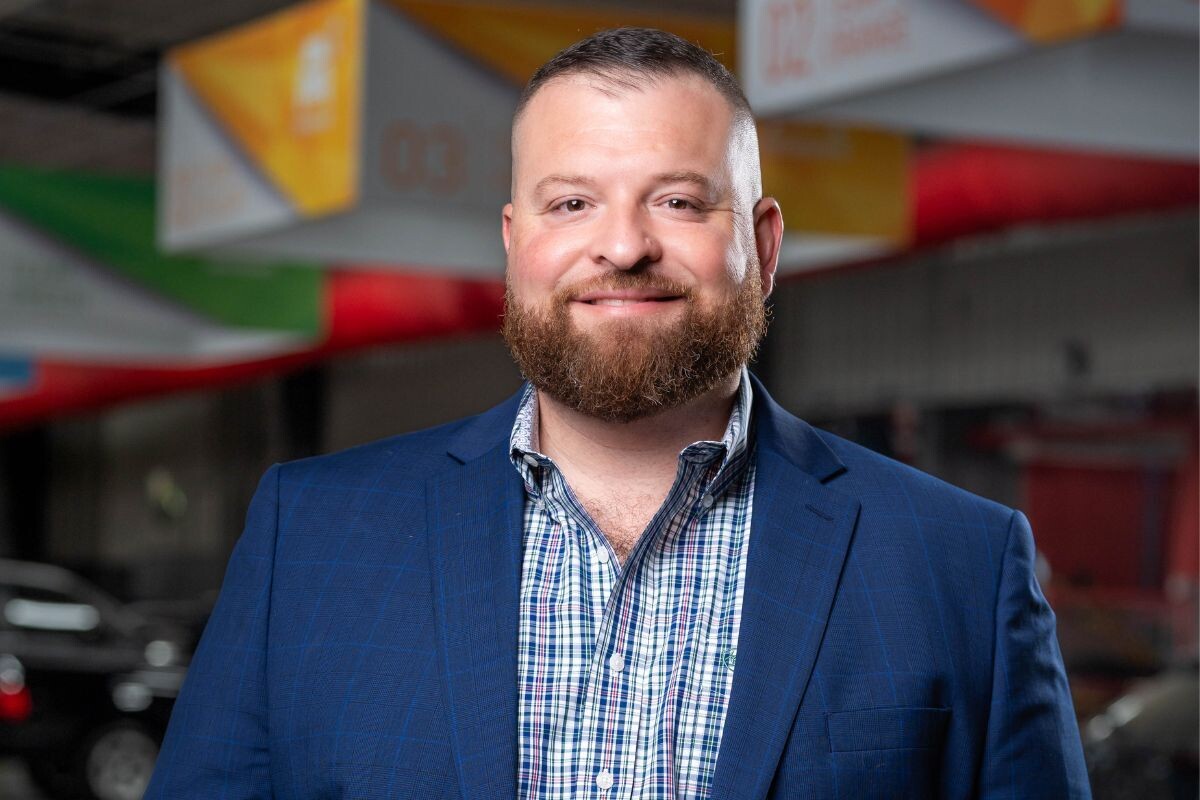 Kyle Al-Rifai.
As an engineer with a background in manufacturing, Al-Rifai designed the facility like a factory and brought in engineers to help run it. In 2017, the business operated a 2,500-square-foot location. Since then, it has expanded to nearly 140,000 square feet on 40 acres and has about 800 cars in process. With 115 employees, the company is very process oriented.
“Being from a manufacturing background, everything has a purpose. Everything has to flow,” Al-Rifai said. This includes timing the different stages of the repair process to determine where waste is occurring, as well as tracking cycle time and touch time. Over the last year, the team has prioritized training and workforce development.
“Talent is leaving the pool fast and not being replenished,” Al-Rifai pointed out. “We're hoping to get that back and pass the torch to the next generation.”
To help support this effort, Swift Collision works closely with two local technical schools. Students spend half the day attending the school’s collision repair program and the remainder working at the body shop.
“We're able to harness their skillset and get them ready for the industry when they graduate,” said Al-Rifai.
His company also focuses on a great experience for employees and customers. As part of this effort, Swift has an employee on-site whom they refer to as the “Dreamweaver.”
“The Dreamweaver’s job is to make sure every experience on both sides [employee and customers] is where we want it to be,” explained Al-Rifai.
 Swift Collision, based in Broken Arrow, OK, is nearly 140,000 square feet on 40 acres and has about 800 cars in process.
For example, if an employee is carrying around a Snickers bar, Al-Rifai knows the Dreamweaver has been talking to him or her after having a bad day.
Al-Rifai shared a story about an elderly client who dropped off her car to be repaired and left her bananas in the vehicle. The Dreamweaver bought her some fresh bananas and made up a fancy banana basket, put a bow on it and included a gift card.
“When she picked up her car, she was a little confused why we had bananas waiting for her, but we told her she had forgotten them in the vehicle,” he recalled. Not only did the customer write an amazing review, but she also referred customers to Swift Collision.
The shop has a red carpet it rolls out occasionally when important people come in to make them feel special.
“It's about the experience and looking for different ways to imprint on these customers and keep them interested in our shop,” noted Al-Rifai. “There are so many choices out there and we're humbled that they chose us.”
However, Al-Rifai said the customer experience never surpasses the employee experience and describes Swift Collision as being culture-centric.
This is the second year the company has been voted a great place to work. “It’s a hard thing to do and keeps us vulnerable, so all our information's out there, what our employees think of us — good or bad,” he noted. “We really want to listen to them and see where we're lacking. Without your army, you can't win any wars.”
He said this approach has made Swift what it is today.
“At the end of the day, you can't do it without the right team,” he stressed. “You need innovators around you, visionaries, problem solvers and people who challenge you — people who say this can be better, this can be bigger.”
Al-Rifai’s advice to shop owners is to approach problems differently and not care what others think.
His company is implementing AI diagnostics and ordered a CMT scanner for the shop. Al-Rifai recognizes it’s an up-front financial risk and there is uncertainty about how it might impact their process. However, they are moving forward.
“Do your homework and if you believe in it and you feel like this is the way it has to be, then jump on it,” he said. “Do the trust fall.”
Developing the Next Generation
The importance of developing the next generation of collision repair technicians was discussed by Mary Mahoney, vice president at Enterprise Mobility and chair on the board of directors for the Collision Engineering Career Alliance.
As a total mobility provider with a large global fleet of vehicles, Mahoney said Enterprise Mobility recognizes the critical and growing need to fill thousands of jobs in the collision industry.
She emphasized the burden can't only reside on the shoulders of the shops.
“We're very concerned about the overall health of this industry, and we want to continue to do our part to move it forward,” she said. “But we can't do this alone. We need the entire industry to collaborate and work with us.”
That includes insurance companies, parts companies, paint companies, glass companies, OEMs and others.
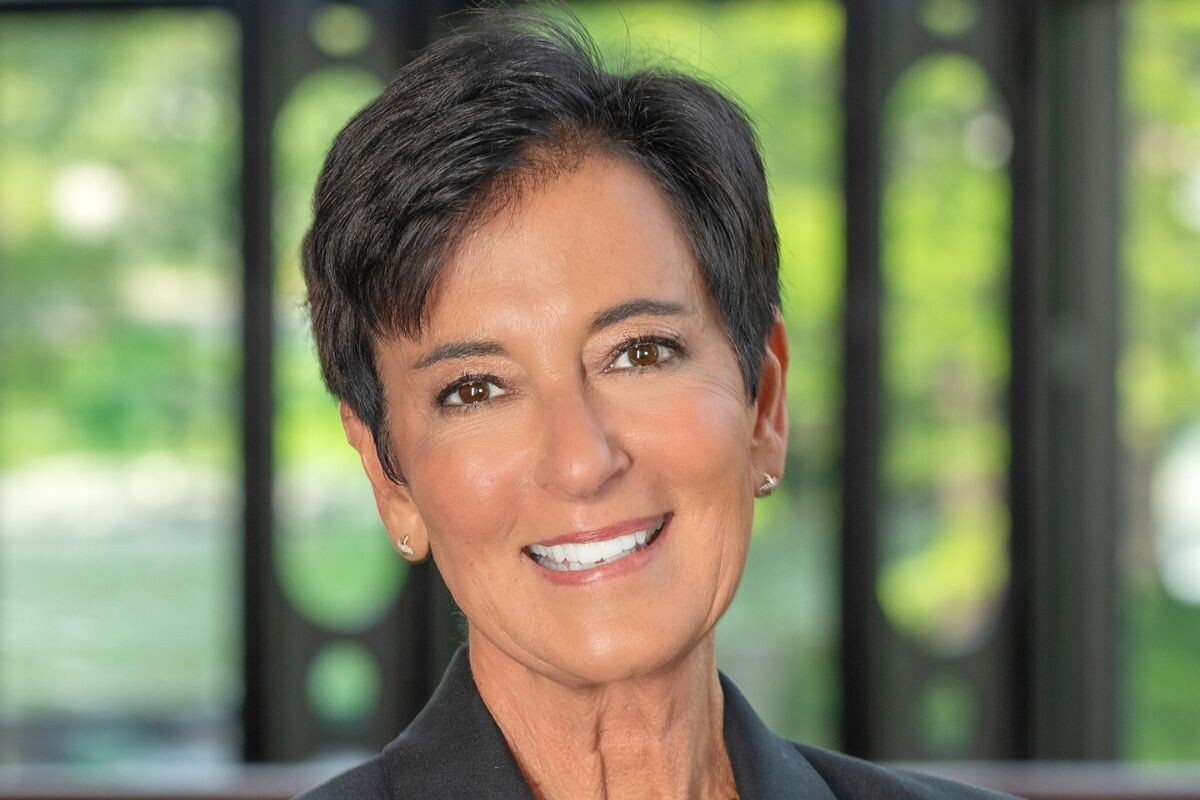 Mary Mahoney.
Mahoney acknowledged the growing complexity of repairing vehicles. “Everybody says they are iPhones on wheels, and we have to assume that we're not ready for what's ahead,” she said. In response, she encouraged the industry to keep moving forward and look for ways to recruit and educate the future workforce.
“It’s not just about trying to backfill retiring technicians,” she explained. “It's about building that next generation of highly skilled, passionate and motivated collision repair professionals.”
To help address the need for technicians, the Enterprise Mobility Foundation and Ranken Technical College launched the Collision Engineering pilot program in 2020, which included four schools in the U.S.
In 2024, Collision Engineering officially became an independent 501(c)(3) nonprofit organization — the Collision Engineering Career Alliance — marking its evolution from a supported initiative into a nationally recognized, standalone entity. Guided by a vision where every student passionate about collision repair can reach their fullest potential, the Alliance strives to make education and training accessible to all while building a community in which industry and education work hand in hand to develop the next generation of skilled professionals. Today, it operates at seven campuses and has grown into a strong network of educators, employers and workforce advocates working together to develop collision technicians who are career-ready, confident and connected to their communities.
Over the last four years, that vision has taken shape. Students in the Collision Engineering program rotate eight weeks in the classroom with eight weeks in a shop, allowing them to apply new skills immediately. The Collision Engineering student receives 1,200 + hours of hands-on training by the time they graduate.
Mahoney said the results have been remarkable, with more than 230 students served and an 87.5% graduation rate; 100% of graduates have secured jobs.
“The students are thrilled to be able to learn hands-on,” she said.
In addition to the success they’ve found with the hands-on training, the mentors and students receive personal and professional development training. This includes financial literacy and learning soft skills, such as how to communicate and get along with others in the workplace.
Taylor noted how the program refers to the students as “collision engineers.”
“We coined it engineering because this is so complex,” Mahoney explained. “They need technology and engineering skills to repair these cars.”
Mahoney and her team are working to include more body shops in the program and welcome feedback on schools that might be a good fit in their marketplace.
“Education is a powerful driver of progress, and by working together with industry partners, we can help schools access the resources, updated curriculum and support they deserve,” noted Mahoney. “Our goal is to strengthen and modernize the educational experience for students.”
For more information, visit www.beacollisionengineer.com.
Shaping the Future of Collision Repair Through Education
Ken Cook, an automotive instructor from Norwalk High School in Norwalk, CA, talked about shaping the future of collision repair through education and the importance of engaging students.
“Let's face it, nationally, there's a crisis,” said Cook. “The crisis is entry-level employees in the collision repair industry.”
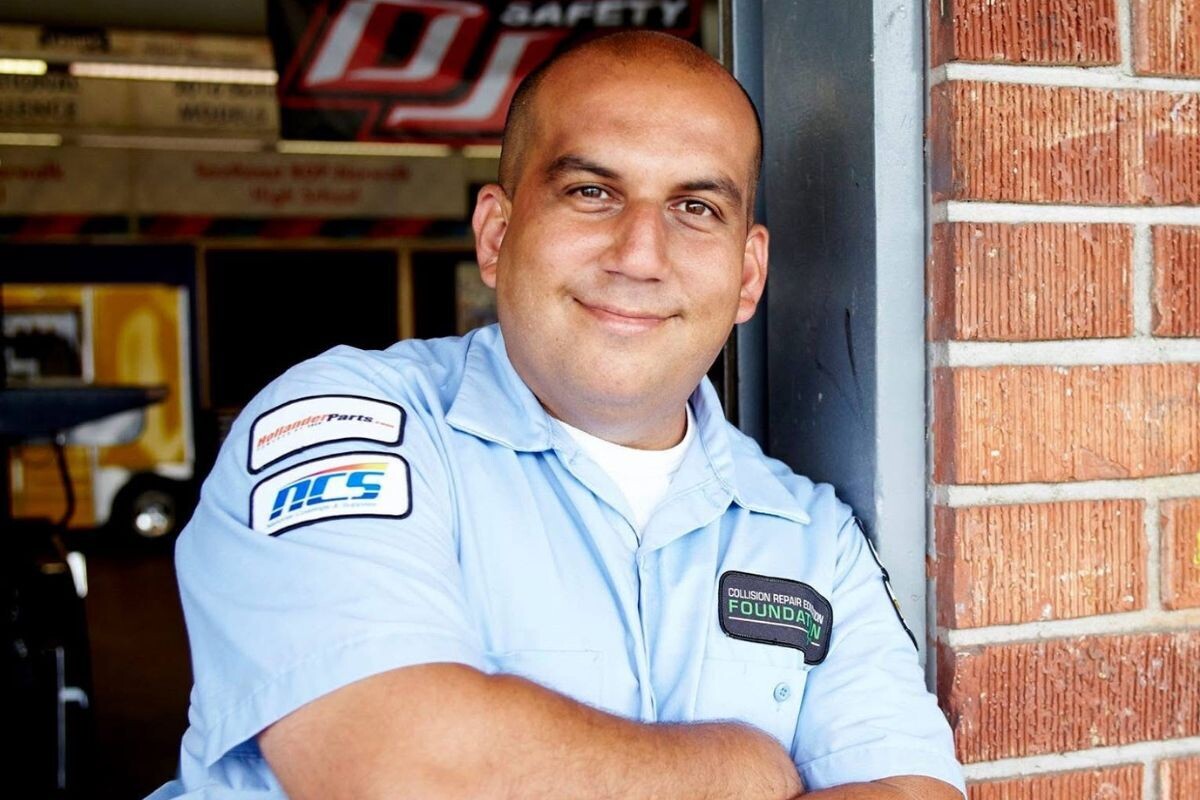 Ken Cook.
He noted the Collision Repair Education Foundation (CREF) recognized the problem decades before anybody else and Norwalk High School is doing everything it can to support CREF’s effort to address it.
Cook currently teaches five classes with a total of about 170 students.
“I realized that over the last five or six years, I'm not producing collision repair technicians,” he shared. “I'm producing graduates. I'm producing kids that are going on to other things.”
He asked himself why that was happening and recognized that students are being recruited into other programs as early as middle school.
One of the challenges he faces is that 45% of his students are special needs learners. “It makes it hard to challenge your best students and it also makes it hard to attract the best students in the school,” he acknowledged.
Cook would ultimately like to have a capstone class of SkillsUSA students who are dedicated to joining the industry. Plans also include setting up a mobile workstation in a utility trailer where he can conduct presentations.
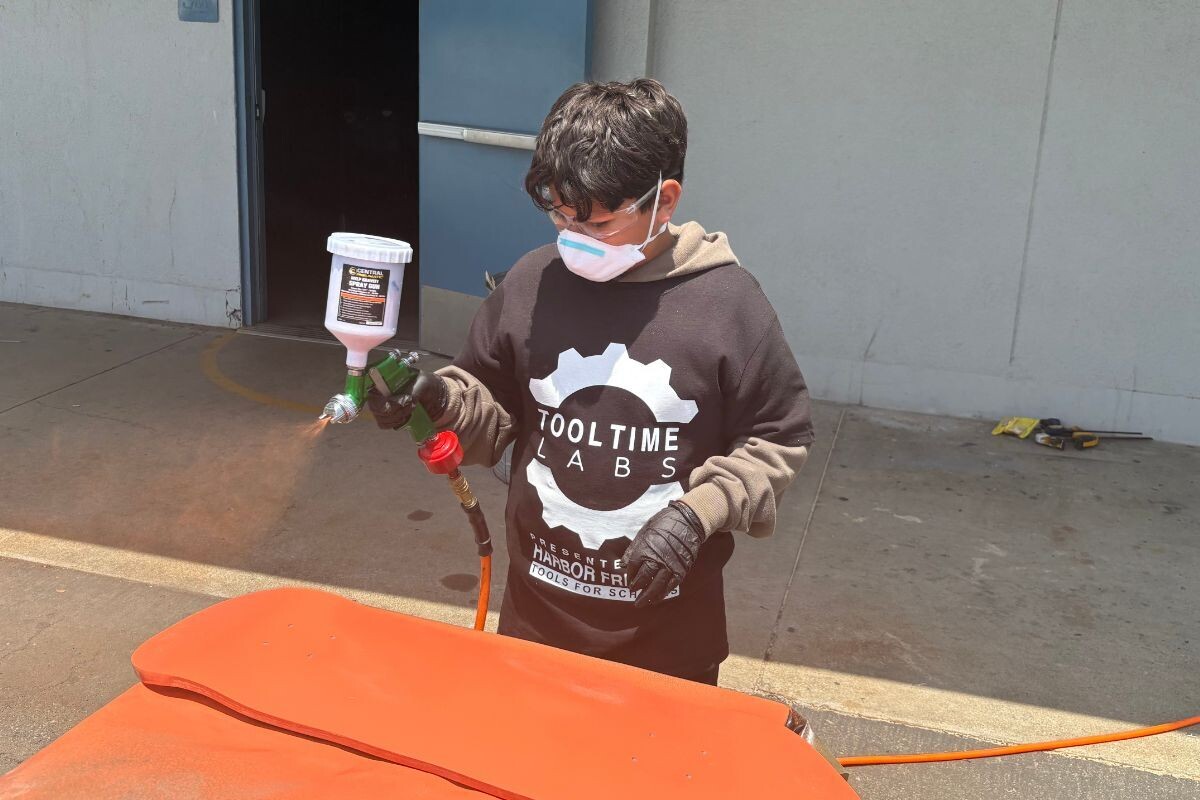 A young student in Harbor Freight's summer internship program.
As part of his teaching, Cook promotes career and community readiness. He also makes an effort to pass along industry knowledge when there is an opportunity. For example, he recently supported Harbor Freight’s summer internship program.
“These kids are 11 years old, and they have a spray gun in their hand for the first time,” he recalled. “The masks barely fit their faces; they're so small. But it really was cool.”
He noted how beneficial it is to get the kids engaged at such a young age and stressed the importance of attracting a strong student base.
The school has been an active member of SkillsUSA for a decade. Cook, a SkillsUSA advisor, has received the organization’s Models of Excellence Award, the highest honor it bestows in the nation. The award recognizes the exceptional integration of personal, workplace and technical skills into SkillsUSA chapter activities.
Cook said many instructors get burned out after dealing with a variety of challenges and not receiving industry support.
“If you don't love what you do, this job doesn't make any sense,” he said.
His call out to the industry is for shops purchasing the “latest and greatest” to consider donating their used equipment to collision repair programs rather than selling it for pennies on the dollar. He also encouraged shop owners and managers to visit local collision repair programs, talk to students about the opportunities available in the industry and invite them to their facilities.



Stacey Phillips Ronak