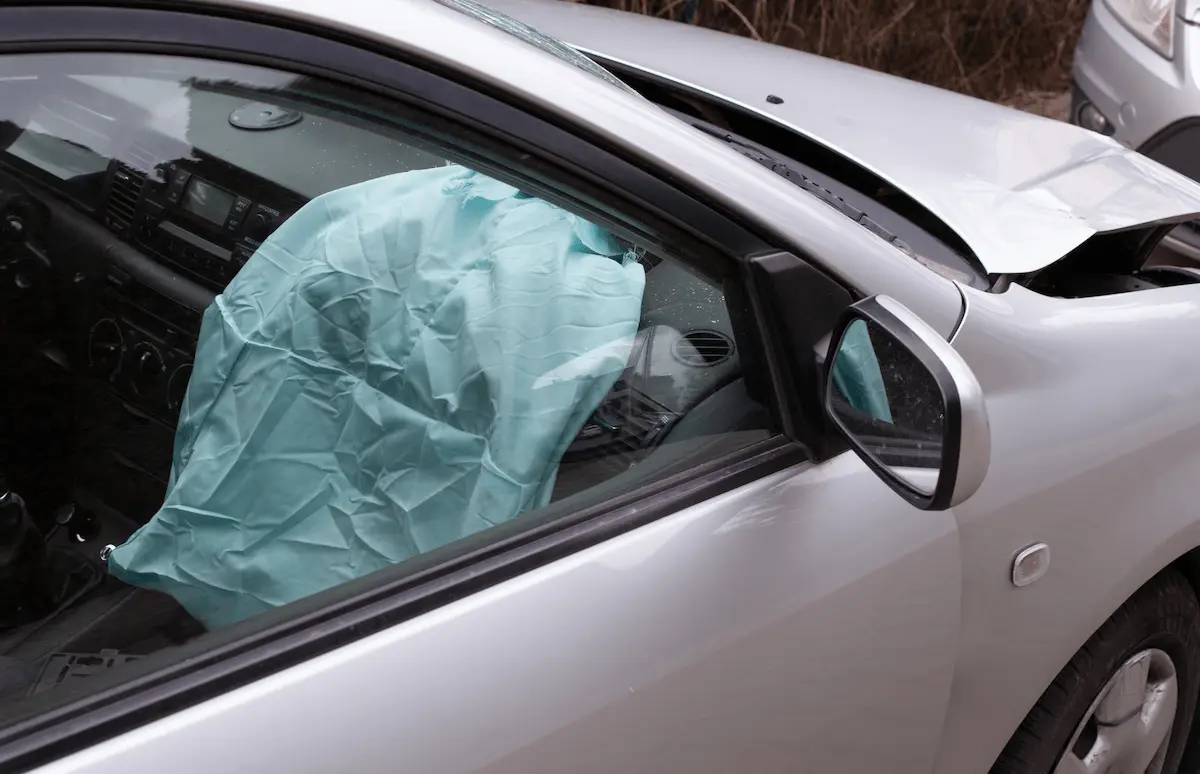
A bill introduced in the U.S. House would require anyone selling a used vehicle through a dealership, auction, private sale, or any other channel used to resell vehicles to either sell it with a working airbag system or disclose in writing that the system is “missing or disabled,” according to the bill text.
The requirements would apply to any seller of a covered vehicle, regardless of the sales channel. They would be enforced by the Federal Trade Commission and state authorities and backed by federal criminal penalties of up to life in prison when a death results.
The airbag disclosure measure comes as the National Highway Traffic Safety Administration has alerted the auto repair industry to watch for banned replacement inflators and to “notify NHTSA immediately with any additional information” about them, according to NHTSA’s replacement airbag guidance. The agency tells used-vehicle owners to check a vehicle’s history report for airbag deployments, prior crashes or total-loss events, reported thefts, and repairs at noncertified service centers, and to have the vehicle inspected by a “certified technician.”
The bill, introduced by U.S. Rep. Mike Lawler of New York, is named for Anthony Amoros, a native of Rockland County, New York, who died in a crash in a car that had no airbags, a fact he did not know when it was sold to him, according to Lawler’s office.
Proposed criminal penalties
The bill would add a section to Title 18 of the U.S. Code covering the resale of unsafe motor vehicles. The offense would apply to anyone who knowingly sells a covered vehicle with a nonworking or missing airbag system without making a written statement or a windshield disclosure. The bill defines a written statement as one in at least 10-point bold type on the front of a sales contract, receipt, invoice, or other sale document, and a physical disclosure as a conspicuous sign on the windshield.
Maximum prison terms would scale with the outcome, and each tier allows fines, prison time, or both:
- Death results: a prison term of any number of years, up to life
- Serious bodily injury, including paralysis: up to 20 years
- Attempts and all other cases: up to 10 years
NHTSA guidance on replacement inflators
The federal bill does not mention counterfeit airbag parts. Its introduction follows NHTSA’s Sept. 3 confirmation of an 11th death tied to a banned replacement inflator from China. That death involved a 2018 Chevrolet Equinox in Dallas on Aug. 27.
According to NHTSA:
- Before the Equinox case, all of the deaths, along with three severe injuries, involved Chevrolet Malibu and Hyundai Sonata models.
- In each case, the original frontal driver airbag inflator had been swapped for a unit marked DTN60DB, which the agency says was likely brought into the country illegally.
- The agency barred importation and sale of the inflators earlier this year, the first ban it had issued in more than 20 years.
A VIN lookup will not identify the inflators, because the units are aftermarket components with no link to the vehicle identification number. An inspection is the only way to tell whether a vehicle has one. The suspect units bear a DTN60DB marking. A label on the electrical connector side may show the number sequence 144415654 666631 or 144415654 666633, according to the agency.
What the technician guidance says
NHTSA’s technician guidance for managing DTN-equipped airbags, dated April 2, tells technicians not to probe airbag connector terminals electronically or apply power to them. The agency says doing so can set off the inflator and seriously injure or kill someone.
The document lists signs of a suspect module, including:
- Trim cover: a cover whose texture or color differs from the original part, tear seams that are absent or poorly formed, or faint SRS lettering
- Inflator label: the barcode-style number sequence NHTSA associates with the suspect units, a manufacturer name that does not match the vehicle’s emblem or fitment, a model number that does not match the OEM part number, or identical labels on multiple units
- Hardware: tool or grind marks, missing warning labels, connector colors that do not match OEM, or missing shorting bars
- Signs of a rebuilt unit: burn marks, metal stretched by gas pressure, or an SRS warning lamp that may have been bypassed with resistors or diodes
When a technician finds a suspect unit and the customer is at risk, the guidance says to take these steps:
- Record the 17-digit VIN and the customer’s contact information.
- Give the VIN to the automaker’s corporate office to retrieve the vehicle’s airbag serial numbers.
- Tell the customer about possible inspection or replacement costs.
- Report the case to NHTSA.
The agency notes the guidance may change as its information develops.