Collision repair shops are navigating fewer claims, more complex vehicles, and persistent pressure on margins and labor. ADAS technology is reducing claim frequency. Total loss rates continue to rise. The vehicles that do come through the door demand more time, more training, and more specialized equipment than they did two years ago.
In that environment, how shops invest in technology matters more than it used to.
Autobody News asked its Technology Council a single question this month: What is the one technology that collision shops are currently under-investing in?
The answers ranged from AI-driven automation to diagnostic hardware to operational data. But each one pointed to the same basic problem: there is a gap between what shops have access to and what they are actually getting out of it.
The software stack is not working hard enough
Jonathon Best, founder and CEO of Better Collision Group, did not hold back.
"The average shop now runs 13 or more subscriptions of software that is all about 70 percent of the way there," Best said. "The work is not easier. The hours are not shorter. The margin is not better."
Best argues the industry has spent the last decade buying into the idea that more software equals more leverage. Management systems, estimating platforms, scheduling tools, CSI software, parts integrations, KPI dashboards, customer communication apps. Layer after layer of tools that create visibility into work that still has to be done by the same people.
"We bought visibility into work that still must be done by exhausted humans, who continue to get more and more work dumped on us by our insurance partners, our OEMs, our customers, and then the software that we pay to use," he said.
The technology worth investing in over the next 24 months, Best said, is not another dashboard. It is autonomous agents that actually perform work end to end.
He offers a simple test for any technology investment: Would you hire a $4,000 a month employee to do the work this software is supposedly handling? If yes, the technology is worth more than you are paying. If no, you are paying for theater.
"Run that test against your current stack," Best said. "Most shops will find they are paying for software that does not replace labor. It reports on labor. It dashboards labor. It nudges labor. It does not do labor."
The practical applications he pointed to include agents that handle DRP submissions without a coordinator clicking through portals, agents that run parts procurement follow-up without a service writer making 30 calls, and agents that own customer communication from intake to delivery without a CSR managing overflowing inboxes.
"Shop owners who reframe their tech budget as a labor budget will see the shift coming," Best said. "The rest will keep buying tools and wondering why their headcount never goes down."
The diagnostic gap is a revenue gap
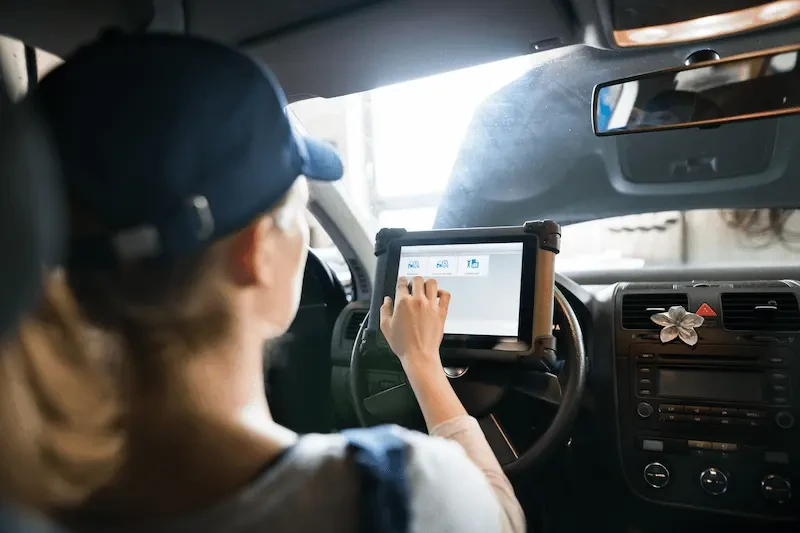
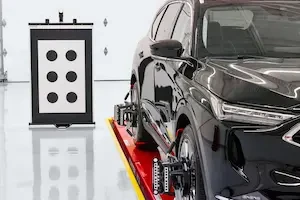
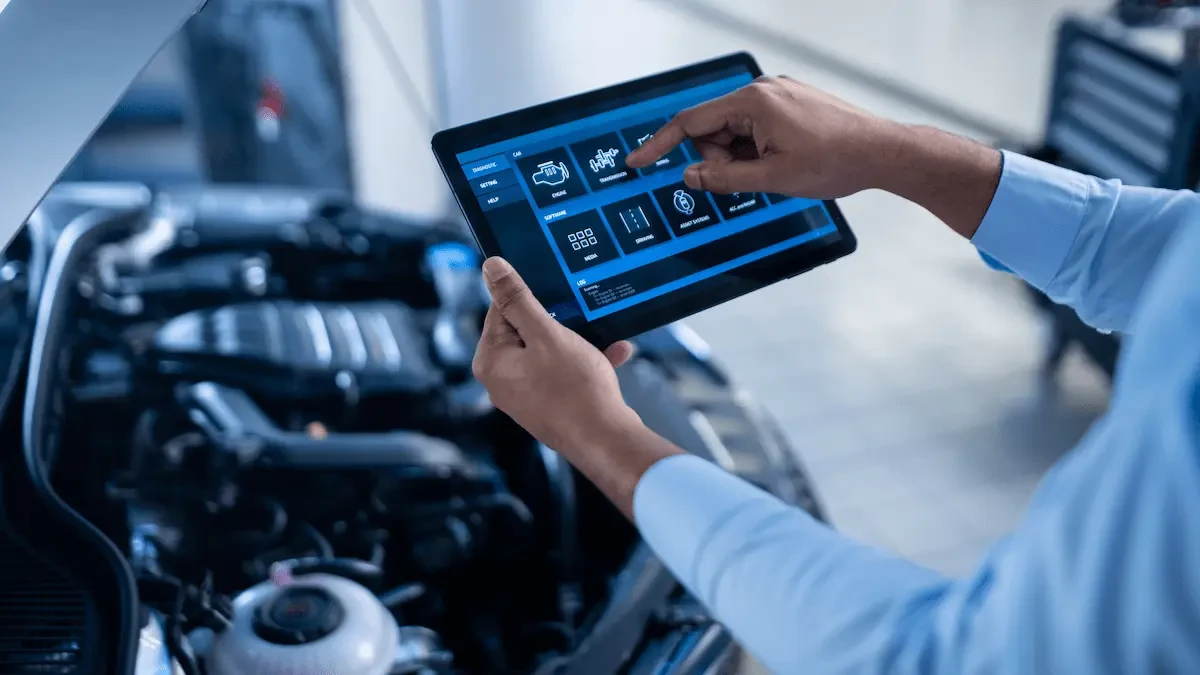
Joel Adcock, director of strategic partnerships at Revv, brought the conversation to a more immediate investment: ADAS-enabled diagnostic tablets.
These devices can perform dynamic calibrations and other billable diagnostic operations in-house. The cost ranges from under $1,000 to around $6,000 depending on brand and functionality, with a typical payback period of 90 to 180 days.
Training is minimal. And the revenue opportunity extends beyond calibrations into reading and erasing codes, active tests, module resets and coding, and steering angle resets.
Adcock framed the investment as a direct response to declining volume. Vehicle counts and claims are down, and shops that bring diagnostic capabilities in-house can bridge that revenue gap while gaining control over cycle time and keeping every point of repair under their own roof.
"Shops that are performing dynamic calibrations are seeing a wide range of reimbursement amounts," Adcock said. The payback math depends on shop volume and vehicle mix, but the ROI window is short enough that the risk is low.
Collecting data is not the same as using it
Taylor Moss, vice president of strategic development at Quality Collision Group, took the broadest view.
"I think the collision industry is still under-investing in operational intelligence," Moss said. "Not just collecting data, but turning it into actionable intelligence at every level of the organization."
Moss tied his answer to the structural changes reshaping the market. With claim counts slowing, the next generation of successful operators will run less on intuition and lagging reports and more on real-time insight into capacity, profitability, capture rate, workflow bottlenecks, customer acquisition, and forecasting.
"As vehicle repair claims decrease and competition for repair volume increases, the winners won't just be the shops that repair cars well and have relationships," Moss said. "They'll be the organizations that understand their business best and can act on that intelligence."
The Autobody News Technology Council is an invite-only group of industry leaders who respond to a monthly question on the technologies shaping collision repair. If you're interested in joining the conversation, please reach out to Jess Fritsche at jess@autobodynews.com to learn more.