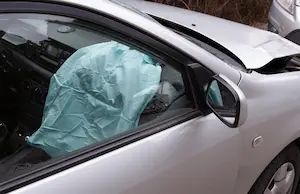
The California Bureau of Automotive Repair revised its proposed airbag safety rule in September. The revision would extend the rule’s prohibitions to individual airbag parts and components and would bar shops from installing or selling airbags subject to a safety recall. The revised rule and the bureau’s storage fee rules are both pending state review, with an expected effective date of Jan. 1, 2027.
Both packages are under review by the Department of Consumer Affairs and the Business and Consumer Services Agency, according to the bureau’s legislation and regulations update prepared for its Oct. 22 Advisory Group meeting. After that review, the bureau plans to file them with the Office of Administrative Law. The bureau’s regulatory actions page continues to list both as proposed regulations.
A separate bureau package would repeal the requirement that shops include a telephone number in their advertising, according to the October update.
Airbag rule adds recalls, parts, and sensor checks
The bureau posted modified text of its proposed amendment to Section 3367 of Title 16 of the California Code of Regulations on Sept. 2. Comments were taken through Sept. 17, according to the notice of modified text. The comment period on the original proposal had closed Aug. 24.
The revised text makes four main changes:
- The prohibition now covers individual airbag parts and components, in addition to complete airbags.
- Airbags that a shop knows, or reasonably should know, are subject to an airbag-related safety recall from the vehicle manufacturer or the National Highway Traffic Safety Administration are added to the list of items shops may not install or sell.
- Where a vehicle manufacturer has published a position statement on airbag parts, replacements must not contradict any statement currently in effect.
- For parts sourced from a DMV-licensed dismantler, shops must verify that individual components needed for safe deployment, including control units or impact sensors, have not triggered a previous airbag deployment.
The revised text keeps the requirements that shops restore airbags to OEM operating condition and buy replacement parts only from the OEM, an OEM-authorized supplier or reseller, or a licensed dismantler. Shops must also keep receipts for all parts received or purchased.
Advertising package would drop the phone number requirement
Rules that took effect Oct. 1, 2025, require shops to include three items in any internet-based advertising, according to the bureau’s fall 2025 newsletter:
- The business name as registered with the bureau
- The automotive repair dealer registration number
- The phone number registered with the bureau
The bureau’s business information package would repeal the telephone number requirement for advertising. It would also:
- Extend the name and registration number display requirements to print and vehicle-based advertising
- Clarify that internet advertising includes social media, email, and websites
- Allow an online ad to meet the display requirement by linking to another online source that shows the business name and registration number
The package would also require applicants for a registration to provide a phone number for the business’s physical location and a business email address. Shops renewing a registration would have to verify that all information from their initial application is current.
As of Oct. 12, the package was pending review by the Business and Consumer Services Agency. After that review, the bureau plans to file it with the Office of Administrative Law and open a 45-day public comment period.
Towing authorization package also awaits agency review
A towing authorization package is at the same stage. It would require:
- Customer authorization of towing fees before a tow
- For shops holding a motor carrier permit, that authorization on a document separate from the repair authorization, with exceptions for sublet repairs and moving a vehicle for storage
- Storage and towing charges listed as separate invoice line items
Storage fee package back in state review
The bureau filed its final storage fee package with the Office of Administrative Law on May 19. It withdrew the package June 26 to address that office’s concerns about the clarity of several provisions, according to the October update. A second set of modified text followed, with comments accepted Aug. 13 through Aug. 28, according to the notice of second modified text.
As described in the October update, the proposal would require shops that provide storage to:
- Base their storage fees on their own costs of storing a vehicle
- Post their daily storage rates where customers can see them
- Report their maximum daily storage rate when renewing their registration, with one change allowed per registration cycle
The bureau would also build a search tool on its website showing average and median storage rates by locale.
On the legislative side, SB 1112, which would have required auto body shops to post a vehicle owner’s rights notice, was held in the Assembly Appropriations Committee in August. The bureau’s October update lists it among bills that died in committee.
The next BAR Advisory Group meeting is Oct. 22 from 9:30 a.m. to 1 p.m. at the Department of Consumer Affairs in Sacramento, with remote access by Webex and a live webcast. The agenda includes a legislation and regulations update from the bureau’s executive office.