California lawmakers and regulators advanced several measures in August that carry compliance implications for collision repair shops, from a glass repair disclosure bill now awaiting the governor's signature to proposed rules on airbag parts sourcing, tire efficiency standards and vehicle storage fees.
SB 988 clears Legislature, awaits Newsom's decision
The California Motor Vehicle Glass Act, authored by Sen. Tim Grayson, D-Concord, passed the Assembly floor 78-0 on Aug. 24 and returned to the Senate, which concurred in the Assembly's amendments 37-0 on Aug. 26. The bill is now enrolled and headed to Gov. Gavin Newsom, who has until Sept. 30 to sign or veto it under the state constitutional deadline for bills passed before Sept. 1 and delivered to the governor on or after that date.
As amended, SB 988 applies to businesses primarily engaged in automotive glass replacement and would require those shops to disclose ADAS calibration needs, confirm calibration results in writing and follow new claims authorization procedures before completing insured repairs.
SB 1112 towing bill held in committee
The Assembly Appropriations Committee held SB 1112 in committee at its Aug. 13 suspense file hearing, according to the committee's hearing results. The bill, authored by Sen. Bob Archuleta, D-Pico Rivera, had passed the full Senate 38-0 on May 20 and cleared the Assembly Judiciary Committee 12-0 on June 16.
SB 1112 targets "bandit towing" by letting a vehicle's registered owner, lienholder or insurer post a bond with a county court to force release of a vehicle from a tow yard or storage facility, with a maximum bond of $6,250 for a company owner and $500 for an individual. Its notice-posting and fine provisions name "auto body shop" as a covered entity alongside towing companies and storage facilities.
BAR proposes new airbag sourcing restrictions
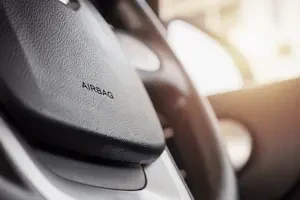
The Bureau of Automotive Repair closed a 45-day public comment period Aug. 24 on a proposed amendment to Section 3367 of Title 16 of the California Code of Regulations governing airbag safety. As proposed, the rule would bar automotive repair dealers from manufacturing, importing, installing, reinstalling, distributing, selling or offering for sale an airbag that has been previously deployed, has an electrical fault, includes a component designed to make a vehicle's restraint-system control unit register a nonfunctional airbag as installed, or bears a mark that copies a vehicle manufacturer's or parts supplier's genuine branding without authorization.
Under the proposal, ARDs could purchase replacement airbag parts only from the vehicle's original manufacturer, a supplier or reseller the manufacturer has authorized, or a DMV-licensed automotive dismantler, and only after verifying the part is a genuine OEM component that has not been deployed, shows no damage or tampering, and carries no open recall. ARDs would also be required to restore airbags to factory operating condition and retain receipts for every part purchased or received.
BAR estimates OEM airbags for popular models from Toyota, Honda, Ford and Tesla run $500 to $1,000 per unit, and says noncompliant airbags can be found online for up to half that price.
CEC adopts nation's first tire efficiency standard
The California Energy Commission on Aug. 17 approved the Replacement Tire Efficiency Program, which the commission described as the nation's first efficiency standard for replacement tires sold for passenger vehicles and light-duty trucks. The regulation, adopted under Title 20 of the California Code of Regulations, sets minimum rolling-resistance and wet-grip standards and carves out exemptions for specialty tires, including competition tires, large off-road tires, and all-weather winter performance tires.
The rule applies to all tire retailers, including automotive repair dealers that sell or replace tires. The first phase takes effect for tires manufactured on or after Jan. 1, 2029, with a stricter second phase beginning Jan. 1, 2033, according to CEC's adoption resolution.
BAR storage fee rules head into third comment round
BAR's effort to overhaul vehicle storage fee rules for automotive repair dealers is now in its third round of public comment. The bureau opened an initial 45-day comment period in November, followed by two rounds of comment on modified regulatory text, the most recent of which opened Aug. 13 and closes Friday, Aug. 28, according to BAR's regulatory actions page.
As most recently revised, the proposed regulation would require ARDs to base storage rates on documented costs, including property costs such as rent, mortgage, and market value, plus utilities, labor and liability insurance, and to store vehicles at their registered primary business address, notifying the customer before moving a vehicle elsewhere and obtaining written authorization if the move exceeds 20 miles.
It would also direct BAR to publish a searchable tool showing average and median storage rates by locale, a radius that expands outward from each reporting shop until enough nearby dealers are captured to calculate a meaningful average, and would bar insurers from using those published averages to limit or suppress an individual shop's rate, a provision that would not take effect until a year after the regulation itself.
Alongside the latest text, BAR added a recent enforcement case to the official rulemaking file. In June, BAR suspended the license of LA Custom Collision, a Los Angeles-area shop, after an investigation found it worked with tow operators who monitored police radio traffic and arrived at crash scenes uninvited, then pressured consumers into signing documents promising free towing before billing them thousands of dollars.
BAR said that in one case, the shop charged over $4,000 to store a vehicle for only a few hours, and that some insurers ended up totaling vehicles because towing and storage costs made repairs uneconomical.