


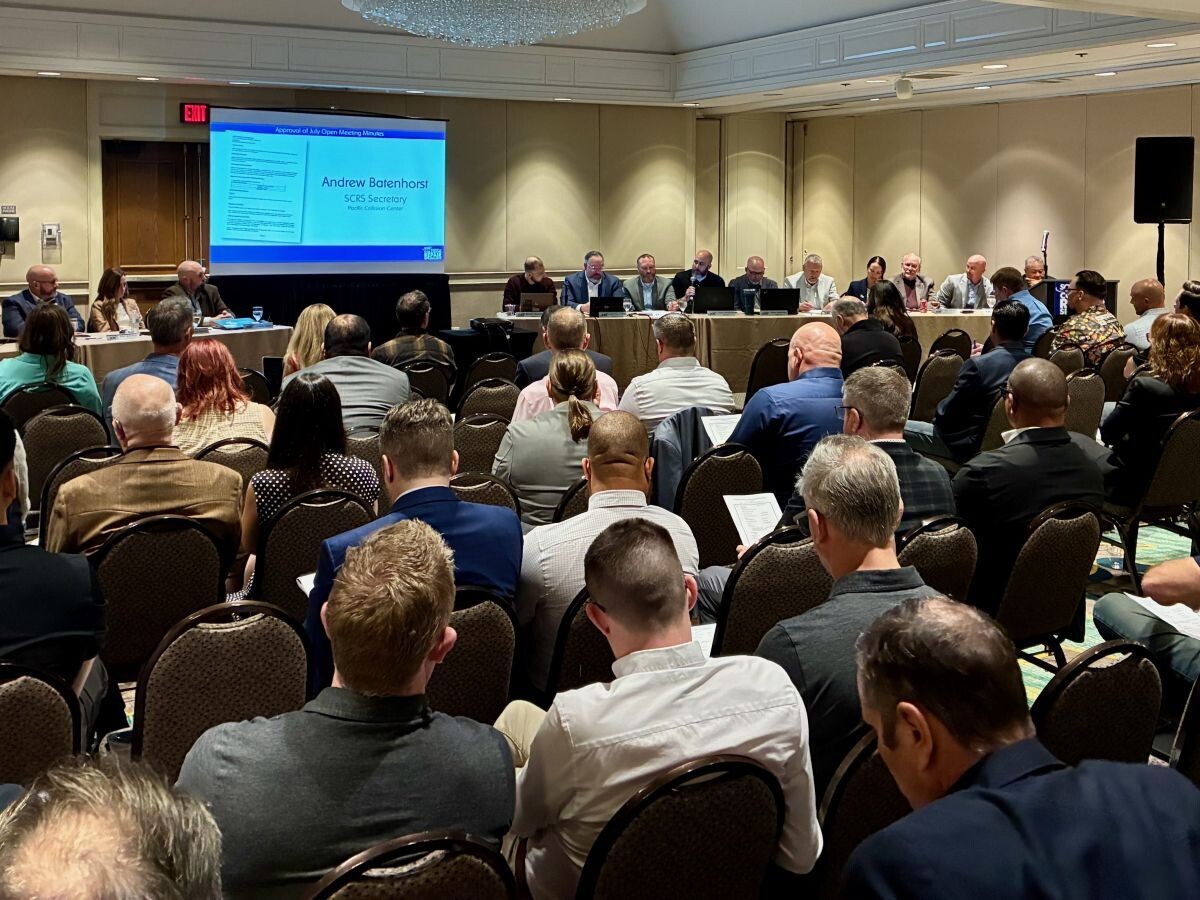
New California Bureau of Automotive Repair (BAR) regulations on storage fees charged by shops in that state are on track to be finalized and implemented this year, according to BAR representatives who spoke at the recent Society of Collision Repair Specialists’ open board meeting.
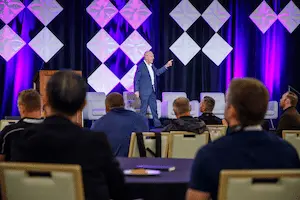
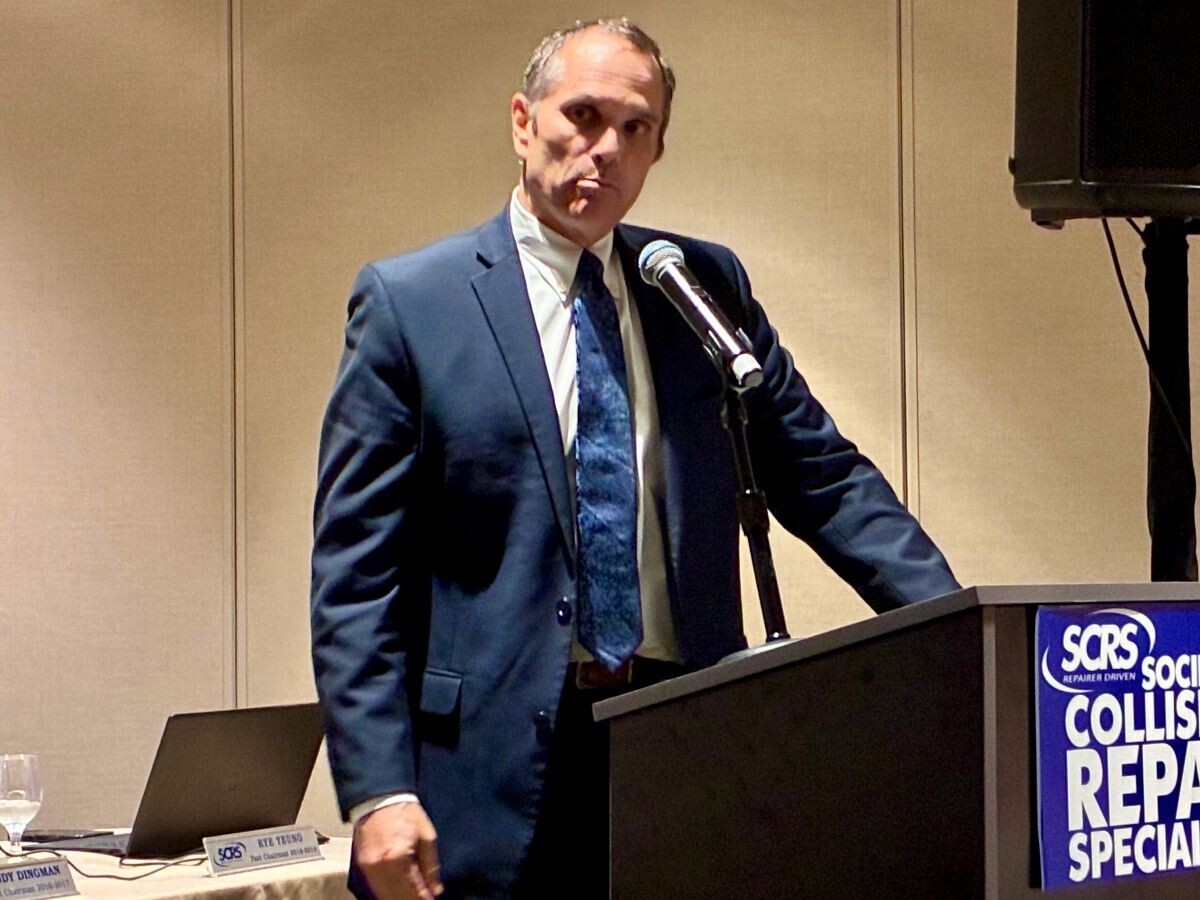 Patrick Dorais, chief of the California Bureau of Automotive Repair (BAR), said his agency hopes to finalize new regulations on storage charges in that state by later this year.Patrick Dorais, the chief of the BAR, said his agency is now “digesting all of the information and comments received” during a recent public comment period, and any changes made in response will go out for an additional 15-day comment period. But he said he hopes by early summer “everybody can see for the record what was asked and how we responded to it, and then if all goes well, we’ll have a final package that’s adopted and will take effect the later part of this year.”
Conversations around reasonable storage fees
Dorais said storage charges “have become an increasingly huge issue in California and other states as well.” It was not until 2023 that legislation gave the BAR authority to address storage fees, but in response to other proposed legislation on the topic even prior to that, Dorais said, in 2022 the BAR began allowing insurers to report storage disputes to the BAR for mediation, and about 1,500 were reported, including about 450 last year alone.
Storage fees were reduced in about 30 percent of those disputes, he said, and in three cases the BAR successfully sought revocation of the company’s license for “false and misleading statements…or fraudulent behavior that is not representative of anyone doing an honest job in this business,” though he said those were adjacent businesses “not interested in doing a single auto repair.”
It has not been uncommon for the BAR to find that the storage charges were reasonable, Dorais said, which “more often than not, is why we’re getting reductions only 30 percent of the time.”
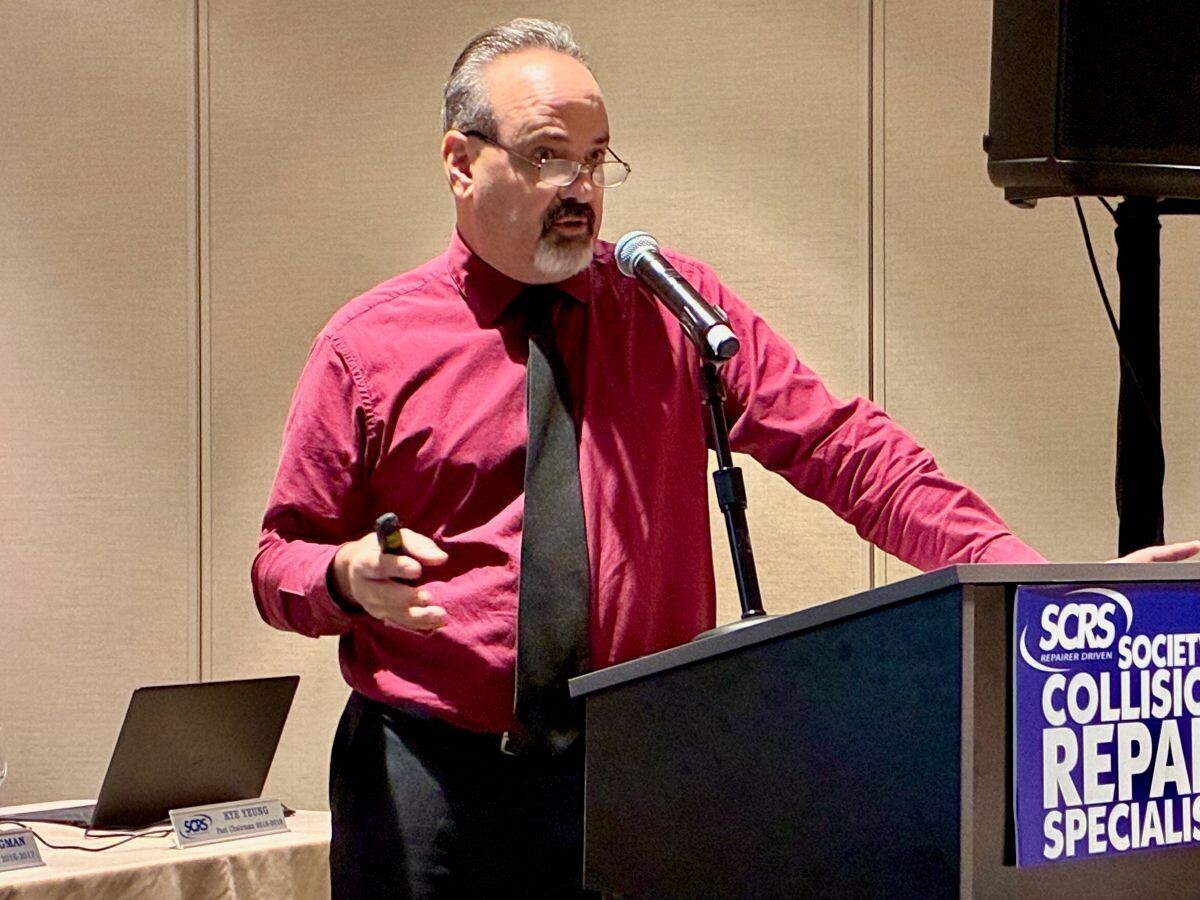 Bill Thomas of the California Bureau of Automotive Repair said the agency in recent years has reduced storage charges challenged by insurers in about 30 percent of instances.Bill Thomas, the deputy chief for field operations and enforcement for the BAR, cited an example of an adjuster in the Midwest complaining about a repairer in Long Beach charging $120 a day for storage.
“Those of you that are from the Los Angeles area know that’s quite reasonable and quite comparable to everybody else in the area,” Thomas said. “And so more often than not, the message we give to the insurers is ‘No, that’s pretty typical for California.’”
A shop representative at the meeting said when he’s had an insurer challenge the shop’s storage charges, he’s had “a very low success rate” in getting insurers to submit a challenge to the BAR.
“Often we find that they don’t want to interact with you guys,” Andrew Batenhorst of Pacific BMW Collision Center in Glendale, California, told Dorais and Thomas. “Insurers are saying that we’re capped at [highway patrol or public agency storage] rates, which has been debunked for many, many years, yet that’s the message we receive.”
“That’s probably the reason they don’t want to come to us, is because we’re going to tell them the same thing, that you’re entitled to reasonable rates for the locality of your shop,” Thomas said. “We do see some insurers avoiding us now, avoiding calling the referral line, because it’s not a tool for them to use against [shops].”
Dorais said the BAR published a Q&A page related to storage charges in January 2024 to provide some guidance while the currently proposed regulations were being developed. He said the BAR held four workshops as it worked on those proposed regulations, three more than they typically see for other regulations being developed.
CAA’s concerns about BAR regulations
During the public comment period that ended back in December, the California Autobody Association submitted written testimony raising some concerns about that proposed storage regulations, which would require shops to submit their daily storage fees for a public search tool enabling customers or insurers to identify average and median daily storage rates for a given area (a geographic radius that varies based on the number of regulated shops in that area).
The BAR has said such published averages and medians are not to be used to establish or influence a shop’s storage rates (which it says should be based on the shop’s actual costs), nor to establish a maximum rate.
It further intends the regulation to reduce confusion about which of three statutes in California code apply when charging vehicle storage fees.
The regulation would also require shops to notify a customer within one business day after receiving a vehicle if the shop declines to repair a vehicle (and whether it intends to begin charging storage), and it gives the customer up to three business days to authorize repairs or remove the vehicle before storage fees can begin. The CAA’s comments on the proposal argue the one business day notification requirement is unrealistic for shops (suggesting a 3-day requirement instead), and that the mandatory three days of free storage exceeds the BAR’s authority.
“In addition, publicly posting industry rates may inadvertently facilitate price coordination or discourage natural market competition,” CAA stated in its comments. “When businesses know that BAR publishes an “average” rate, they may cluster around that figure to avoid regulatory scrutiny, reducing competitive pricing and raising potential antitrust concerns.”
The CAA suggested that the BAR could continue to conduct storage rate surveys — keeping the information confidential rather than publicly available — based on consumer complaints to determine whether a shop’s storage rate charges are fair and reasonable.



John Yoswick